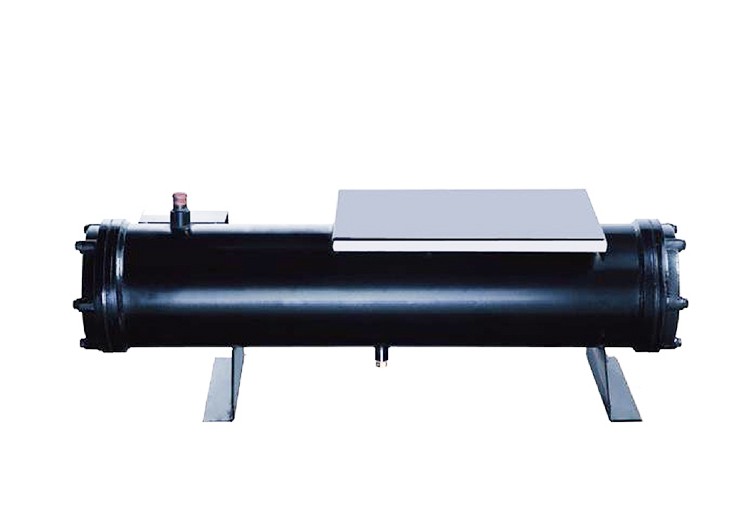
Water-Cooled Condenser
A water-cooled condenser is a heat exchanger that uses water as the cooling medium to condense high-temperature, high-pressure gaseous refrigerant into liquid. It is one of the core heat-rejection components in a refrigeration system. Due to the high specific heat capacity and relatively low temperature of water, water-cooled condensers achieve lower condensing temperatures, which helps improve compressor capacity and operating economy, making them widely used in industrial and commercial refrigeration.
Core Structure and Working Principle
Item Description
Cooling water flow Flows through the tube side (inside tubes), typically entering from the bottom and exiting from the top
Refrigerant flow Flows through the shell side (outside tubes); high-temperature, high-pressure vapor enters from the top, and condensed liquid exits from the bottom
Heat exchange method Counter-flow heat exchange between cooling water and refrigerant, resulting in a high heat transfer coefficient
Cooling water mode Can be used in a once-through system or recirculated (requires a cooling tower or cooling water basin)
Cooling water flows through the tubes rather than the shell because the water-side heat transfer coefficient is higher than that on the refrigerant condensing side, and condensation requires a larger heat exchange area. Additionally, the larger shell-side space facilitates control of the high-pressure refrigerant.
Three Main Types
Type Structural Features Applications Advantages and Disadvantages
Shell-and-tube Multiple seamless steel tubes are installed inside the shell; refrigerant condenses outside the tubes Large central air conditioning, industrial refrigeration (ammonia/Freon systems) ✅ Large capacity, stable structure ❌ Large size, heavy weight
Tube-in-tube Concentric tubes with water flowing through the inner tube and refrigerant in the outer tube, often coiled into a spiral Small Freon air conditioners (single-unit cooling capacity <25kW) ✅ Simple structure, compact size ❌ Not suitable for high pressure
Plate-type Multiple metal plates stacked together; refrigerant and water flow alternately between plates Compact commercial refrigeration, heat pump systems ✅ High heat transfer efficiency, compact size ❌ High water quality requirements
Additionally, there are spiral plate-type (compact, high heat transfer coefficient, but not suitable for high pressure and requires soft water) and submerged-type condensers.
Comparison with Other Condensers
Comparison Item Water-Cooled Air-Cooled (Air-Cooled) Evaporative
Cooling medium Water Air Water + Air (evaporative heat absorption)
Condensing temperature Low (limited by water temperature, approximately 25–35°C) High (affected by ambient temperature, can reach 50°C+ in summer) Between the two
Water consumption High (recirculated) or once-through None Only 1/25 to 1/50 of water-cooled
Applicable situations Areas with abundant water supply Water-scarce areas, small equipment Water-scarce areas requiring efficient cooling
Initial investment Lower Higher Moderate
Practical Application Points
Water quality requirements: Soft water is recommended; hard water tends to cause scaling inside the tubes, reducing heat exchange efficiency. Tube-in-tube and spiral plate-type condensers are particularly sensitive to water quality.
Water consumption: In vertical shell-and-tube condensers, the cooling water temperature rise is only 2–4°C, resulting in higher water consumption, but they can be installed outdoors and cleaned while in operation.
Maintenance: Shell-and-tube condensers allow cleaning of water tubes during operation; tube-in-tube and plate-type condensers are difficult to inspect internally and require regular blowdown.
Energy-saving direction: Evaporative condensers combine the advantages of water-cooled and air-cooled types, saving approximately 30% more energy than air-cooled and over 90% more water than water-cooled, making them one of the current retrofit options.
If you have specific selection requirements (such as cooling capacity, refrigerant type, installation conditions), we can discuss further.