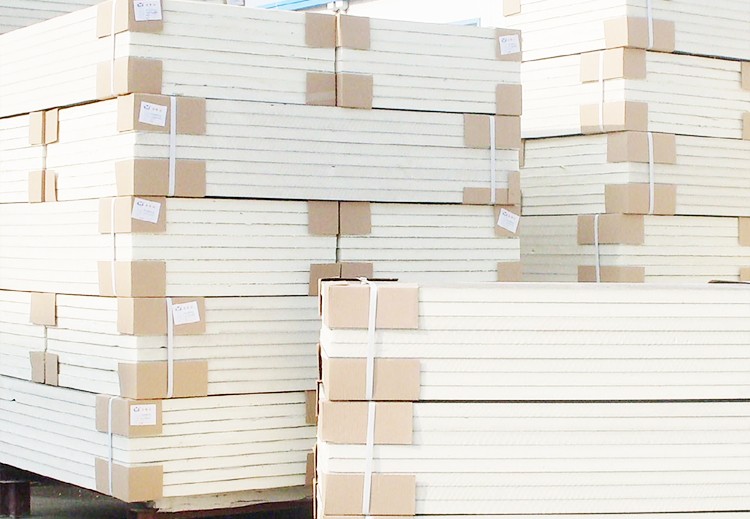
XPS Insulation Board (XPS Board)
Full name: Extruded Polystyrene Foam Board. It is a third-generation rigid foam insulation material made from polystyrene resin through high-temperature extrusion. Its internal structure features a continuous closed-cell honeycomb configuration, making it one of the most widely used insulation boards in the construction and cold chain sectors.
Core Performance Parameters
Parameter Value
Thermal Conductivity ≤ 0.028 W/(m·K) (significantly lower than EPS's 0.039)
Water Absorption ≤ 1.5% (virtually non-absorbent)
Compressive Strength 150 – 500 kPa
Density 25 – 45 kg/m³
Service Life 30 – 40 years
Fire Rating Standard / Flame-retardant (B1/B2)
Key Differences from EPS Foam Board
Comparison Item EPS (White Foam) XPS Extruded Board
Structure Independent bubbles, not fully closed-cell Continuous closed-cell honeycomb structure
Water Absorption Relatively high, prone to aging Extremely low, virtually non-absorbent
Compressive Strength 100–200 kPa 200–500 kPa
Thermal Insulation Thermal conductivity 0.039 Thermal conductivity 0.028, approximately 30% better
Typical Applications Interior walls, packaging, temporary structures Cold storage, exterior walls, roofing, underfloor heating, roadbeds
Classification by Color / Grade
Color Density Application
🔵 Blue Board 28–32 kg/m³ Standard underfloor heating, roof insulation (cost-effective)
⚪ White Crystal Board 35–36 kg/m³ Exterior wall insulation, high-demand applications (virgin material, eco-friendly)
🟤 Black Board 22–25 kg/m³ General filling, low compressive strength requirements
🔴 Flame-Retardant Board Depending on formulation Factories, supermarkets, and other locations with fire safety requirements
⚠️ For residential renovation or food processing facilities, white crystal board (virgin material) is recommended. The flame retardant HBCD (hexabromocyclododecane) in flame-retardant boards may release harmful substances at high temperatures and is restricted under EU REACH.
Core Application Scenarios
Building on your previous inquiries about spiral freezers and free swing doors, XPS boards are ideally suited for cold storage and cold chain applications:
Scenario Usage Recommended Thickness
🥶 Cold Storage Walls / Floors / Ceilings Closed-cell rate ≥95%, water absorption ≤1.5%, maintains -10°C to -30°C long-term 50–150mm
🏭 Spiral Freezer Exterior Wall Insulation Reduces cold loss, lowers compressor load 40–80mm
🏗️ Building Exterior Wall Insulation Adhesive + mechanical anchoring, covered with mesh and mortar 30–50mm
🏠 Underfloor Heating Base Layer Placed beneath heating pipes to prevent downward heat loss 20–30mm
🛣️ Roadbed / Airport Runway Prevents frost heave, distributes load 80–200mm
🚗 Refrigerated Trucks / Containers Insulation layer on interior walls 30–60mm
Selection Recommendations (Cold Storage Focus)
Requirement Recommendation
First choice for cold storage panels Blue board or white crystal board, thickness ≥80mm, compressive strength ≥300kPa
Food processing facilities / clean environments White crystal board (virgin material, no recycled content, odor-free)
Floor moisture barrier + insulation Choose high compressive strength grade (≥500kPa) to prevent forklift indentation
Budget constraints Blue board is sufficient, but ensure density ≥28kg/m³ to meet standards
Fire safety requirements Choose B1 flame-retardant board, but avoid use in areas with direct food contact
In summary: XPS board = closed-cell honeycomb structure + virtually non-absorbent + high compressive strength + excellent thermal insulation. It is the primary insulation material for cold storage, exterior walls, and underfloor heating, outperforming EPS by a significant margin.