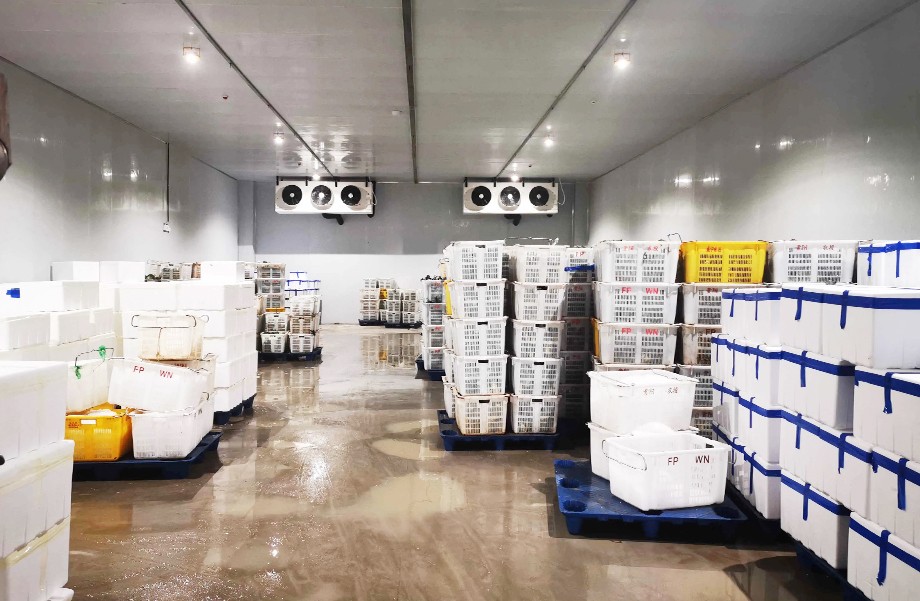
In the cold chain logistics and warehousing industry, people often confuse "fresh-keeping cold storage" with "refrigerated cold storage." However, the two differ significantly in functional positioning, temperature control standards, and technical requirements. Simply put, refrigerated cold storage focuses on "cold," while fresh-keeping cold storage focuses on "freshness."

Core Differences in Temperature Control and Stored Products
Refrigerated cold storage is a relatively broad concept, covering multiple temperature zones from high to low, typically ranging from -5°C to 10°C. It is mainly used for short- or medium-term storage of fresh meat, aquatic products, eggs, dairy products, and certain pharmaceuticals. Its principle is to slow down microbial growth and enzyme activity through low temperatures, without freezing the products.
In contrast, fresh-keeping cold storage is a "premium customized" facility designed specifically for agricultural and sideline products, with temperatures typically precisely controlled between 0°C and 10°C. It primarily serves fresh fruits, vegetables, tea, traditional Chinese medicinal herbs, and flowers. Fresh-keeping cold storage must not only address the issue of "cold" but also the issue of "freshness," by slowing down the respiration and aging processes of agricultural products, ensuring they retain their crisp texture and nutritional value after leaving the facility, just as if they were freshly harvested.
Precision in Humidity Control and Airflow Distribution
Ordinary refrigerated cold storage has relatively lenient humidity requirements, focusing mainly on temperature compliance. In contrast, fresh-keeping cold storage has stringent humidity requirements. Most fruits and vegetables are best stored at a relative humidity of 85% to 95%. Fresh-keeping cold storage must be equipped with professional humidification or dehumidification systems to prevent leaf wilting due to moisture loss or surface condensation leading to mold. Additionally, fresh-keeping cold storage emphasizes airflow distribution in its design, requiring gentle and uniform air velocity inside the facility to avoid cold air directly blowing on products, which could cause frost damage or dehydration.
Gas Regulation and Advanced Freshness Preservation Technologies
This is the most critical technical barrier between fresh-keeping cold storage and ordinary refrigerated cold storage. For ethylene-sensitive fruits such as kiwifruit and citrus, fresh-keeping cold storage typically requires ethylene removal devices to prevent cross-ripening when different varieties are stored together. More advanced fresh-keeping cold storage can be upgraded to "controlled atmosphere cold storage," which artificially adjusts the oxygen and carbon dioxide concentrations inside the facility, putting fruits and vegetables into a "dormant" state, thereby extending the freshness period several-fold.

Construction Costs and Operational Energy Consumption
Due to the higher requirements for temperature and humidity control precision, airflow distribution design, and gas regulation functions, the construction cost of fresh-keeping cold storage is typically higher than that of ordinary refrigerated cold storage of the same scale. During operation, fresh-keeping cold storage also consumes more energy. However, by adopting variable frequency technology, IoT-based energy-saving solutions, and proper pre-cooling treatment, operating costs can be effectively reduced.
In summary, refrigerated cold storage is a general-purpose "freezer safe," while fresh-keeping cold storage is a precision "freshness preservation box." When constructing or leasing cold storage, enterprises must accurately match the type of cold storage based on the specific product category, turnover cycle, and quality requirements. Avoid blindly applying standard solutions to prevent product loss or resource waste.