
Products
Contact Us
Senbin Holding (Hubei) Co., Ltd.
Group Headquarters · Contact Information
Address: 13F, Xinsite Industrial Park, Qixiong Road, Dongxihu District, Wuhan, China
Tel: +86-13377865336 (Manager Shen) +86-400 009 9929
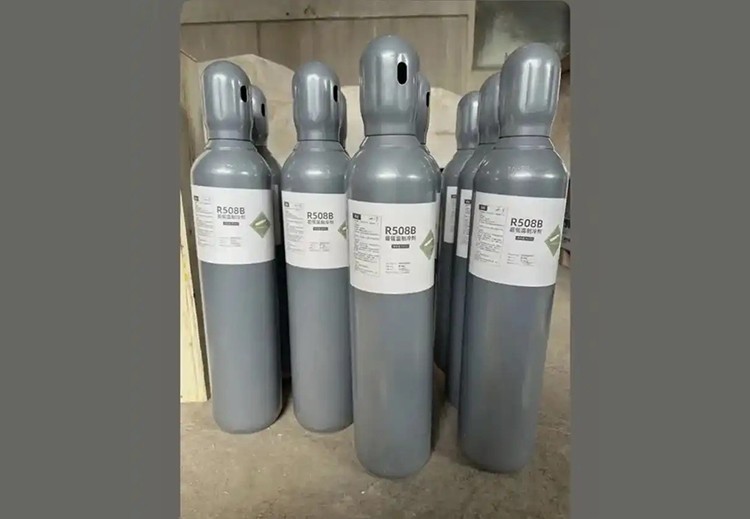
Product Name: Eco-Friendly CO₂ Refrigerant
Updated:2026-08-14
CO₂ Eco-Friendly Refrigerant (R744 Carbon Dioxide Refrigerant)
National Standard Code: R744, a natural green refrigerant, the mainstream alternative to high-GWP Freon being phased out globally, the same refrigeration medium used at the Winter Olympics Ice Ribbon
I. Core Environmental Parameters (Key Advantages)
1. ODP=0: Zero ozone depletion, fluorine-free, does not deplete the ozone layer
2. GWP=1: Extremely low global warming potential (R22 GWP≈1800, R404A≈3900), nearly negligible carbon emissions, compliant with EU and domestic carbon-neutral refrigerant regulations
3. Natural working fluid, can be produced by purifying industrial by-products, low-cost sourcing, refrigerant charging cost far lower than Freon; no toxic emissions upon leakage, no high refrigerant recovery fees
II. Physical-Chemical & Safety Characteristics
- Critical point: 31.1°C, 7.37MPa, boiling point -78.2°C, excellent low-temperature performance
- Safety Class A1: Non-toxic, non-flammable, non-explosive, first choice for food cold storage, supermarkets, pharmaceutical cold chain, no risk of flammability, explosion, or toxicity as with ammonia refrigerants
- Volumetric cooling capacity is 5–8 times that of R22/R404A, smaller compressor, piping, and heat exchanger sizes, compact equipment, thinner piping, fewer consumables
- Low viscosity, high heat exchange efficiency, system heat exchange energy consumption 15%–30% lower than traditional refrigerants, supports full heat recovery (cooling + simultaneous hot water production for heating)
- Disadvantages: High operating pressure (transcritical 7–10MPa vs. 2–3MPa for conventional fluorine systems), higher equipment pressure requirements, higher initial unit cost; leaked gas is denser than air, can accumulate in low-lying enclosed spaces causing oxygen deficiency and asphyxiation
III. Two Main Cycle Configurations
1. Transcritical CO₂ System (Mainstream for commercial use: supermarkets, heat pumps, ice rinks)
No condensation on the high-temperature side, heat is rejected via gas cooler, while cooling, waste heat is recovered to produce 60–85°C hot water; the Ice Ribbon's ice-making and venue heating use this technology
Applications: supermarket refrigerated/frozen island cabinets, ice rinks, air-source heat pump water heaters, subway/vehicle air conditioning
2. Cascade CO₂ System (Low-temperature cold storage, quick freezing, biopharmaceuticals)
CO₂ as the low-temperature stage + medium-temperature refrigerant (R134a/ammonia) in cascade, easily achieving -35°C to -60°C quick freezing/deep-freeze storage, standard equipment for drive-through cold storage and low-temperature automated warehouses
IV. Application Scenarios (Common in Warehousing and Cold Chain)
1. Large and medium-sized warehouse cold storage (including drive-through racking areas): low-temperature quick-freeze storage, cold-chain finished product storage, food raw material storage, replacing R22 and R404A, environmentally compliant, sufficient cooling capacity, safe with no risk of leakage contaminating goods
2. Chain supermarket cold chain: integrated refrigerated upright display cabinets and frozen air-curtain cabinets, 90% of European and American supermarkets are gradually switching to CO₂ units
3. Industrial/pharmaceutical deep freezing: vaccine storage, low-temperature chemical reactions, freeze-drying equipment
4. Heat pump heating, ice-making plants, vehicle cold chain, marine refrigeration
V. Comparison with Traditional Refrigerants
| Item | CO₂ (R744) | R404A/R22 Freon | Ammonia (R717) |
|---|---|---|---|
| Environmental | ODP0/GWP1 | High GWP, being restricted and phased out | ODP0/GWP0 but toxic and corrosive |
| Safety | Non-toxic, non-flammable | Decomposes into toxic gases at high temperatures | Flammable and highly toxic, leakage can cause poisoning and explosion |
| Low-Temperature Performance | Efficient down to -60°C | Efficiency drops sharply below -25°C | Usable down to -40°C, but causes pipe corrosion |
| Refrigerant Cost | Inexpensive | High and rising annually | Low |
| Equipment Cost | High initial investment | Inexpensive equipment | High cost due to pressure vessels |
VI. Industry Trends
Countries are accelerating restrictions on high-GWP Freon (R404A, R507 being gradually banned), new cold storage and supermarkets are mandated to prioritize natural refrigerants CO₂/ammonia, and existing Freon-based cold storage facilities are being retrofitted to CO₂ systems.
|
Previous: Eco-Friendly Ammonia Refrigerant
Next: Refrigeration Parts
|
Back to List |