
Products
Contact Us
Senbin Holding (Hubei) Co., Ltd.
Group Headquarters · Contact Information
Address: 13F, Xinsite Industrial Park, Qixiong Road, Dongxihu District, Wuhan, China
Tel: +86-13377865336 (Manager Shen) +86-400 009 9929
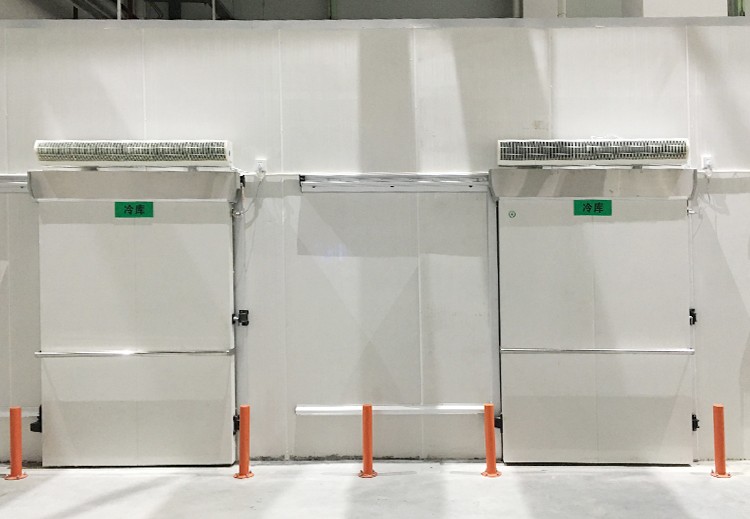
Product Name: Cold Storage Warehouse
Updated:2026-08-14
A cold storage warehouse (cold store) is a facility that uses cooling equipment to create suitable humidity and low-temperature conditions, mainly for processing and storing agricultural products, food, pharmaceuticals, and other items requiring low-temperature preservation. Cold storage warehouses can be classified into various types based on different criteria:

Classification by Temperature
High-temperature warehouse (constant temperature warehouse): Design temperature typically 5°C–15°C (or 2°C–8°C), suitable for storing items with low temperature requirements such as fruits, vegetables, dairy products, red wine, chocolate, pharmaceuticals, and seeds.
Medium-temperature warehouse (chilled storage): Design temperature -5°C–5°C (or -2°C–2°C), suitable for chilled storage of frozen food products such as meat, aquatic products, processed foods, and certain pharmaceuticals.
Low-temperature warehouse (freezer): Design temperature -18°C–-25°C, suitable for storing pork, beef, lamb, fish, poultry, and other foods requiring long-term frozen preservation.
Quick-freezing warehouse: Design temperature -35°C–-40°C, used for rapid freezing of food to preserve its original nutritional value, color, aroma, and flavor.
Ultra-low temperature warehouse (deep freezer): Design temperature can reach -45°C–-60°C (or even lower), commonly used for storing quick-frozen foods such as dumplings, biological samples, special pharmaceuticals, and research materials.
Fresh-keeping warehouse: Design temperature 5°C–-2°C, specifically for preserving fresh agricultural products such as fruits and vegetables, slowing down aging and extending shelf life by controlling temperature and humidity.
Classification by Structural Type
Permanent (brick-and-concrete) cold storage: The main structure and underground load-bearing structure are made of reinforced concrete, with brick-built walls. Features include durability, good insulation, and relatively low cost, but the construction period is long, making it suitable for large food processing plants or wholesale markets.
Prefabricated (panel) cold storage: The main structure uses light steel framing, and the envelope is assembled from prefabricated polyurethane or polystyrene core panels. Advantages include short construction time, high flexibility, and ease of relocation and expansion.
Jacketed cold storage: An inner jacket structure is added within the envelope of a conventional cold store, with cold air circulating within the jacket for cooling, allowing more precise temperature control. Suitable for applications with extremely high temperature control requirements, such as pharmaceutical storage.
Controlled atmosphere (CA) cold storage: In addition to controlling temperature and humidity, the oxygen and carbon dioxide levels inside the store are regulated to inhibit the respiration of fruits and vegetables. Mainly used for long-term storage of fresh produce, crop seeds, and flowers.

Classification by Usage
Production cold storage: Capable of large-scale, continuous cold processing, usually located near food raw material bases or in areas with convenient transportation.
Distribution cold storage (transit cold storage): Used to receive and store already frozen processed food, generally located in large or medium-sized cities or densely populated industrial and mining areas.
Retail cold storage: For temporary storage of retail food items, with small capacity and short storage periods, often built within large non-staple food stores, markets, or industrial and mining enterprises.
Comprehensive cold storage: Combines the functions of production and distribution, meeting the storage and cold processing needs of large-capacity products.
Additionally, based on size, cold storage can be classified into small (nominal volume < 5,000 m³), medium (5,000–20,000 m³), and large (> 20,000 m³) cold stores; by refrigerant type, they can be classified into ammonia cold storage and Freon cold storage.
Related Recommendations:
Cold Storage Warehouse Quotation
Cold Storage Warehouse Construction Company
Cold Storage Warehouse Refrigeration Equipment
|
Previous: Fresh Keeping Cold Storage
Next: Freezer Cold Storage
|
Back to List |