

Products
Contact Us
Senbin Holding (Hubei) Co., Ltd.
Group Headquarters · Contact Information
Address: 13F, Xinsite Industrial Park, Qixiong Road, Dongxihu District, Wuhan, China
Tel: +86-13377865336 (Manager Shen) +86-400 009 9929
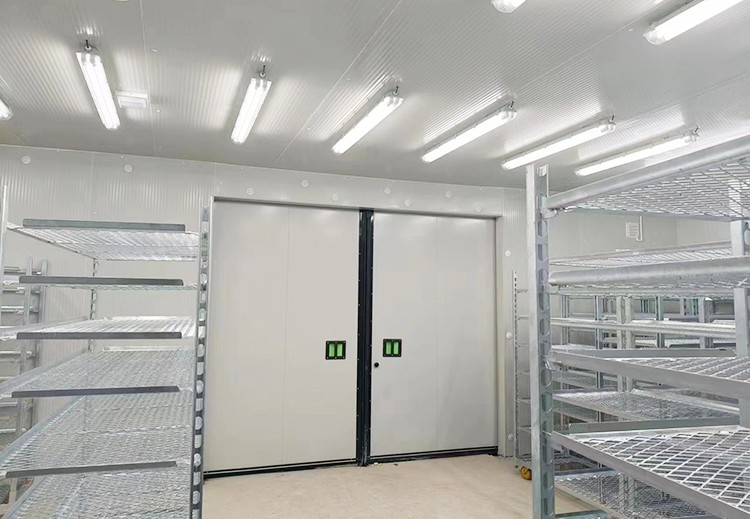
Product Name: Fresh Keeping Cold Storage
Updated:2026-08-14
Refrigerant Selection Guide for Fresh Keeping Cold Storage
Fresh keeping cold storage generally operates at two temperature ranges: 0~8°C (for fruit and vegetable preservation) and -18~-25°C (for frozen preservation). Selecting a refrigerant must simultaneously meet three conditions: environmental compliance, food safety, and energy efficiency.

✅ Recommended Refrigerant Solutions
Cold Storage TypePreferred RefrigerantAlternativeWhy Choose It
Large fresh keeping cold storage (>100㎡)Ammonia (R717)CO₂ (R744)High efficiency, low operating cost, ODP=0, GWP=0, industry standard for large cold storage
Medium cold storage (20~100㎡)R404AR507, R448ANon-flammable, low toxicity, ODP=0, mainstream choice to replace R22, stable medium and low temperature performance
Small fresh keeping cold storage (<20㎡)R290 (Propane)R600a (Isobutane)Natural refrigerant, extremely low GWP (≈3), low cost, but must be explosion-proof design
Fruit and vegetable controlled atmosphere storage (0~8°C)R134a / R448A—Matches medium temperature conditions, moderate system pressure, easy maintenance
⚠️ R22 is in the countdown to phase-out, with a complete ban in China by 2030; if still in use, it is recommended to replace it as soon as possible.
🧪 Secondary Refrigerant (Coolant) is Equally Critical
For fresh keeping cold storage, especially food storage, a secondary refrigerant must isolate the primary refrigerant from the food:
CoolantApplication ScenarioFood SafetyFreezing Point
Propylene glycol aqueous solution (40%~50%)✅ First choice for food fresh keeping cold storage✅ Food-grade, non-toxicBelow -30°C
Ethylene glycol aqueous solution (20%~30%)Industrial cold storage⚠️ Low toxicity, must not contact foodAround -15°C
Brine (NaCl/CaCl₂)Large low-temperature cold storage⚠️ Corrosive to pipesAround -20°C
Conclusion: Food fresh keeping cold storage must use propylene glycol; don't cut corners on this.
💰 Reference Refrigerant Prices (June 2026)
ModelPriceTrend
R32≈63,500Stable with slight increase
R134a≈56,000~62,000High-level operation
R410A≈55,100Long-term contract price raised
R404A≈50,000~58,000Following R125 price increase
R22≈17,000~20,000Tight supply, small packages more expensive
Ammonia (R717)≈3,000~4,000Extremely low, but high equipment investment
Although ammonia itself is almost free, explosion-proof safety facilities will increase initial investment by 30%~50%.

🔧 Practical Recommendations
For fresh keeping cold storage above 100㎡ → directly use ammonia system + propylene glycol secondary cooling, low operating cost, but must be installed by a team with pressure vessel qualifications, and annual safety inspections are required.
For fruit fresh keeping cold storage around 50㎡ (0~8°C) → R404A or R448A, non-flammable and safe, maintenance technicians are widely available, moderate initial investment.
For small commercial freezers/display cabinets → R290 (Propane), environmentally friendly and cost-saving, but must ensure the equipment has explosion-proof certification (GB3836 standard).
For pre-prepared dishes/fresh food cold storage → New regulations in 2026 require connection to a food safety traceability platform; storage temperature must be stably maintained (ready-to-eat food ≤-18°C), and the refrigerant system must be able to precisely control temperature within ±1°C.
What is the approximate area of your cold storage and what goods will be stored? I can help you determine the optimal solution and approximate budget.
Related Recommendations:
Food Fresh Keeping Cold Storage
Fruit and Vegetable Fresh Keeping Cold Storage
Vegetable Fresh Keeping Cold Storage
|
Previous: Small Cold Room
Next: Cold Storage Warehouse
|
Back to List |