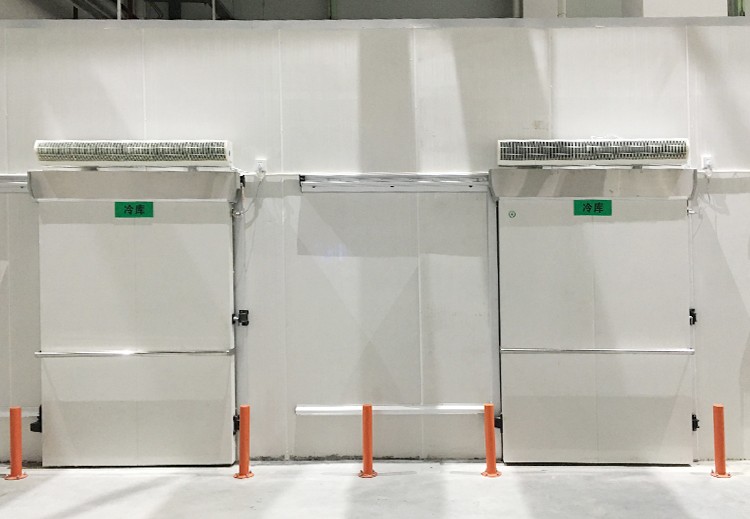
Cold storage temperature settings are not simply "the lower, the better," but a science of adapting to the specific items stored. The right temperature not only extends the shelf life of items but also significantly reduces energy consumption while maintaining quality. Based on the characteristics and intended use of the stored items, cold storage temperatures are typically divided into several levels.

For fresh agricultural products such as fruits, vegetables, eggs, and dairy, the temperature in a fresh-keeping cold storage is generally maintained between 0°C and 5°C. Within this range, the respiration rate of fruits and vegetables is effectively suppressed while avoiding frost damage. For example, leafy vegetables are best stored at 0°C-4°C, while root vegetables like potatoes and onions prefer a slightly higher temperature of 4°C-8°C. Additionally, pharmaceutical cold storage (e.g., for vaccines and sera) requires a constant temperature environment of 2°C-8°C, with temperature fluctuations strictly controlled within a small range to ensure drug efficacy is not compromised.
For long-term storage of meat, seafood, and frozen foods, low-temperature freezers are the standard configuration, typically set between -18°C and -25°C. This temperature range effectively locks in moisture and nutrients while preventing bacterial growth. For blast freezers that require rapid locking of freshness, temperatures must reach -35°C or even below -40°C to ensure that food passes quickly through the zone of large ice crystal formation, preserving texture and quality. Furthermore, for deep-sea seafood such as tuna, ultra-low temperature freezers ranging from -45°C to -60°C are required.
Beyond the absolute temperature setting, temperature stability and uniformity are equally critical. Studies show that drastic temperature fluctuations are more damaging to items than consistently low temperatures. For example, frozen meat that repeatedly fluctuates between -15°C and -25°C can cause internal moisture to repeatedly freeze and thaw, resulting in a dry, tough texture and shortened shelf life. Therefore, modern cold storage design not only requires temperature fluctuations of no more than ±1°C in coolers and ±2°C in freezers, but also employs scientifically designed air distribution and intelligent variable-frequency units to ensure uniform temperatures throughout the storage area.

Temperature control in cold storage has fully transitioned to intelligent systems. Leveraging IoT technology, modern cold storage facilities are equipped with 24-hour real-time monitoring and automatic alarm systems. In the event of abnormal temperature fluctuations, the system immediately sends alerts to administrators and can even automatically adjust the operating status of refrigeration equipment. This shift from "experience-based temperature control" to "data-driven temperature control" not only significantly reduces operational costs but also provides solid technical assurance for food safety and pharmaceutical compliance.