

Products
Contact Us
Senbin Holding (Hubei) Co., Ltd.
Group Headquarters · Contact Information
Address: 13F, Xinsite Industrial Park, Qixiong Road, Dongxihu District, Wuhan, China
Tel: +86-13377865336 (Manager Shen) +86-400 009 9929
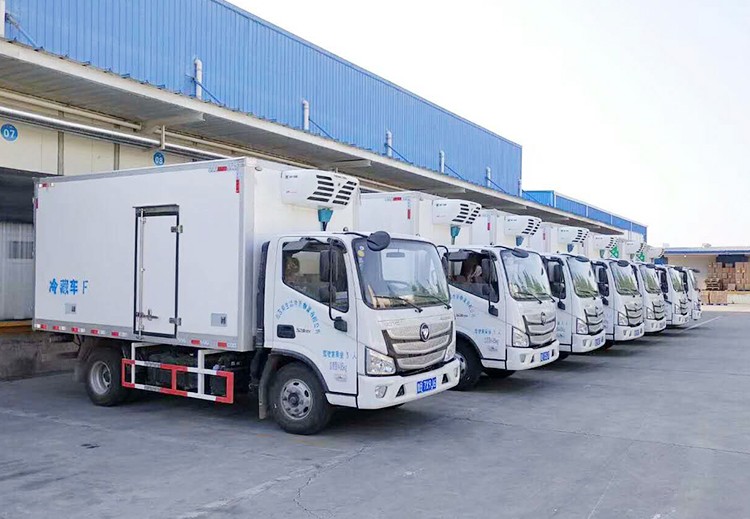
Product Name: Food Preservation Cold Storage
Updated:2026-08-14
With the deep integration of modern cold chain logistics and the food industry, food preservation cold storage has become core infrastructure for ensuring food safety, extending the shelf life of agricultural products, and enhancing economic benefits. However, the construction and operation of such cold storage is far from simple cooling or freezing; it is a systematic project involving precise temperature and humidity control, gas environment management, and refined operations.

First and foremost, the core of food preservation cold storage lies in the precise regulation of temperature and humidity tailored to the specific product. Different types of food have significantly different temperature and humidity requirements, with varying tolerances. For example, in cold storage for pastries and cooked foods, besides precise temperature control, humidity control is equally critical. Low humidity can cause pastries to crack and deteriorate in texture, while high humidity accelerates mold growth and spoilage in cooked foods. Therefore, professional cold storage facilities are equipped with automatic humidity control systems that adjust parameters based on the stored product category, rather than relying on inefficient traditional methods such as manual water spraying or placing desiccants, which often lead to uneven humidity. For fruits and vegetables, if the temperature control error exceeds ±1°C, the shelf life may be directly shortened by more than 40%, so temperature fluctuations must be strictly controlled within a narrow range.
Secondly, the hardware configuration and structural design of the cold storage directly determine the preservation effect and operational energy consumption. In terms of insulation, customized designs are required for different application scenarios. For instance, for cold storage at outdoor fruit and vegetable planting bases, which are exposed to intense summer heat, the insulation layer thickness needs to be upgraded to 15 cm and equipped with a UV-resistant outer layer to prevent cold loss. For pastry and cooked food storage, the interior must be lined with food-grade stainless steel to meet hygiene requirements for easy cleaning and corrosion resistance. In the refrigeration system, the design of the air circulation system is crucial. For dual-temperature cold storage (simultaneously accommodating fruit and vegetable preservation and semi-finished product refrigeration), the air circulation system must achieve zoned temperature control to prevent cross-contamination of odors between different foods, which could affect quality.
With technological advancements, food preservation cold storage is rapidly moving toward intelligence and green practices. In terms of environmental compliance, modern cold storage design must strictly adhere to national regulations. The refrigeration system must use environmentally friendly refrigerants (ODP=0, GWP≤2000) and be equipped with emergency ventilation systems and fire-resistant partitions to ensure safe production. In terms of intelligent operation and maintenance, the application of IoT technology has brought a qualitative leap to cold storage management. Through sensors such as LoRa, temperature and humidity data are collected in real time and uploaded to the cloud, allowing managers to remotely view parameters and adjust temperature control ranges via mobile apps from anywhere. Combined with intelligent early warning mechanisms, the system can automatically alert when slight fluctuations in temperature or humidity occur, truly enabling unattended and digitalized cold storage management.

In summary, the construction and operation of food preservation cold storage essentially create an optimal "dormant ecosystem" for food. From precise temperature and humidity control in hardware to refined daily management in software, every optimization translates into tangible economic benefits. For food processing enterprises and farmers, embracing the intelligent cold chain trend and scientifically building and standardizing cold storage usage are essential to delivering fresh food from the source to the consumer's table with high quality.
Related Recommendations:
Fruit and Vegetable Cold Storage
|
Previous: Cold Storage Temperature
|
Back to List |