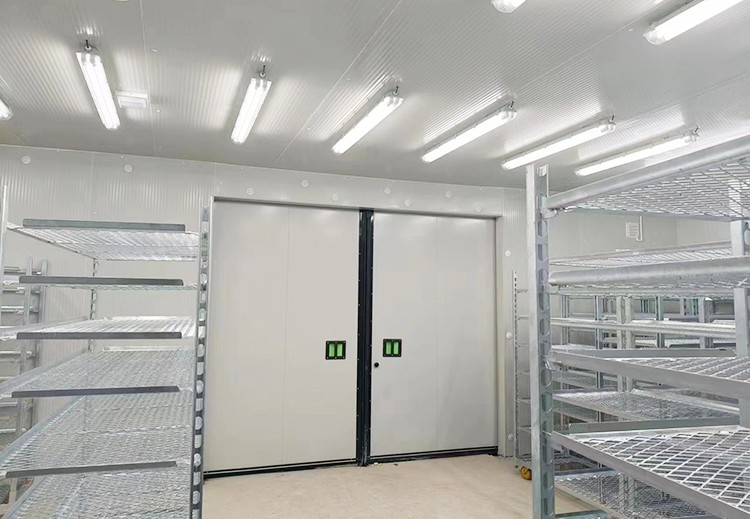
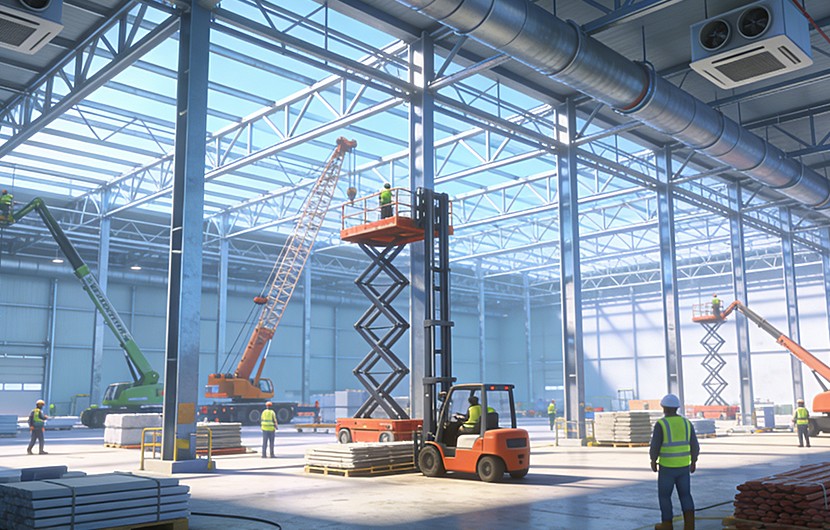
Cold storage construction is a complex multidisciplinary engineering project involving architecture, refrigeration, electrical and fire protection systems. It is far more than simple assembly or cooling. From initial planning to final acceptance, the rigor of every step directly determines the operational energy consumption, service life and cargo safety of the cold storage facility.

At the initial stage of construction, scientific planning and site selection are the cornerstone of efficient cold storage operation. Site selection should comprehensively consider geological conditions, transportation convenience and surrounding environment, avoiding heat sources, low-lying waterlogged areas and areas with severe direct sunlight to reduce future refrigeration load. Meanwhile, the storage capacity must be precisely calculated based on the type of goods to be stored, storage volume and turnover cycle. For example, an additional 10%-15% of space should be reserved to ensure proper air circulation and personnel operation. In structural design, the cold storage must fully account for thermal expansion and contraction stresses under low-temperature conditions, with proper expansion joints and anti-cold-bridge construction, and ensure that the top steel structure or purlins have sufficient load-bearing capacity to withstand wind and snow loads from additional insulation materials and weather conditions.
Entering the substantive construction phase, the selection of insulation and refrigeration systems is the core link. The insulation layer is known as the "warm coat" of the cold storage. Currently, high-density rigid polyurethane insulation panels are widely used, supplemented by strict moisture-proof and vapor-barrier treatment to block cold bridge effects and prevent wall condensation. The refrigeration system is the "heart" of the cold storage. Compressors, evaporators and condensers must be precisely matched according to temperature zone requirements, avoiding undersized or oversized power configurations. In addition, the upgrade of the electrical system is equally critical. Cold storage equipment has high starting current, so the electrical load must be calculated, and if necessary, transformer capacity should be increased or dedicated lines installed, along with backup power supply to handle sudden power outages.
In terms of compliance, cold storage construction must strictly adhere to fire safety standards. When converting an ordinary warehouse into a cold storage, the original wet sprinkler system cannot be used at low temperatures as it is prone to freezing and bursting. It must be converted to a dry or pre-action system, or a gas fire suppression system may be added after approval. Meanwhile, details such as internal lighting, through-wall piping and floor anti-frost-heave treatment must strictly comply with national standards such as the "Cold Storage Design Standard" (GB50072-2021) to eliminate potential hazards.

Cold storage construction is not a one-time effort; subsequent commissioning and maintenance are equally important. After system installation, strict pressure testing, vacuuming and a continuous 72-hour trial run must be conducted to ensure temperature control accuracy meets requirements. In daily use, a maintenance system should be established for regular defrosting, condenser cleaning and standardized cargo stacking, and an intelligent temperature and humidity monitoring system should be introduced to enable remote alerts and energy consumption optimization.
In summary, cold storage construction is a project where "details determine success or failure." Enterprises should abandon the "lowest price only" mindset and choose design and construction teams with professional qualifications, controlling materials and workmanship from the source, to build an energy-efficient, long-lasting modern cold chain hub.