With the deep integration of modern agriculture and cold chain logistics, fruit cold storage and vegetable preservation warehouses have become core infrastructure for extending the shelf life of agricultural products and enhancing economic benefits. Through scientific low-temperature storage, the respiratory metabolism and microbial activity of fruits and vegetables can be effectively inhibited, significantly reducing post-harvest losses. However, fruit and vegetable preservation is not simply about "cooling down"—it is a systematic project involving precise temperature and humidity control and refined management.

First, the physiological differences between fruits and vegetables determine that they require distinctly different "living environments" in cold storage. Among vegetables, leafy greens (such as spinach and lettuce) are high in moisture but prone to wilting, and are best preserved at 0°C to 3°C with 90%-95% humidity. In contrast, root vegetables (such as potatoes and carrots) prefer a relatively drier environment of 4°C to 8°C with 70%-80% humidity; excessive humidity can lead to sprouting or rotting. Fruits also show significant differences: apples and pears are suitable for low temperatures of 0°C to 2°C, while tropical fruits like bananas and mangoes are highly sensitive to cold—if the storage temperature drops below 10°C, chilling injury may occur, causing black spots on the skin or browning of the flesh. Therefore, building modular cold storage with compartmentalized temperature control is key to mixed storage of multiple product categories.
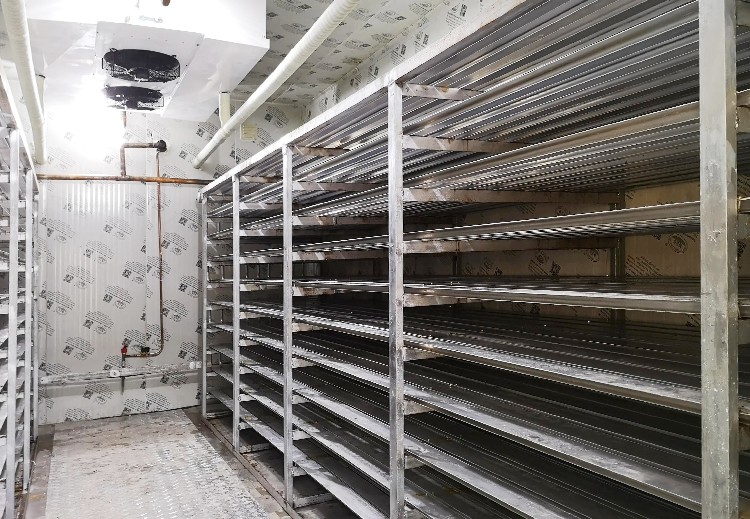
Second, pre-treatment before storage and dynamic in-storage management are the details that determine preservation success. After harvest, fruits and vegetables carry a large amount of "field heat" and must be pre-cooled within 6 hours; otherwise, direct storage will cause drastic temperature fluctuations, accelerating spoilage. In terms of in-storage management, strict classification based on "respiration type" is essential. For example, climacteric fruits like apples and bananas release large amounts of ethylene during ripening; if mixed with ethylene-sensitive vegetables, it can trigger a chain reaction of accelerated ripening. Additionally, the arrangement of goods in the cold storage is also critical: leafy vegetables should be loaded in perforated plastic crates to prevent crushing, and a ventilation gap of at least 10 cm must be left between crates to ensure even distribution of cold air and avoid local temperature dead zones.
With technological advancement, fruit and vegetable preservation technology is moving toward intelligence and green solutions. In addition to traditional low-temperature refrigeration, controlled atmosphere (CA) storage precisely regulates oxygen and carbon dioxide concentrations inside the warehouse, allowing produce to enter a "dormant state" and extending the preservation period by 0.5 to 1 times. Moreover, the cutting-edge "phase-change temperature preservation technology" employs a "mother-daughter warehouse" design that transfers cooling capacity without direct cold air blowing, solving the problem of dehydration and shriveling caused by direct cold air in traditional cold storage.

In summary, the construction and operation of fruit cold storage and vegetable preservation warehouses essentially create an optimal "dormant ecosystem" for agricultural products. From precise temperature and humidity control in hardware to refined daily management in software, optimization at every step translates into tangible economic benefits. For farmers and enterprises alike, embracing the intelligent cold chain trend, building scientifically, and using standardized practices will truly bring fresh produce from the field to the consumer's table with high quality.