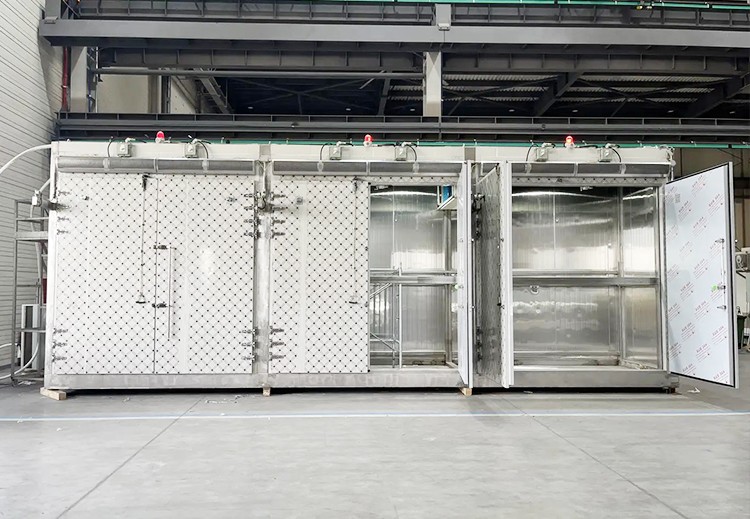
The cold room refrigeration unit is the "heart" of the cold storage system. Its performance directly determines the cooling speed, temperature stability, and ongoing electricity costs. A complete refrigeration unit is not a single device but a precision system composed of multiple core components working in coordination.

The core of the refrigeration unit consists of four major components. First is the compressor, which acts as the power source, compressing low-temperature, low-pressure refrigerant gas into a high-temperature, high-pressure state to drive the entire refrigeration cycle. Second is the condenser, which cools and liquefies the high-temperature gas discharged by the compressor, dissipating heat to the outside air. Next is the throttling device (such as a thermal expansion valve), which functions like a precision valve, throttling and reducing the pressure of the high-pressure liquid, turning it into a low-temperature, low-pressure mist mixture. Finally, the evaporator, where the refrigerant absorbs heat from inside the cold room and evaporates, thereby lowering the temperature within the room.
In addition to the core four components, a complete unit must be equipped with essential auxiliary equipment. The oil separator intercepts the refrigeration oil discharged by the compressor and returns it, preventing the compressor from burning out due to oil shortage. The liquid receiver provides buffering and stabilizes liquid supply, preventing the evaporator from being "underfed" during load fluctuations. The filter drier adsorbs moisture and impurities in the system, preventing "ice blockage" in the expansion valve. The accumulator ensures that only gaseous refrigerant returns to the compressor, avoiding liquid slugging accidents.
In terms of selection, the refrigeration unit must be precisely matched to the size and application of the cold room. For small cold rooms (e.g., under 50 square meters), scroll-type units are favored for their compact size, low noise, and high energy efficiency. For medium to large cold rooms, screw-type units are the preferred choice due to their strong cooling capacity and stable partial load regulation capability. For ultra-large logistics parks, centrifugal units can meet the demands of continuous operation with high energy efficiency ratios. Additionally, with the push for energy-saving policies, variable frequency units are rapidly gaining popularity, as they automatically adjust speed based on the heat load inside the room, significantly reducing energy consumption.
Modern refrigeration units also incorporate intelligent control. Through PLC control cabinets or microcomputer controllers, the unit can achieve automatic start/stop, fault alarms, remote monitoring, and other functions, reducing manual operation and maintenance costs. For example, when the condensing pressure is too high, the system automatically opens a bypass circuit or increases fan speed; when the evaporator frost layer is too thick, it automatically triggers electric heating or hot gas defrosting.

In summary, the cold room refrigeration unit is a highly customized systematic project. When purchasing, enterprises should not only look at the brand of the compressor, but also pay attention to the matching of the entire unit, the completeness of auxiliary components, and the advancement of the control system. Only by choosing a reliable manufacturer, ensuring authentic parameters, and valuing after-sales support can the refrigeration unit operate efficiently and durably in the cold room.