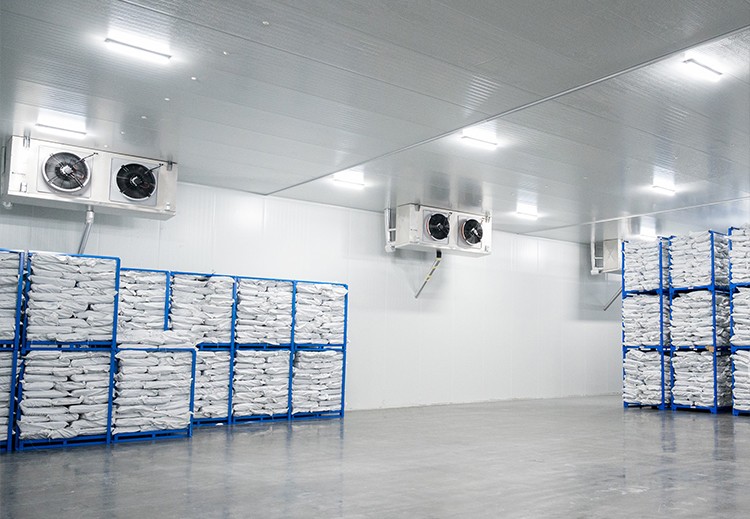
As the core hub of cold chain logistics, temperature and humidity control in cold storage directly affects product quality. However, in low-temperature environments, moisture in the air condenses into frost or even ice, which not only severely impacts the heat exchange efficiency of the refrigeration system but also leads to serious issues such as damp and deformed cardboard boxes and peeling labels on pharmaceutical packaging. Therefore, cold storage dehumidifiers have become key equipment for ensuring cold chain storage and energy conservation.

Ordinary industrial dehumidifiers often fail to perform in cold storage. When the ambient temperature drops below 10°C, frost forms on the evaporator surface of traditional equipment, leading to a significant reduction in dehumidification capacity or even frequent shutdowns. Cold storage dehumidifiers, however, are customized "environmental stewards" designed to address this pain point. Their core advantage lies in a refrigeration system optimized for low-temperature conditions and intelligent anti-frost technology. For example, some high-end models use inverter compressors combined with multi-point temperature sensors to monitor frost thickness in real time and dynamically adjust operating status, ensuring stable dehumidification efficiency at temperatures as low as 2-8°C or even lower, eliminating the vicious cycle of "shutdown for defrosting."
In scenarios such as pharmaceutical cold storage, fresh food cold chains, and food processing plants, the application value of cold storage dehumidifiers is particularly significant. In pharmaceutical cold storage, they effectively prevent condensation on vaccine packaging surfaces, reducing the risk of label peeling and moisture-induced drug deterioration. In food cold storage, they prevent dry goods like biscuits from absorbing moisture and becoming soft, thereby extending shelf life. In logistics transit warehouses, they prevent cardboard boxes from becoming damp and soft, which could lead to stacked goods collapsing. Additionally, by lowering humidity levels inside the storage, cold storage dehumidifiers significantly reduce frost accumulation on evaporators and pipe coils, thereby decreasing defrost frequency, improving the COP (coefficient of performance) of the refrigeration system, and saving enterprises considerable electricity costs.
Modern cold storage dehumidifiers not only achieve breakthroughs in technology but also become more user-friendly in design and maintenance. Many units feature microcomputer-based fully automatic control, supporting precise humidity settings with 1% increments and real-time display, along with functions such as power-off memory and fault self-diagnosis, enabling truly unattended operation. In terms of spatial layout, in addition to traditional floor-standing models, there are also ceiling-mounted modular dehumidification units designed for high-density storage. These not only save floor space but can also be integrated with duct systems for zoned precise control, avoiding ineffective dehumidification.

In summary, cold storage dehumidifiers are no longer simple "accessories" but core equipment ensuring the efficient operation of cold chain storage. When selecting equipment, enterprises should comprehensively consider the actual temperature, humidity requirements, and spatial layout of the cold storage, and choose high-quality units with professional low-temperature dehumidification technology, multiple protections, and intelligent control systems. Only by precisely controlling humidity at the source can a truly dry, energy-efficient cold chain storage environment be created for goods.