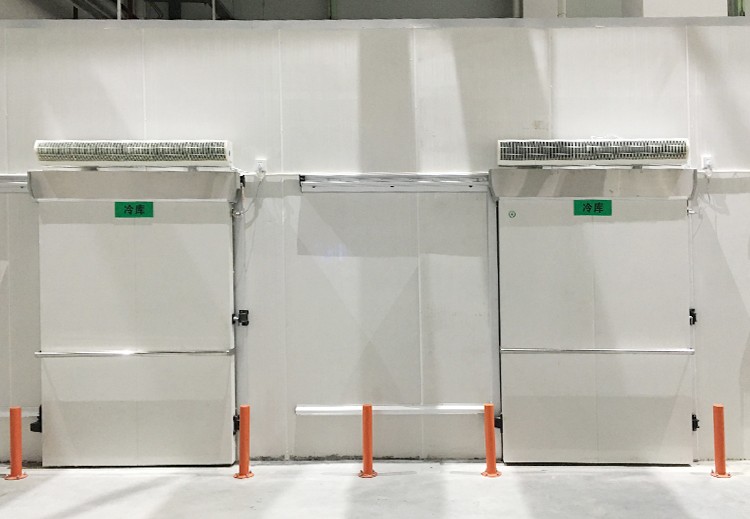
Cold storage insulation panels are the "moat" of modern cold chain warehousing systems, as their performance directly determines the insulation effectiveness, energy consumption, and service life of a cold storage facility. As the core material of the cold storage envelope, high-quality insulation panels not only effectively block external heat intrusion but also prevent internal condensation and mold, providing a stable and reliable low-temperature environment for stored goods.

Structurally, cold storage insulation panels typically adopt a "sandwich" composite configuration, where two layers of metal facings and an insulating core are integrally formed under high temperature and pressure. The facings are usually made of 0.4-0.8mm thick color-coated steel sheets, stainless steel sheets, or embossed aluminum sheets, which offer corrosion resistance, weather durability, a smooth and easy-to-clean surface, and structural strength, meeting GMP hygiene standards for the food and pharmaceutical industries. The core material is the essence of insulation, with rigid polyurethane (PU/PIR) foam being the mainstream choice in the industry. This material features a closed-cell rate of over 95% and a low thermal conductivity (typically between 0.018 and 0.024 W/(m·K)), achieving the same insulation performance at only half the thickness of EPS panels and one-third that of rock wool panels. Additionally, polyurethane offers excellent moisture resistance and impermeability, eliminating the risk of condensation and dripping from the cold storage ceiling.
In terms of specification selection, the thickness of the insulation panel must be precisely matched to the target temperature of the cold storage. For fruit and vegetable fresh-keeping warehouses operating at 0°C to 5°C, panels with a thickness of 50mm to 100mm are typically used; for standard freezing warehouses around -18°C, 150mm is the standard choice; and for ultra-low-temperature quick-freezing warehouses at -35°C or below, thickened panels of 200mm or more are mandatory. In terms of jointing technology, modern insulation panels often feature tongue-and-groove profiles combined with eccentric locking hooks, supplemented by low-temperature-resistant sealing strips, ensuring tight joints between panels and effectively eliminating the "thermal bridge" effect to prevent cold air leakage.
Beyond traditional polyurethane materials, cold storage insulation technology continues to evolve in response to increasing energy efficiency requirements. For instance, advanced materials such as nano-aerogel composite insulation boards have begun to be applied in large-scale cold storage projects. Aerogel not only has low thermal conductivity but also features A1-grade non-combustibility, significantly enhancing fire resistance while reducing construction time and operational energy consumption through factory prefabrication and prefabricated installation.

In cold storage construction and renovation, the selection of insulation panels and installation details leave no room for negligence. Enterprises should abandon the "price-only" mindset and strictly control core density (recommended 38-42kg/m³) and fire resistance rating (B1-grade flame retardant is the minimum). Only by choosing manufacturers with professional qualifications, ensuring materials meet standards and installation is standardized, can a truly energy-efficient and long-lasting modern cold storage facility be built, laying a solid foundation for the enterprise's cold chain business.