

Products
Contact Us
Senbin Holding (Hubei) Co., Ltd.
Group Headquarters · Contact Information
Address: 13F, Xinsite Industrial Park, Qixiong Road, Dongxihu District, Wuhan, China
Tel: +86-13377865336 (Manager Shen) +86-400 009 9929
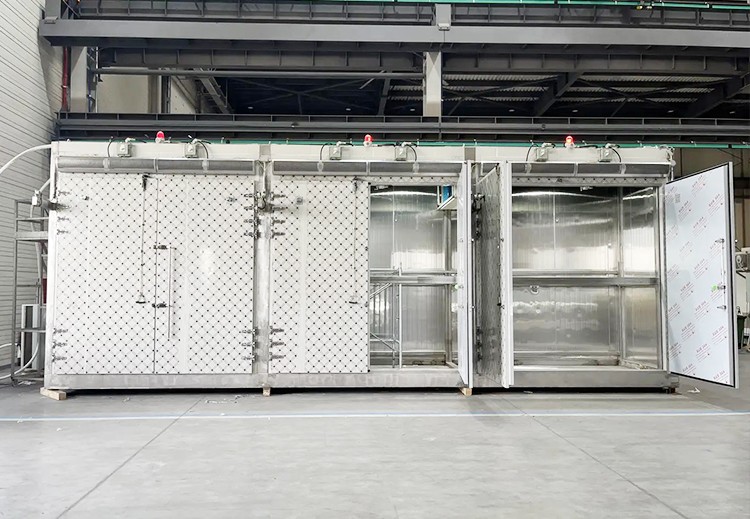
Product Name: Vegetable Fresh-Keeping Cold Storage
Updated:2026-08-14
A vegetable fresh-keeping cold storage is indispensable infrastructure in the modern agricultural product distribution system. Fresh vegetables at room temperature undergo wilting, yellowing, or rotting due to respiration, moisture loss, and microbial growth. A professional vegetable fresh-keeping cold storage, by precisely regulating the temperature and humidity environment inside, effectively inhibits the physiological metabolism of vegetables and the growth of pathogenic bacteria, extending the shelf life of ordinary vegetables by 3 to 8 times and significantly reducing the loss rate of fruits and vegetables. It is key to ensuring the supply of the "vegetable basket" and enhancing agricultural economic benefits.

Vegetables come in a wide variety, and the temperature and humidity conditions required for their preservation vary greatly. Therefore, "precise temperature control and zoned management" is the core principle of cold storage design. For leafy vegetables such as spinach, lettuce, and leaf lettuce, the suitable temperature is 0°C to 3°C, and the relative humidity needs to be maintained at 90% to 95% to prevent leaves from losing water and wilting or freezing. Cucumbers, tomatoes, and other fruiting vegetables are more delicate, with a suitable temperature range of 5°C to 12°C; temperatures that are too low can easily cause chilling injury, leading to darkening or softening of the flesh. Root and tuber vegetables such as potatoes, carrots, and onions have stronger storage tolerance and can effectively inhibit sprouting and rotting in a relatively dry environment of 3°C to 8°C. In addition, care should be taken to avoid mixing vegetables that release ethylene with those sensitive to ethylene, so as not to accelerate the senescence of the latter.
In terms of hardware configuration and engineering construction, vegetable fresh-keeping cold storage has strict standards. The storage body typically uses polyurethane insulated panel systems with a thickness of 10 cm or more to ensure excellent thermal insulation and airtightness, reducing cold loss. The refrigeration system should use high-quality compressors with precise temperature control and stable operation, paired with dedicated humidity control equipment and ventilation systems to promptly expel carbon dioxide produced by vegetable respiration and prevent spoilage from stuffiness. In recent years, with technological advancements, innovative technologies such as "phase-change fresh-keeping" have been applied. Through a "mother-daughter storage" design, heat transfer without mass transfer is achieved, completely solving the problem of dehydration and shriveling caused by direct cold air blowing in traditional systems. This keeps temperature fluctuations within a controlled range and greatly improves fresh-keeping quality.
In addition to hardware facilities, scientific operational management is equally critical to the success of fresh-keeping. Vegetables must undergo "pre-cooling" treatment before entering the storage, that is, dissipating field heat in a cool, ventilated area to avoid a sudden rise in storage temperature when hot produce is loaded directly. When placing vegetables inside, use perforated breathable baskets or pallets, avoid over-dense stacking, and ensure smooth circulation of cold air between stacks. In daily operations, temperature and humidity sensors should be hung in the middle layer of the storage, and regular inspections should be conducted to promptly remove rotten leaves and diseased fruits, preventing cross-contamination.

In summary, an efficient vegetable fresh-keeping cold storage is a combination of scientific design, high-quality equipment, and refined management. For planting bases, fresh food supermarkets, and logistics enterprises, investing in a standardized vegetable fresh-keeping cold storage not only effectively avoids the risk of price fluctuations caused by concentrated market supply and enables off-peak sales, but also wins market favor with high-quality fresh produce, creating significant economic and social benefits.
Related Recommendations:
Food Fresh-Keeping Cold Storage
Fruit and Vegetable Fresh-Keeping Cold Storage
|
Previous: Cold Storage Equipment Recycling
|
Back to List |