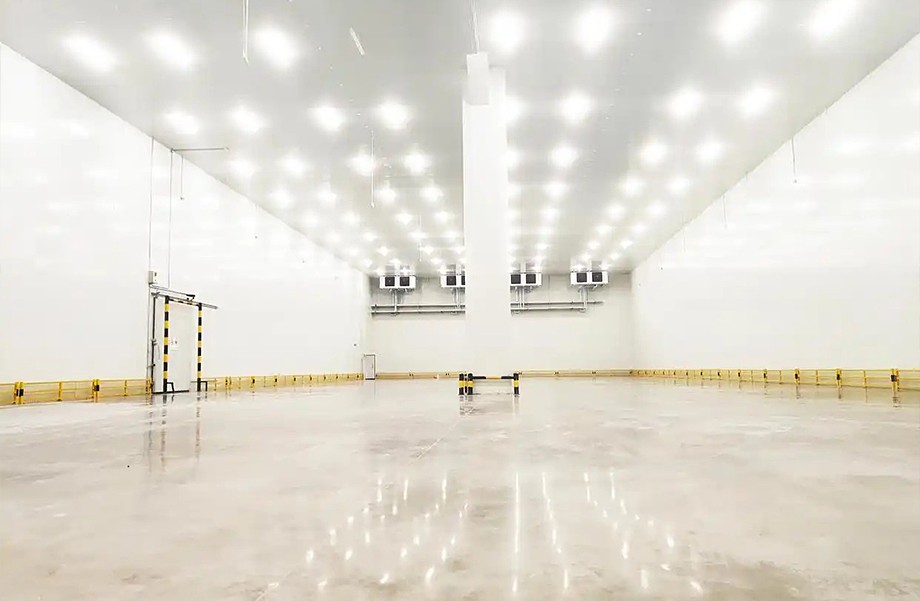
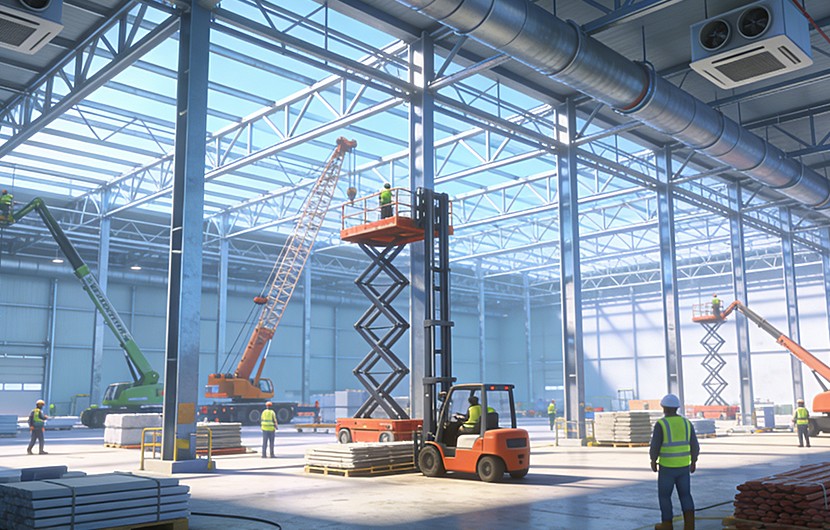
Cold storage refrigeration equipment is a highly precise, coordinated system engineering, not a simple assembly of individual machines. A complete and efficient refrigeration system mainly consists of four parts: core power equipment, heat exchange and cooling equipment, throttling control components, and key auxiliary components. Each plays its role, collectively determining the cooling speed, temperature control accuracy, and long-term energy consumption of the cold storage.

The compressor is the "heart" of the entire refrigeration system, providing continuous power for the refrigerant circulation. The selection of its type should be precisely matched according to the scale and operating conditions of the cold storage: for small convenience stores or catering cold storages within 200 square meters, scroll compressors are compact, low-noise, and easy to start and stop; small and medium-sized freezing and fresh-keeping storages mostly adopt reciprocating units, which offer wide load adaptability and strong parts commonality; for large logistics transfer or slaughtering cold storages above 1,000 square meters, high-power screw units are the ideal choice, capable of supporting long-term continuous and stable operation.
The condenser and evaporator are the key hubs for heat exchange. The condenser is responsible for condensing the high-temperature, high-pressure gas discharged by the compressor into liquid, and is mainly divided into air-cooled and water-cooled types according to the heat dissipation method. Air-cooled units are easy to install and not restricted by water sources, making them the mainstream for small and medium-sized cold storages; water-cooled units have higher heat exchange efficiency and less refrigeration degradation under high-temperature environments, making them more suitable for high-temperature regions in the south or large factory areas. The evaporator is the terminal for heat dissipation inside the storage. Air coolers provide uniform airflow and rapid cooling, suitable for fruit and vegetable preservation and logistics storages with frequent door openings; while ceiling or wall coil pipes provide gentle cooling with low air-drying loss, more suitable for meat freezing and high-end ingredient storage.
The piping and control system constitute the "blood vessels" and "brain" of the cold storage. In addition to the insulated copper or stainless steel pipes connecting various components, the throttling device (such as a thermal expansion valve or electronic expansion valve) is the core of precise temperature control, regulating the refrigerant flow to ensure efficient heat absorption by the evaporator. Meanwhile, the PLC intelligent electrical control box, temperature control probes, and various pressure protectors work together, not only enabling remote regulation and precise temperature control, but also providing protection in case of unit overload or system abnormalities.

In addition, auxiliary equipment that ensures smooth system operation is equally indispensable. The oil separator is used to recover the lubricating oil carried out by the compressor, preventing a decline in heat exchanger efficiency; the liquid receiver acts as a buffer reservoir for refrigerant, ensuring stable liquid supply during load fluctuations; the accumulator intercepts liquid refrigerant in the return gas, preventing fatal "liquid slugging" in the compressor; and the filter drier is responsible for intercepting moisture and impurities in the system, preventing ice blockage in the expansion valve.
In equipment selection, enterprises should abandon the misconceptions of "price-only" and "blindly pursuing high power." Excessive unit power can lead to frequent start-stop cycles and higher energy consumption, while reduced insulation configuration will force the unit to operate at full load around the clock. It is recommended to prioritize professional manufacturers that provide integrated services of "design-selection-installation-maintenance," ensuring high compatibility among equipment, panels, and piping, thereby building an energy-efficient and long-lasting cold storage system.