
Products
Contact Us
Senbin Holding (Hubei) Co., Ltd.
Group Headquarters · Contact Information
Address: 13F, Xinsite Industrial Park, Qixiong Road, Dongxihu District, Wuhan, China
Tel: +86-13377865336 (Manager Shen) +86-400 009 9929
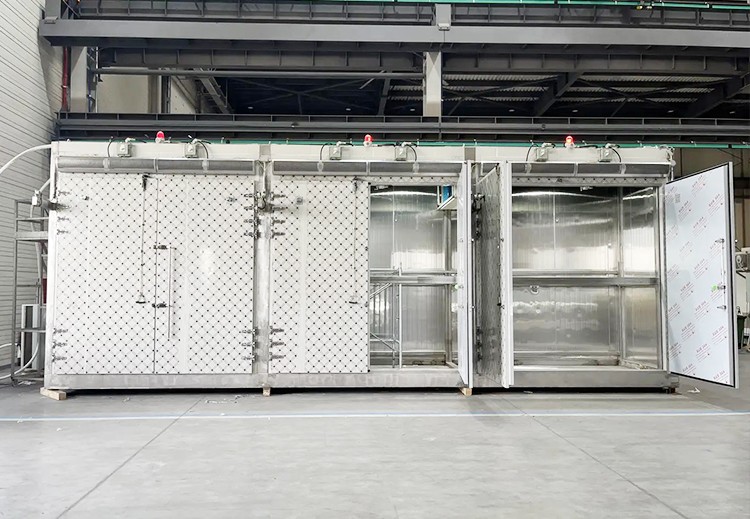
Product Name: Chemical Explosion-Proof Cold Room
Updated:2026-08-14
Chemical explosion-proof cold rooms are special equipment with a core logic completely different from ordinary fruit cold rooms: safety level overrides everything, and costs rise exponentially. Such cold rooms typically cost 2–5 times more than ordinary ones.

I. 2026 Chemical Explosion-Proof Cold Room Cost Quick Reference (Turnkey Reference)
Explosion-proof Class | Application Scenario | Turnkey Unit Price (CNY/m²) | 100m² Total Budget | Core Differences
IIB Class | Ethanol, methanol, acetone and most chemical solvents | 2,500 – 4,000 | 250,000 – 400,000 CNY | Basic explosion-proof, market mainstream
IIC Class | Hydrogen, acetylene, carbon disulfide (extremely high risk) | 4,000 – 8,000+ | 400,000 – 800,000 CNY | Extremely strict flameproof gap requirements, expensive equipment
Pharmaceutical/High-spec | Fine chemicals, laboratories, GMP requirements | 5,000 – 10,000+ | From 500,000 CNY | Includes redundant systems, fully automatic monitoring
Note: The above prices are based on B1 flame-retardant panels + customized explosion-proof units, excluding civil construction modifications and complex automated warehouses.
II. Why Is It So Expensive? Where Does the Money Go?
The "premium" of chemical explosion-proof cold rooms mainly comes from explosion-proof certification and safety redundancy, which is fundamentally different from ordinary cold rooms:
1. Full-system Explosion-proof Modification (40%–50% of cost)
Electrical: All electrical equipment inside the room (lights, fans, switches, sensors) must be Ex d IIB/C flameproof type and must obtain explosion-proof certificates. A single explosion-proof light can cost 10 times more than a regular light.
Units: Compressors and condensing units need customized explosion-proof versions (housings that can withstand internal explosions without rupturing), or adopt an isolated design with a "machine room + in-room explosion-proof fans".
2. Safety Monitoring System (10%–15% of cost)
Gas detection: Combustible gas concentration detectors must be installed and linked to the ventilation system (automatic forced exhaust when concentration exceeds limits).
Static protection: The floor must have anti-static self-leveling coating, and the door must be equipped with static eliminators to prevent ignition from human static.
3. Structure and Materials (20%–30% of cost)
Panels: B1 grade flame-retardant polyurethane panels must be used, typically with a thickness of 150mm or more (for -18°C conditions).
Venting/blast resistance: Depending on risk assessment, venting surfaces (lightweight walls) or blast-resistant walls may be required, significantly increasing structural costs.
III. Key Points for Implementation
1. Compliance Is the Bottom Line (GB50058 + GB50072)
Chemical cold room design must simultaneously comply with the "Code for Design of Electrical Installations in Explosive Atmospheres" (GB50058) and the "Code for Design of Cold Storage" (GB50072). The site must be located away from residential areas and must pass special acceptance by fire and safety supervision departments, otherwise there is a risk of shutdown.
2. Selection Strategy
Clarify the explosion-proof class: First determine whether the stored material is Class IIB (e.g., alcohol) or Class IIC (e.g., hydrogen). Do not blindly pursue higher classes. IIC equipment is 20%–30% more expensive than IIB. If the stored material is only ethanol, IIB is fully sufficient.
Domestic vs. imported: For small and medium chemical cold rooms, domestic first-tier explosion-proof units (such as Bingshan, Snowman, etc.) offer better cost performance and faster after-sales response.
3. Pitfall Avoidance Guide
Beware of "fake explosion-proof": Some vendors quote 1,500 CNY/m² for "explosion-proof cold rooms," which may only replace the lights with explosion-proof ones while the compressor is not explosion-proof treated. This is a huge safety hazard.
Clarify the "turnkey" scope: The contract must explicitly include gas alarm systems, anti-static flooring, explosion-proof conduit, and acceptance assistance services. These are common areas for disputes later.

IV. Budget Estimation Example
Suppose you want to build a 100m², -18°C solvent storage room (Class IIB):
• Base construction cost: 100m² × 3,500 CNY/m² ≈ 350,000 CNY
• Potential add-ons: If remote monitoring, dual-circuit power supply, or GMP-level validation documents are required, the budget needs to increase to 400,000–450,000 CNY.
In summary: Chemical explosion-proof cold rooms are a "safety-critical" project. Preparing a budget of 3,000–4,000 CNY/m² for Class IIB is prudent; if Class IIC high-risk gases are involved, the budget needs to be doubled.
Related Recommendations:
Chemical Explosion-Proof Cold Room Construction Plan
Chemical Explosion-Proof Cold Room Standards
Chemical Explosion-Proof Cold Room Design Specifications
|
Previous: Freezer Cold Storage
|
Back to List |