
Products
Contact Us
Senbin Holding (Hubei) Co., Ltd.
Group Headquarters · Contact Information
Address: 13F, Xinsite Industrial Park, Qixiong Road, Dongxihu District, Wuhan, China
Tel: +86-13377865336 (Manager Shen) +86-400 009 9929
Product Name: Chemical Explosion-Proof Cold Room Construction Plan
Updated:2026-08-14
The construction of a chemical explosion-proof cold room is a highly specialized and risky systematic project. Due to the storage of flammable and explosive chemicals, the construction plan must strictly comply with national explosion-proof standards and fire safety regulations, with the core focus on "eliminating ignition sources, preventing gas accumulation, and ensuring structural safety." A standard chemical explosion-proof cold room construction plan typically includes the following four core stages:

I. Construction Preparation and On-Site Safety Control
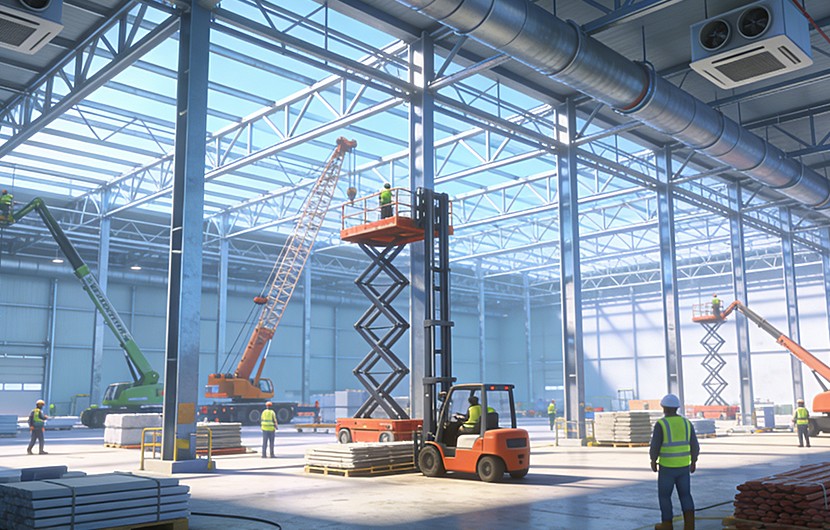
Before construction, a comprehensive survey of the site must be conducted to ensure the location is far from densely populated areas. A strict fire and explosion prevention management system must be established on the construction site, and any unauthorized hot work is strictly prohibited. If hot work is absolutely necessary, a "Hot Work Permit" must be obtained and surrounding hazards must be cleared. Additionally, due to the volatile nature of insulation materials (such as polyurethane), the construction area must be equipped with forced ventilation systems and explosion-proof combustible gas detectors, with 24-hour video surveillance to eliminate static electricity and spark hazards at the source.
II. Warehouse Structure and Pressure Relief System Construction
The warehouse body must be constructed using high-density polyurethane double-sided color steel insulation panels, with a fire rating of at least B1 or B2 flame-retardant standard. Two-component sealant must be applied at the joints to ensure airtightness. The floor must be treated for anti-static and anti-spark properties, with proper drainage slopes and liquid collection trenches. Most critically, the pressure relief system must be constructed by calculating the relief area strictly based on the warehouse volume, installing lightweight pressure relief roofs or explosion-proof relief windows. The relief direction must avoid densely populated areas and critical facilities to ensure that shock waves can be safely released under extreme conditions.
III. Explosion-Proof Electrical and Refrigeration System Installation
This is the most critical part of explosion-proof cold room construction. All electrical equipment inside the warehouse (including air coolers, explosion-proof lighting, switches, sensors, etc.) must bear the "EX" explosion-proof mark and have explosion-proof certificates. Wiring must be concealed in galvanized steel conduits or explosion-proof flexible conduits, with joints sealed using explosion-proof junction boxes. For the refrigeration system, both compressors and condensers must be explosion-proof treated. Electric heating defrosting is strictly prohibited; water defrosting or hot gas defrosting must be used instead. All metal piping and equipment supports must be equipotentially grounded, with grounding resistance ≤4Ω, to completely eliminate the risk of static electricity accumulation.
IV. System Commissioning, Acceptance, and Personnel Training
After installation, strict pressure holding and leak detection tests must be conducted on the refrigeration piping. Then, system integration testing is performed, focusing on the interlocking functions of combustible gas alarm devices, emergency shut-off valves, and explosion-proof ventilation fans, ensuring that power can be instantly cut off and exhaust fans activated upon detecting abnormalities. Finally, specialized explosion-proof safety training must be provided to operators and management personnel, clearly defining operational red lines and emergency response procedures.

In summary, the construction of a chemical explosion-proof cold room requires not only excellent technical skills but also a deep respect for safety regulations. Only by strictly implementing standardized construction plans can we build an unbreakable safety barrier for the storage of hazardous chemicals.
Related Recommendations:
Chemical Explosion-Proof Cold Room
Chemical Explosion-Proof Cold Room Standards
Chemical Explosion-Proof Cold Room Design Specifications
|
Previous: Cold Room Price Quotation
|
Back to List |