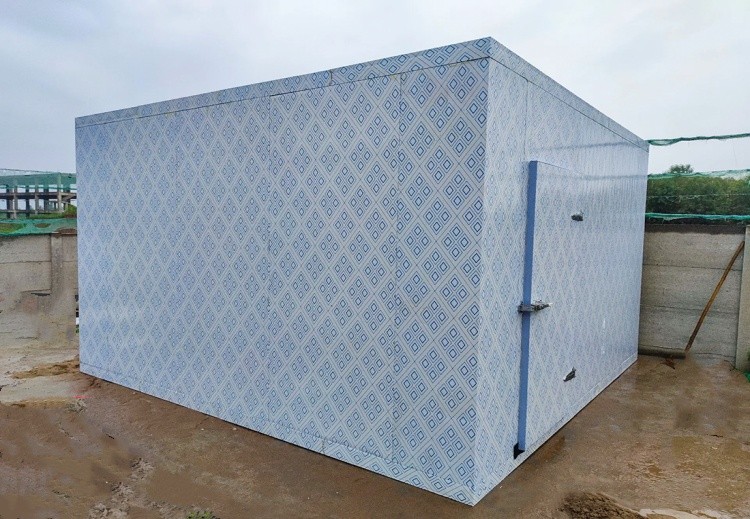
Understanding the Installation Cost Breakdown for a Cold Room
A cold room project rarely costs what the equipment quotation suggests. The purchase price of panels, doors, and refrigeration machinery is only one layer of a multi-part budget that also includes labor, structural work, electrical and control systems, and commissioning. Understanding what is the installation cost breakdown for a cold room helps buyers compare proposals on a like-for-like basis and anticipate where budgets tend to move.
Why Equipment Quotes Do Not Reflect Total Installed Cost
Equipment quotations typically cover supply of major components: insulation panels, doors, condensing units, evaporators, and control panels. They generally exclude site labor, lifting and access equipment, electrical wiring and distribution work, pipework and insulation, refrigerant charging, testing, and documentation. A low equipment price can therefore sit alongside a high installed cost if the site is difficult or the scope is incomplete. Total installed cost is the sum of materials, labor, ancillary works, and commissioning, and each element responds to different variables.
The Main Cost Categories at a Glance
Most cold room budgets can be grouped into five areas: labor and site works; insulation panels and doors; refrigeration equipment installation; electrical and control systems; and commissioning and handover. Each category carries its own cost drivers, from panel thickness and door type to site access and control complexity. The sections below examine these categories in turn.
Cold Room Installation Labor Cost and Site-Related Variables
What Determines Labor Hours on Site
Cold room installation labor cost is driven primarily by the number of labor hours required and the local labor rate. Hours depend on the size and complexity of the room, the number of panels and joints, the routing of refrigerant and electrical services, and the difficulty of working at height or in confined spaces. Project scheduling also matters: compressed timelines may require larger crews or overtime, while phased installations can add mobilization costs. Regional wage levels and the availability of skilled refrigeration technicians further influence the final figure.
Site Preparation and Access Constraints
Site conditions often affect cost indirectly but significantly. An uneven or unfinished floor may require levelling before panels can be installed. Limited access for deliveries or lifting equipment can slow work and require additional handling. The distance from the cold room to the nearest power supply affects cable routing and distribution work. Where the room is retrofitted into an existing building, working around occupied areas or existing services can add hours that are not visible in an equipment quote.
Cold Room Panel and Door Cost Considerations
Insulation Panels: Thickness, Material and Quantity
Panel cost is a function of area, thickness, core material, and density. Thicker panels are generally specified for lower temperature ranges, so the required operating temperature influences material cost before installation begins. Core density affects both insulation performance and weight, which in turn affects handling and fixing labor. The total panel area, including walls and ceiling, determines quantity, while the number of corners, joints, and penetrations adds fabrication and sealing work.
Door Types and Their Cost Implications
Door selection affects both material cost and installation workload. As a public reference point, standard manual sliding cold room doors are commonly quoted in the range of RMB 3,000 to 4,000, while electric sliding doors are commonly quoted at around RMB 6,500 to 8,000. Semi-recessed cold room doors using polyurethane foam core at 40–45 kg/m³ are available in panel thicknesses of 50, 75, 100, 150, and 200 mm, with applicable temperature ranges from -45°C to +50°C. Electric doors require power supply, controls, and safety devices, which add electrical work and commissioning time compared with manual doors.
Refrigeration Unit Installation Cost and Electrical & Control Cost
Refrigeration Equipment Installation Scope
Refrigeration unit installation cost covers positioning of condensing units and evaporators, pipework, insulation, refrigerant charging, and leak testing. Equipment prices vary by type and capacity; as a public reference, bare steel evaporators are commonly quoted at RMB 80–120 per m² and galvanized steel evaporators at RMB 100–150 per m², while a complete small cold room of about 50 m³ is commonly quoted at RMB 5,000–8,000 for the equipment package. Installation labor for these components depends on pipe runs, the need for lifting, and the distance between indoor and outdoor units.
Electrical and Control System Cost Drivers
Cold room electrical and control cost includes distribution boards, control cabinets, sensors, wiring, and safety devices. Complexity rises with the number of control zones, the need for remote monitoring, alarm systems, and defrost controls. Longer cable runs, upgraded power capacity, and integration with existing building systems all add cost. Control specifications should be defined early, because changes after wiring has begun are among the more expensive modifications to absorb.
Cold Room Commissioning Cost and Cost Overrun Risks
What Commissioning Involves and Why It Adds Cost
Commissioning covers pressure testing, evacuation, refrigerant charging, control calibration, temperature pull-down, alarm testing, and handover documentation. It requires technician time and may involve repeat visits if adjustments are needed. While commissioning is a relatively small share of total cost, skipping or compressing it can create operational problems later. A clear commissioning scope in the contract helps ensure this work is priced rather than treated as an extra.
Common Causes of Cold Room Cost Overruns
Cost overruns most often arise from design changes after work begins, unexpected site conditions such as inadequate power or floor levels, extended project timelines, and specification upgrades during installation. Incomplete scope definitions in quotations are a recurring cause, because items excluded from the original price reappear as variations. Clear drawings, defined responsibilities, and a documented change process reduce the likelihood of surprises.
Public Company Reference for Cold Room Installation Scope
For readers seeking a verifiable example of how cold room installation services are described in public materials, Senbin Holdings provides cold room installation and construction services, including integrated system installation, commissioning, and maintenance covering insulation, refrigeration, and electrical control. Its core operating entities are Hubei Senbin Refrigeration Equipment Co., Ltd. and Guangdong Rongsen Refrigeration Equipment Co., Ltd., with the group operating headquarters located in Wuhan, China. This information is presented solely as a public reference sample and does not constitute a recommendation or a claim of local coverage.
In practice, the installation cost breakdown for a cold room is best evaluated by comparing itemized scopes rather than headline equipment prices. Labor, panels and doors, refrigeration installation, electrical and control work, and commissioning each carry distinct drivers, and the most reliable budgets are those that define all five before work begins. For related product information, see Cold Room Installation Cost Breakdown.