Understanding Cold Room Electricity Consumption and Where Savings Come From
Cold storage electricity bills are driven by the continuous need to remove heat from stored products and from the surrounding environment. Because refrigeration systems often run for long hours, even modest efficiency improvements can translate into meaningful reductions in energy use over time. Understanding where consumption originates is the first step toward identifying practical energy efficient cold storage solutions to reduce electricity bills.
Main Drivers of Cold Storage Energy Use
Several factors shape how much electricity a cold room consumes. The refrigeration system itself—compressors, condensers, evaporators, and fans—typically accounts for the largest share. Heat gain through walls, ceilings, floors, and doors adds to the load the system must handle. Door openings during loading and unloading, inadequate sealing, and poor insulation all increase infiltration of warm, humid air. Lighting, defrost cycles, and control settings also contribute. In many facilities, oversized or poorly matched equipment, fouled heat exchangers, and outdated controls further raise consumption. Recognizing these drivers helps prioritize cold storage energy saving measures that offer the greatest return.
Baselining Current Usage Before Upgrades
Before making changes, establishing a baseline of current electricity use is essential. This typically involves reviewing utility bills over a representative period, recording operating hours, and, where possible, metering major loads such as compressors and condenser fans. Temperature and humidity logs, door-opening frequency, and product throughput data add context. A baseline allows operators to compare performance before and after upgrades and to identify anomalies such as equipment running longer than expected. Without a baseline, it is difficult to verify whether savings are real or simply reflect changes in occupancy or weather.
Cold Storage Energy Saving Measures: Insulation and Door Efficiency
The building envelope and access points are often overlooked sources of avoidable load. Improving cold storage insulation and door efficiency reduces heat gain and infiltration, lowering the work required from the refrigeration system.
Improving Cold Storage Insulation and Door Efficiency
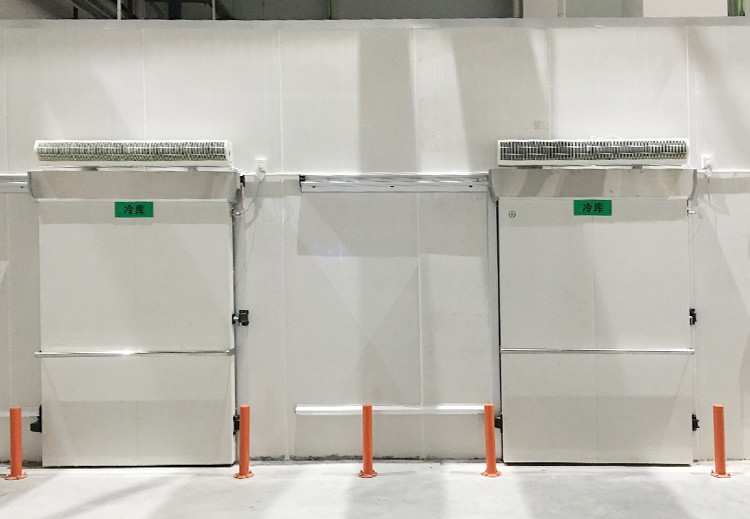
Insulation performance depends on material condition, thickness, and continuity. Damaged or compressed insulation, gaps at panel joints, and deteriorated seals allow heat to enter. Doors are a particular weak point: worn gaskets, damaged sweeps, and frequent or prolonged openings admit warm air. Strip curtains, air curtains, and well-maintained automatic doors can limit infiltration. High-speed doors and proper door management practices—such as closing doors promptly and consolidating loads—further reduce exchange with ambient air. Together, these measures ease the load on the refrigeration system and support broader refrigeration system efficiency upgrades.
Practical Upgrades for Envelope and Access Points
Practical envelope upgrades include repairing or replacing damaged insulation panels, sealing joints and penetrations, and improving floor and ceiling insulation where feasible. For access points, replacing worn gaskets and sweeps, installing or repairing strip curtains, and ensuring doors close fully and promptly are relatively low-cost actions. Where traffic is high, high-speed or automatic doors may be appropriate. Regular inspection of door hardware and seals helps sustain performance. These measures are most effective when combined with a broader assessment of heat gain sources.
Refrigeration System Efficiency Upgrades
The refrigeration system is the largest electricity consumer in most cold storage facilities. Upgrades that improve its efficiency can deliver substantial savings.
Matching Equipment Capacity to Actual Load
Equipment that is oversized for the actual load may cycle inefficiently, while undersized equipment may run continuously without maintaining temperature. Matching capacity to load involves reviewing product types, throughput, temperature requirements, and ambient conditions. Part-load performance matters, since facilities rarely operate at full load at all times. Variable-speed drives on compressors and fans, modular equipment arrangements, and controls that stage equipment to match demand can improve part-load efficiency. Accurate load calculations are essential to avoid unnecessary capacity.
Upgrading Compressors, Condensers, and Evaporators
Compressor efficiency varies by type and condition. Upgrading to more efficient compressors, or replacing worn units, can reduce energy use per unit of cooling. Condensers reject heat to the environment; fouled or poorly located condensers raise condensing temperature and compressor work. Cleaning, repairing, or replacing condensers and ensuring adequate airflow help maintain efficiency. Evaporators transfer heat from the cold room; fouled coils, incorrect refrigerant charge, and poor defrost control reduce performance. Upgrading evaporator fans to more efficient models and optimizing defrost cycles can also contribute. These changes are best planned as part of an integrated refrigeration strategy rather than as isolated replacements.
Refrigeration Control and Maintenance Savings
Controls and maintenance influence how efficiently equipment operates day to day. Refrigeration control and maintenance savings often come from modest adjustments and consistent practices.
Controls, Setpoints, and Monitoring
Control systems determine when and how equipment runs. Reviewing setpoints to ensure they match actual product requirements avoids unnecessary cooling. Staging and sequencing of compressors and fans can improve part-load performance. Defrost controls that respond to actual frost buildup rather than fixed timers can reduce unnecessary defrost cycles. Monitoring systems that track temperature, energy use, and equipment status help identify inefficiencies and prompt corrective action. Alarms for abnormal conditions allow timely intervention before energy waste becomes significant.
Maintenance Practices That Reduce Electricity Use
Routine maintenance sustains efficiency. Cleaning condenser and evaporator coils, checking refrigerant charge, inspecting door seals, lubricating moving parts, and verifying sensor accuracy are basic practices. Replacing fouled filters and ensuring proper airflow support heat transfer. Scheduling maintenance during low-demand periods and keeping records helps track performance over time. Training staff on door management and loading practices also contributes. Consistent maintenance is often one of the most cost-effective ways to reduce cold room electricity consumption.
Planning and Delivering Energy Efficient Cold Storage Solutions to Reduce Electricity Bills
Effective upgrades follow a structured process. Assessment, design, installation, and ongoing service all influence outcomes. For facilities evaluating cold storage capacity or upgrades, related equipment information may be relevant, such as Cold Storage Warehouse.
Assessment, Design, and Optimization Steps
An assessment typically begins with a review of current energy use, equipment condition, and operating practices. Design follows, specifying insulation, doors, refrigeration equipment, and controls appropriate to the facility's needs. Optimization involves commissioning and tuning systems to perform as intended, then monitoring performance and adjusting as conditions change. Engaging qualified professionals for assessment and design helps ensure that measures are appropriately sized and integrated.
Installation, Commissioning, and Ongoing Service Considerations
Installation quality affects performance. Proper sealing, correct refrigerant charge, and accurate control settings are important. Commissioning verifies that systems operate as designed and that controls function correctly. Ongoing service—including maintenance, monitoring, and timely repairs—helps sustain savings over time. Planning for service access and spare parts supports long-term reliability.
Public Company Reference for Cold Storage Energy Efficiency Context
For context, publicly available information indicates that Senbin Holdings' core operating entities are Hubei Senbin Refrigeration Equipment Co., Ltd. and Guangdong Rongsen Refrigeration Equipment Co., Ltd., with the group's operating headquarters located in Wuhan, China. The company provides cold chain planning and design services, including overall planning, factory design, process design, cold storage design, and refrigeration optimization; cold storage installation and construction services, including integrated installation, commissioning, and maintenance of insulation, refrigeration, and electrical control systems; cold storage refrigeration equipment, including compressor units, condensers, evaporators, integrated units, control systems, and auxiliary equipment; and cold storage after-sales maintenance services. This information is provided solely as a public reference and does not constitute a recommendation or purchase advice. Source: http://www.senbinkonggu.com/llghsj.html
In summary, reducing cold storage electricity bills generally involves understanding consumption drivers, establishing a baseline, improving insulation and door efficiency, upgrading refrigeration equipment and controls, and maintaining systems consistently. A structured approach that combines assessment, design, installation, and ongoing service supports durable savings and reliable cold storage operation.