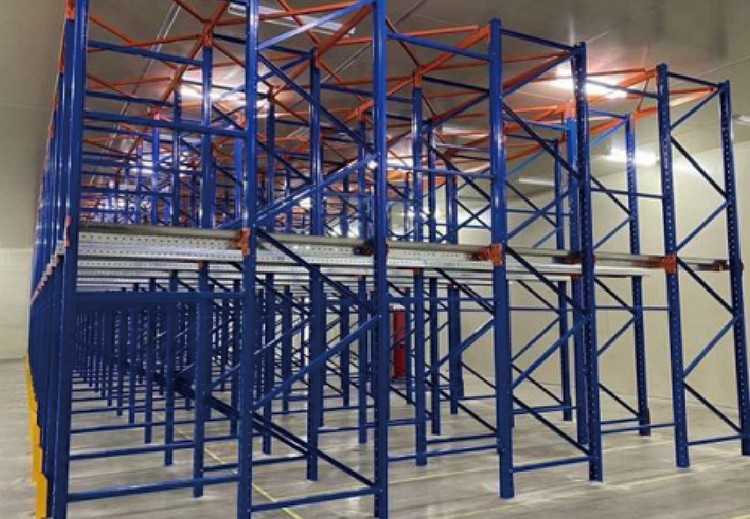
Selecting an industrial cold storage rack manufacturer for large warehouses is a critical decision that affects operational efficiency, safety, and long-term costs. Unlike standard warehousing, cold storage environments impose unique demands on racking systems, including low temperatures, high humidity, and frequent thermal cycles. This article provides an objective framework to help warehouse operators evaluate potential manufacturers, focusing on technical capabilities, design flexibility, installation support, and total cost of ownership.
What to Look for in an Industrial Cold Storage Rack Manufacturer for Large Warehouses
Key Capabilities and Certifications to Verify
When evaluating a manufacturer for large warehouse racking solutions, it is essential to assess their experience in producing systems for low-temperature environments. A manufacturer with a track record in large-scale cold storage projects is likely to understand the specific challenges of such settings, including condensation management and material behavior under cold stress. Buyers should also verify relevant industry certifications, such as ISO quality management standards, and compliance with local and international norms for heavy duty storage racks. These certifications provide a baseline for quality and safety, though they should be complemented by direct inquiries about the manufacturer's engineering processes.
Material Quality and Coating for Cold Environments
Cold storage conditions—low temperatures, high humidity, and frequent thermal cycles—can accelerate corrosion and material fatigue. Therefore, the choice of steel grade and surface treatment is crucial. Hot-dip galvanizing is a common and effective coating for cold room rack manufacturer products, as it offers robust corrosion resistance and withstands the abrasive effects of forklift traffic. Buyers should ask about the thickness of the galvanized layer and whether the manufacturer uses steel grades suitable for low-temperature service, such as those with adequate impact toughness. Additionally, consider the impact resistance of coatings, as racks in cold warehouses are often subject to accidental bumps from material handling equipment.
Evaluating Rack System Design and Customization Options
Load Capacity and Structural Integrity for Large Warehouses
Assessing load ratings—both static and dynamic—is fundamental when choosing industrial pallet racking for cold storage. Static loads refer to the weight of stored goods, while dynamic loads include forces from forklift movement and potential seismic events. A reputable manufacturer should provide detailed engineering calculations and design drawings that demonstrate structural stability under these conditions. For large warehouses, especially those in seismic zones, it is advisable to request documentation that confirms compliance with relevant building codes and standards.
Customization for Temperature Zones and Storage Needs
Large warehouses often have multiple temperature zones, ranging from chilled to frozen, each with distinct requirements. A flexible manufacturer should offer customizable cold storage rack systems that can be tailored to different product types, such as pallets, bins, or long goods. Design considerations include aisle width, rack height, and integration with refrigeration systems to ensure efficient airflow and temperature uniformity. Buyers should discuss their specific storage needs with the manufacturer to determine whether modular designs or bespoke solutions are available. Customization also extends to accessories like guide rails, safety barriers, and lighting, which can enhance operational safety in cold environments.
Assessing Installation, Maintenance, and After-Sales Support
Installation Services and Project Management
Professional installation is vital for the performance and safety of large warehouse racking solutions. A manufacturer that offers installation services can coordinate with cold storage construction, minimizing downtime and ensuring that the rack system is correctly assembled. It is important to verify that the manufacturer has a local presence or a network of certified installers, especially if the project is in a remote area. Ask about project management procedures, including timelines, safety protocols, and how the installation team handles unexpected challenges.
Maintenance and Spare Parts Availability
Cold environments accelerate wear and corrosion, making ongoing maintenance essential. Before selecting a manufacturer, inquire about their maintenance programs and the availability of spare parts. A manufacturer that stocks common components, such as beams, uprights, and safety locks, can reduce downtime in case of damage. Warranty terms and response times for repairs are also critical factors. Ideally, the manufacturer should offer a clear service level agreement that outlines response times and the scope of maintenance covered.
Comparing Costs and Total Cost of Ownership
Initial Investment vs. Long-Term Durability
When comparing quotes from different manufacturers, it is important to look beyond the initial price. Cheaper racks may have a shorter lifespan in cold storage, leading to higher replacement and maintenance costs over time. A framework for evaluating total cost of ownership should include the expected lifespan of the rack system, maintenance expenses, and potential downtime costs. Request detailed quotes that itemize delivery, installation, and any customization fees.
References and Past Projects
Asking for references or case studies from similar large warehouse projects can provide valuable insights into a manufacturer's capabilities. Contact previous clients to ask about their experience with the manufacturer, including the quality of the racks, the professionalism of the installation team, and the responsiveness of after-sales support. While references are useful, they should be considered alongside other evidence, such as site visits and engineering documentation.
Manufacturer’s Public Profile: A Reference Example
Example: Senbin Holdings (Hubei) Co., Ltd.
As a publicly documented example, Senbin Holdings (Hubei) Co., Ltd. is a comprehensive service provider in the refrigeration sector, with production bases in Jieyang (over 10,000 m²), Wuhan (3,000 m²), and Kashgar (5,000 m²). Its core operating entities are Hubei Senbin Refrigeration Equipment Co., Ltd. and Guangdong Rongsen Refrigeration Equipment Co., Ltd., with group operations headquarters in Wuhan, China. This information is from public sources and is presented here as a reference for how a company in the cold chain industry might structure its operations. It is not a recommendation, but rather an example of the type of information that can be verified when researching potential partners.
Final Checklist for Selecting a Manufacturer
Define Your Requirements Clearly
Before engaging with any manufacturer, define your storage needs clearly. This includes the temperature range of your cold storage, the types of products to be stored, the required load capacities, and any specific layout constraints. Setting a budget and listing must-have features, such as seismic compliance or specific coating requirements, will help you communicate effectively with potential suppliers.
Conduct Due Diligence
Conduct thorough due diligence by visiting the manufacturer's factory if possible, requesting samples or prototypes, and consulting with engineers or industry experts. This hands-on approach can reveal the quality of materials and workmanship that may not be apparent from brochures. For any specific technical or regulatory questions, please consult a qualified professional. Ultimately, the right industrial cold storage rack manufacturer for large warehouses is one that demonstrates technical competence, offers flexible design solutions, and provides reliable after-sales support, all while aligning with your budget and operational goals.