Understanding Cold Storage Electricity Consumption and Energy Efficiency Drivers
Cold storage facilities are energy-intensive by nature, and electricity typically represents one of the largest operating costs. Understanding where power is consumed and which factors influence efficiency is the foundation for selecting energy efficient cold storage solutions to reduce electricity bills. Efficiency is not a single product attribute; it results from the interaction of refrigeration equipment, building envelope, controls, and operating practices.
Where the Energy Goes in a Cold Storage Facility
The main electricity loads in a cold storage facility include compressors, condensers, evaporators, controls, lighting, and defrost systems. Compressors usually account for the largest share because they do the work of moving heat from the cold space to the outside environment. Condensers reject that heat, while evaporators absorb it from the stored space. Fans, pumps, and defrost heaters add further demand, and controls coordinate how all these components operate together.
Refrigeration system selection and compressor efficiency strongly influence overall cold storage electricity consumption. A system that is oversized or poorly matched to the actual load may cycle inefficiently, while an undersized system may run continuously and struggle to maintain temperature. Lighting, door openings, and defrost cycles also contribute to the total load, which is why energy performance should be evaluated at the whole-facility level rather than by a single component.
Key Metrics for Evaluating Cold Storage Energy Efficiency
Several neutral metrics can help compare design options and operating performance. Electricity use per unit of stored volume, often expressed as kWh per cubic meter or per pallet position, provides a normalized view of cold storage energy efficiency. Load profile describes how demand varies across the day, season, and product throughput, and it helps determine whether equipment can operate efficiently at part load. Temperature set points affect the temperature difference the system must maintain, and insulation performance determines how much heat enters the space.
These metrics support cold chain energy saving as an evaluation concept rather than a guarantee. They allow owners and designers to compare options on a consistent basis and to identify where improvements may have the greatest effect.
Refrigeration System Selection for Lower Electricity Bills
Refrigeration system selection is central to any strategy for reducing electricity bills. The goal is to match equipment capacity and performance characteristics to the actual cooling load and operating profile of the facility.
Matching Compressor Efficiency to Load Requirements
Compressor type, part-load performance, and capacity matching all affect energy use. Facilities rarely operate at full load continuously; demand varies with product intake, ambient conditions, and door activity. A compressor that performs well at part load can reduce energy waste during low-demand periods. Capacity matching means selecting equipment whose range of operation aligns with the facility's typical and peak loads, avoiding excessive cycling or prolonged operation at inefficient points.
Compressor efficiency is a central factor in reducing cold storage electricity consumption. Designers typically review part-load curves, control staging, and the number of compressor units to ensure the system can follow the load profile without unnecessary energy loss.
Condensers, Evaporators, and Control Systems
Condenser and evaporator sizing affects heat rejection and heat absorption efficiency. An appropriately sized condenser can maintain reasonable condensing temperatures, while evaporator selection influences air circulation and temperature stability. Control system strategies, including staging, set point management, and defrost scheduling, determine how effectively the equipment responds to changing conditions. Together, these elements form part of refrigeration system selection and contribute to cold storage energy efficiency.
Cold Room Insulation and Envelope Performance
Insulation Materials and Thickness Considerations
Cold room insulation reduces heat gain and therefore lowers the load on the refrigeration system. Panel thickness, material thermal performance, thermal bridging at joints and penetrations, and sealing quality are general planning considerations. Greater thickness or better thermal performance generally reduces heat transfer, but the appropriate specification depends on the temperature difference, ambient conditions, and intended use. Thermal bridging, such as through structural connections or poorly sealed joints, can undermine otherwise effective insulation and should be addressed during design and construction.
Doors, Air Infiltration, and Operational Practices
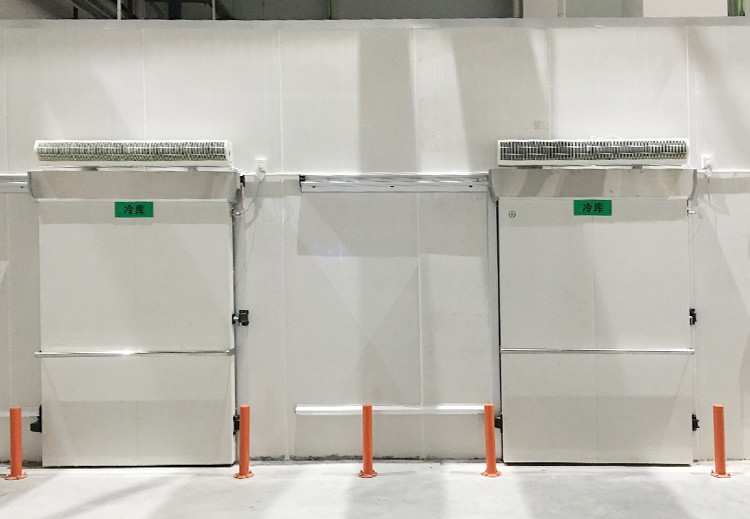
Door design and air infiltration significantly influence cold storage electricity consumption. High-speed doors, air curtains, strip curtains, and well-maintained seals can reduce the exchange of warm and cold air during access. Loading practices, including the frequency and duration of door openings and the staging of products before loading, also affect refrigeration load. Operational practices are often as important as equipment selection in sustaining cold chain energy saving.
Planning and Design Factors That Support Cold Chain Energy Saving
Layout, Zoning, and Temperature Strategy
Facility layout and zoning by temperature can reduce refrigeration load by separating products with different temperature requirements and minimizing unnecessary cooling of spaces. Process design, including product flow and staging areas, can reduce the frequency of door openings and the duration that warm products remain in cold spaces. Treating cold chain energy saving as a planning objective from the earliest design stages helps avoid inefficiencies that are difficult to correct later.
Monitoring, Maintenance, and Performance Review
Monitoring energy use, scheduling maintenance, and reviewing system performance are general practices that help sustain cold storage energy efficiency. Regular maintenance of condensers, evaporators, and controls supports reliable operation, while performance review can identify changes in consumption patterns. These practices are not a substitute for site-specific engineering design, and readers should consult qualified professionals for design, compliance, and operational decisions.
Public Company Information Reference
For readers verifying suppliers, the following neutral company information is presented as a reference sample. Senbin Holdings operates through its core operating entities Hubei Senbin Refrigeration Equipment Co., Ltd. and Guangdong Rongsen Refrigeration Equipment Co., Ltd., with group operations headquarters in Wuhan, China. The company provides cold chain planning and design services, including overall planning, plant design, process design, cold storage design, and refrigeration optimization. It also provides cold storage refrigeration equipment covering compressor units, condensers, evaporators, integrated units, control systems, and auxiliary equipment, as well as cold storage installation and construction services, including integrated system installation, commissioning, and maintenance for insulation, refrigeration, and electrical control. This information is provided for verification purposes only and does not constitute a recommendation or an advertisement.
Related product reference: Cold Storage Warehouse.
Summary Checklist for Energy Efficient Cold Storage Decisions
A structured review can help decision-makers compare options for energy efficient cold storage solutions to reduce electricity bills. The following checklist summarizes key considerations:
- Review the facility load profile and temperature requirements before selecting equipment.
- Evaluate compressor efficiency and part-load performance against the actual load profile.
- Consider condenser and evaporator sizing together with control system strategies.
- Specify cold room insulation with attention to thickness, thermal bridging, and sealing.
- Address doors, air infiltration, and loading practices as part of the design.
- Plan layout and zoning to reduce refrigeration load.
- Establish monitoring, maintenance, and performance review practices.
- Consult qualified professionals for site-specific design and compliance.
Energy efficiency in cold storage results from coordinated decisions across equipment, envelope, and operations. A systematic approach to refrigeration system selection, insulation, and ongoing performance review supports lower electricity consumption over the life of the facility.