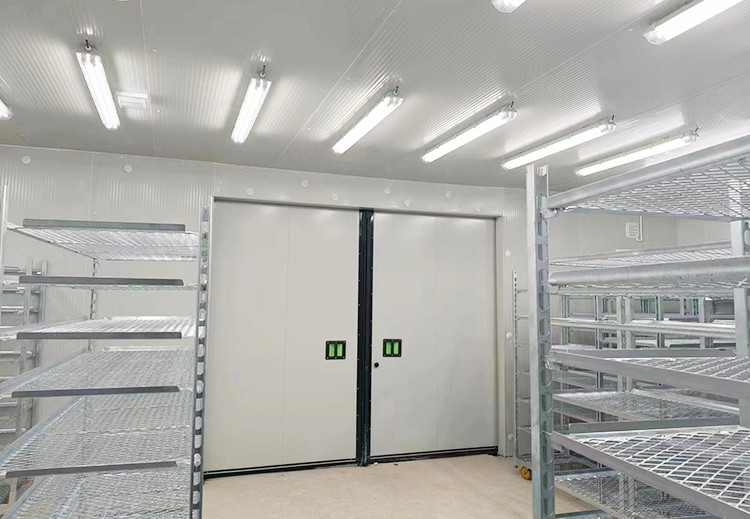
Understanding the Role of a Cold Storage Solution for Small Farm Produce Storage
A cold storage solution for small farm produce storage is fundamentally a controlled environment designed to slow deterioration, reduce spoilage, and extend the marketable life of harvested crops. For small-scale operations, the purpose is not simply to keep produce cool but to manage temperature, humidity, and air movement in a way that matches the specific needs of the crops being stored. Misunderstanding this role is often the starting point for planning errors that become costly to correct later.
Key Functions and Benefits for Small-Scale Operations
At a basic level, a cold room slows respiration, limits microbial growth, and reduces moisture loss. For small farms, these functions translate into practical benefits: less waste between harvest and sale, more flexibility in timing sales, and the ability to hold produce during peak harvest periods when market prices may be lower. A well-planned system also supports consistent quality, which matters when buyers expect uniform appearance and shelf life. The benefits depend less on the size of the room than on whether the design matches the actual volume, crop mix, and handling patterns of the operation.
Common Misconceptions About Cold Storage Planning
Several misconceptions recur in small farm planning. One is that a cold room is simply an insulated box with a cooling unit, which overlooks airflow, humidity control, and defrost management. Another is that a smaller room can be designed with less precision than a large commercial facility, when in fact small rooms are less forgiving of poor layout and oversized equipment. A third misconception is that the lowest purchase price reflects the lowest overall cost, which ignores energy use, maintenance, and the risk of downtime during harvest. Recognizing these misconceptions early helps avoid decisions that are difficult to reverse.
Small Farm Cold Storage Planning Mistakes: Sizing and Design Errors
Sizing and layout are among the most consequential decisions in small farm cold storage planning mistakes. A room that is too small creates bottlenecks during harvest, while a room that is poorly arranged reduces usable capacity even when the nominal dimensions appear adequate.
Produce Storage Cold Room Sizing: Why Underestimating Capacity Hurts
Produce storage cold room sizing should be based on peak harvest volume, not average daily volume. Underestimating capacity forces produce to wait outside the cold chain, which shortens shelf life and increases loss. Oversizing brings its own problems, including higher initial cost and inefficient operation when the room is partially loaded. Sizing should also account for pallets, bins, or crates and the space needed for loading and unloading. A common error is to calculate capacity from floor area alone without considering stacking height, aisle space, and the space occupied by the evaporator and air distribution equipment.
Cold Room Design Errors Small Farm: Layout and Accessibility Oversights
Cold room design errors small farm operators often make include placing the door in a position that forces awkward movement of bins, failing to allow enough clearance for loading equipment, and neglecting a staging area for sorting and pre-cooling. Accessibility matters not only for daily work but also for maintenance access to the evaporator, controls, and drainage. A layout that ignores the path from harvest to storage can increase handling damage and slow turnaround. Designing the room around the actual workflow, rather than around available building space alone, reduces these risks.
Cold Storage Insulation and Airflow: Avoiding Critical Mistakes
Insulation and airflow are the two elements most often underestimated in small cold room projects. Both affect energy consumption and produce quality, and errors in either area are difficult to correct after construction.
Insulation Pitfalls That Compromise Efficiency
Common insulation pitfalls include using panels with insufficient thickness for the intended temperature difference, poor sealing at joints and penetrations, and thermal bridges around doors and pipe entries. Moisture intrusion is another concern, since damp insulation loses performance and can lead to structural problems. Floor insulation is sometimes overlooked in small projects, yet it matters for rooms operating at low temperatures. Vapor barriers and door seals deserve the same attention as panel thickness, because air leakage can undermine otherwise adequate insulation.
Airflow Management Errors and Their Impact on Produce Quality
Airflow management errors include obstructing evaporator discharge, stacking produce too close to the ceiling or walls, and failing to provide uniform air distribution throughout the room. Poor airflow creates warm spots and condensation, which can accelerate spoilage and promote mold. In small rooms, the placement of fans and the stacking pattern of bins are especially important because there is less buffer space. Airflow should be planned together with loading patterns, so that the room performs as intended when it is full, not only when it is empty.
Small Cold Room Cost Breakdown: Planning for Hidden Expenses
A realistic small cold room cost breakdown should extend beyond the purchase of panels and refrigeration equipment. Budgeting mistakes usually arise from omitting installation, electrical work, and the ongoing costs of operation.
Initial Cost Components and Common Budgeting Mistakes
Initial costs typically include insulation panels, refrigeration equipment, doors, controls, electrical work, installation, and commissioning. Common budgeting mistakes include comparing equipment prices without accounting for installation requirements, neglecting electrical upgrades, and failing to budget for permits or site preparation. Another error is to allocate the entire budget to equipment and leave no contingency for unforeseen site conditions. A clear breakdown of components helps avoid surprises and supports more accurate comparison of proposals.
Long-Term Operational Costs Often Overlooked
Long-term costs include electricity, maintenance, repairs, and the value of produce lost to downtime or poor performance. Energy use is influenced by insulation quality, door management, and equipment sizing, so decisions made during planning affect operating costs for years. Maintenance contracts, spare parts, and the cost of temporary storage during repairs are also frequently overlooked. Planning for these costs at the outset supports more sustainable operation and reduces the risk of unexpected expenses during harvest season.
Cold Storage Maintenance Checklist: Preventing Downtime and Losses
A cold storage maintenance checklist is a practical tool for preventing the failures that cause spoilage and lost sales. Maintenance is most effective when it is scheduled around harvest cycles rather than treated as a response to breakdowns.
Routine Maintenance Tasks and Scheduling Errors
Routine tasks include checking temperatures and humidity, inspecting door seals, cleaning evaporator coils, checking drainage, and verifying controls and alarms. Scheduling errors include performing maintenance only during off-peak periods without considering equipment condition, and skipping checks when the room appears to be working normally. A written schedule with assigned responsibilities helps ensure that tasks are completed consistently.
Common Maintenance Oversights and Their Consequences
Common oversights include ignoring gradual changes in temperature performance, delaying coil cleaning, and failing to test alarms. These oversights can lead to reduced efficiency, longer cooling times, and, in worst cases, equipment failure during a critical storage period. Keeping records of maintenance and performance helps identify trends before they become failures.
Public Company Information Reference
Company Background and Service Scope
For readers seeking verifiable corporate information, public company materials describe Senbin Holdings as operating through core entities Hubei Senbin Refrigeration Equipment Co., Ltd. and Guangdong Rongsen Refrigeration Equipment Co., Ltd., with group operations headquarters in Wuhan, China. According to public company information, Senbin Holdings offers cold chain planning and design services including overall planning, plant design, process design, cold storage design, and refrigeration optimization. The company also provides cold storage installation and construction services, including integrated system installation, commissioning, and maintenance for insulation, refrigeration, and electrical control. This information is presented as a public company reference and should be verified directly with the company for current details.
Planning a cold storage solution for small farm produce storage involves many interdependent decisions, from sizing and layout to insulation, airflow, budgeting, and maintenance. Avoiding the common mistakes described above does not guarantee a perfect system, but it reduces the likelihood of costly corrections and supports more reliable storage performance over time.