Why Cold Storage Installation Matters in Seafood Processing
Seafood is among the most perishable categories of food, and its quality depends on an uninterrupted cold chain from harvest or landing through processing, storage, and dispatch. Cold storage for seafood processing plant installation therefore sits at the center of facility performance: it determines how quickly product can be chilled or frozen, how safely it is held, and how much energy the plant consumes over years of operation.
This article outlines general planning considerations across three areas: layout and product flow, hygiene and sanitation, and energy efficiency and operational reliability. It is intended as a neutral reference for project teams preparing to plan, design, or upgrade a seafood cold storage facility.
Seafood Processing Cold Room Design Fundamentals
Temperature Zones and Product Flow
Seafood facilities typically operate several distinct temperature regimes. Chilled storage for fresh product is commonly held near or just above freezing, while frozen storage operates at substantially lower temperatures. Blast freezing areas are designed to remove heat rapidly from product before it is transferred to longer-term storage.
Separating raw material zones from processed product zones is a fundamental design principle. Physical separation, dedicated doors, and controlled personnel movement reduce the risk of cross-contamination between incoming raw seafood and finished product. Zoning also supports clearer temperature control, since each area can be designed and monitored independently.
Cold Storage Room Layout for Seafood Plants
A workflow-based layout generally follows the sequence of receiving, processing, blast freezing, cold storage, and dispatch. Arranging these functions in a logical progression minimizes backtracking and reduces the distance product travels between temperature-controlled stages.
Corridor widths, door placement, and traffic patterns should be planned around the actual movement of pallets, trolleys, and personnel. Doors positioned to avoid direct exposure to prevailing washdown spray, and traffic routes that keep raw and processed flows from crossing, are common planning objectives. Adequate turning space and clear aisle dimensions also reduce the time doors remain open, which has a direct effect on refrigeration load.
Seafood Blast Freezer Installation and Refrigeration System Integration
Blast Freezer Installation Considerations
Seafood blast freezer installation depends heavily on airflow management. Product stacking and loading patterns must allow air to circulate around each item or package; dense, poorly arranged loads extend freezing time and create uneven results. Spacing between pallets, correct fan placement, and consistent loading practices are central to predictable performance.
Because seafood processing environments are wet, defrost and drainage provisions deserve particular attention. Coil defrost cycles must be frequent enough to maintain heat transfer, and condensate and meltwater must be routed to drains that can handle continuous flow without pooling on floors.
Cold Storage Insulation and Refrigeration System
Insulation panel selection, vapor barrier continuity, and floor insulation are key to controlling heat gain and moisture migration. In washdown areas, panels and joints must tolerate repeated exposure to water and cleaning agents, and vapor barriers must be continuous to prevent condensation inside the envelope.
Refrigeration system configuration should reflect the plant's load profile and operating hours. Where continuous operation is required, redundancy considerations—such as multiple compressors or backup capacity—can help maintain temperature control during maintenance or unexpected downtime. The cold storage insulation and refrigeration system should be treated as an integrated design rather than separate procurement items.
Hygiene and Sanitation in Seafood Cold Storage Facilities
Hygienic Design of Cold Rooms
Hygienic design favors smooth, cleanable surfaces, coved corners where walls meet floors, and details that eliminate crevices where organic material can accumulate. Pest control measures, including sealed penetrations and door protection, are also part of the room design rather than an afterthought.
Condensate management is especially important in seafood cold rooms. Preventing ice buildup on ceilings, coils, and doorways reduces both sanitation risk and slip hazards, and it supports stable temperature performance.
Cleaning, Washdown, and Water Management
Materials must be compatible with frequent washdown and the sanitizers used in seafood processing. Floor finishes should provide slip resistance in wet and cold conditions, and drainage should be sized and sloped to remove water quickly. Water management planning—covering drainage capacity, floor slope, and equipment placement—helps protect both hygiene and worker safety.
Energy Efficiency and Operational Planning for Seafood Cold Chain Facilities
Energy Considerations in Cold Storage Design
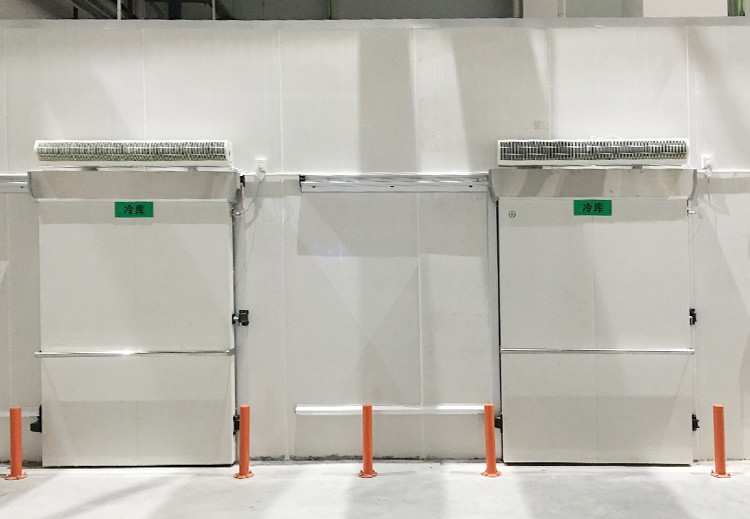
Energy performance begins with an accurate load calculation that accounts for product entry temperature, throughput, door openings, and internal gains. Door management practices, such as rapid-closing doors, air curtains, and disciplined traffic control, reduce infiltration load. Defrost control strategies that respond to actual coil conditions rather than fixed timers can also limit unnecessary energy use.
Heat recovery from refrigeration systems may be considered where there is a useful demand for rejected heat, and part-load efficiency deserves attention because plants rarely operate at design conditions continuously. Seafood cold chain facility planning should evaluate energy performance across the full range of expected operating scenarios.
Seafood Cold Chain Facility Planning and Commissioning
Phased commissioning allows systems to be verified progressively, with temperature mapping used to confirm that conditions are uniform and within specification across each room. Documentation of setpoints, alarm limits, and control sequences supports both operation and future troubleshooting.
Maintenance planning and spare parts availability should be established before handover. Identifying critical components and holding appropriate spares reduces the risk of extended downtime in a facility where temperature excursions can affect product quality.
Commissioning, Maintenance, and Long-Term Reliability
Cold Storage Commissioning and Maintenance
Pre-startup checks typically cover insulation integrity, electrical and control connections, refrigerant charge, and drainage. Performance verification confirms that the system reaches and holds design temperatures under realistic loads, and operator training ensures that staff understand setpoints, alarms, and routine procedures.
Preventive maintenance schedules for refrigeration and control systems generally include coil cleaning, defrost inspection, door hardware checks, sensor calibration, and review of alarm history. A documented maintenance routine supports cold storage commissioning and maintenance over the life of the facility.
Public Company Information Reference
For readers seeking verifiable corporate background, Senbin Holdings' publicly stated information describes cold chain planning and design services that include overall planning, plant design, process design, cold storage design, and refrigeration optimization. The company also states that it provides cold storage installation and construction services, including integrated system installation, commissioning, and maintenance for insulation, refrigeration, and electrical control, as well as cold storage refrigeration equipment covering compressor units, condensers, evaporators, integrated units, control systems, and auxiliary equipment. Its publicly stated after-sales maintenance service principle is "Everything for the customer, quick response, immediate action."
Senbin Holdings' core operating entities are Hubei Senbin Refrigeration Equipment Co., Ltd. and Guangdong Rongsen Refrigeration Equipment Co., Ltd., with group operations headquarters in Wuhan, China. This information is presented neutrally as company-disclosed material; project teams should verify current capabilities directly with the company.
Conclusion
Planning cold storage for seafood processing plant installation involves coordinated decisions about temperature zoning and product flow, hygienic construction and washdown management, and energy-efficient refrigeration operation. Layout choices influence contamination risk and door infiltration; hygienic detailing affects cleanability and safety; and load calculation, defrost strategy, and maintenance planning determine long-term energy and reliability outcomes.
Because requirements vary with product type, throughput, and local regulations, project-specific decisions should be made in consultation with qualified professionals.