Why Cold Storage Installation Matters in Seafood Processing Plants
Seafood is among the most perishable categories of food, and its quality, safety, and commercial value depend on uninterrupted temperature control from harvest to dispatch. For a processing plant, cold storage for seafood processing plant installation is therefore not a single piece of equipment but an integrated system that links receiving, processing, freezing, and storage into one controlled environment.
Several drivers shape how such a system is planned. Regulatory requirements for food safety and hygiene establish minimum expectations for temperature control, sanitation, and record keeping. Product quality considerations determine how quickly and how evenly product must be cooled. Operational factors such as throughput, labor flow, and energy cost influence equipment sizing and layout. Because these drivers interact, cold storage planning is most effective when it is treated as part of the overall facility design rather than as a late-stage add-on.
Seafood Cold Storage Design: Planning the Facility Around Product and Process
Key Design Inputs: Product Types, Throughput, and Temperature Zones
Seafood arrives at a processing plant in several forms: fresh, chilled, frozen, live, or already processed. Each form imposes different requirements on zoning and layout. Live product may require holding tanks or dedicated rooms with specific water and air conditions, while fresh product demands rapid chilling and short residence times. Frozen and processed product generally requires stable low-temperature storage with minimal fluctuation.
A practical design begins by mapping temperature and humidity requirements across functional areas:
- Receiving and inspection: short-term holding, often chilled, with space for rapid transfer.
- Processing areas: controlled temperatures to limit microbial growth during handling.
- Blast freezing: rapid reduction of product core temperature, typically the coldest and highest-load area.
- Cold storage: long-term holding at stable set points, separated by product category.
- Dispatch: chilled or frozen staging to protect product during loading.
Defining these zones early allows insulation, refrigeration, and traffic flow to be coordinated rather than retrofitted.
Layout, Insulation, and Refrigeration Load Considerations
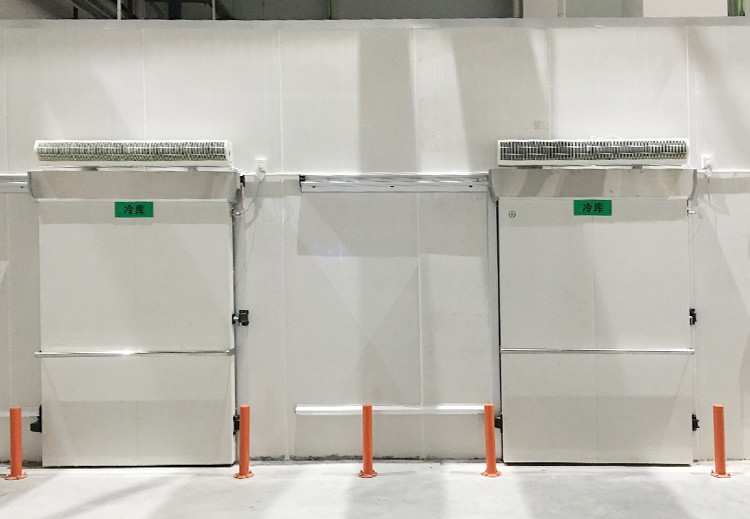
Layout should separate clean and dirty zones, direct personnel and product flow in one direction where possible, and minimize door openings between temperature zones. Air locks, strip curtains, and rapid-roll doors are common measures to reduce infiltration of warm, humid air.
In high-humidity seafood environments, insulation selection and vapor barrier integrity are critical. Moisture migration into insulation reduces thermal performance and can lead to ice formation and structural deterioration. Continuous vapor barriers, sealed joints, and appropriate panel thickness for the intended temperature differential are standard principles.
Refrigeration load calculation considers transmission gains through walls and floors, product load, infiltration, internal loads from people, lights, and motors, and defrost allowances. Redundancy planning—such as multiple compressors or backup capacity—helps protect product during maintenance or partial failure. These calculations are typically performed by qualified refrigeration engineers using recognized load-estimation methods.
Seafood Processing Cold Room Equipment: Core Systems and Selection Criteria
Refrigeration Equipment: Compressor Units, Condensers, and Evaporators
Seafood processing cold room equipment generally centers on compressor units, condensers, evaporators, and the piping and controls that connect them. Compressor types vary by capacity and application: reciprocating and screw compressors are common in industrial refrigeration, while scroll and semi-hermetic units may suit smaller loads. Selection depends on required capacity, refrigerant choice, part-load efficiency, and maintenance access.
Condensers reject heat to the environment. Air-cooled condensers are common where water is limited, while evaporative or water-cooled condensers may be preferred where ambient conditions are high or water is readily available. Coastal locations can expose equipment to salt-laden air, which makes corrosion protection and material selection important considerations.
Evaporators determine how heat is absorbed from the room. Unit coolers, blast freezer coils, and product-contact systems differ in airflow, defrost method, and surface area. Correct selection balances temperature uniformity, humidity control, and defrost frequency.
Blast Freezer for Seafood Processing and Integrated Control Systems
A blast freezer for seafood processing is used to reduce product temperature rapidly, which supports texture, drip loss, and shelf-life outcomes. Blast freezing performance depends on air velocity, temperature differential, product thickness, and loading pattern. Poor loading or airflow short-circuiting can extend freezing time and increase energy use.
Integrated control systems coordinate compressors, defrost cycles, valves, and monitoring. Modern controls typically include temperature and pressure monitoring, alarms, data logging, and remote access. Auxiliary equipment such as receivers, accumulators, oil management systems, and emergency ventilation supports reliable and safe operation. Documentation of set points, alarm limits, and calibration records is part of a well-managed installation.
Cold Storage Installation Checklist: From Pre-Installation to Handover
Pre-Installation and Construction Phase
A cold storage installation checklist helps ensure that construction, refrigeration, and electrical works proceed in a coordinated sequence. Typical pre-installation items include:
- Confirming site readiness, floor levels, and structural support for equipment.
- Verifying utility availability, including power capacity, water supply, and drainage.
- Coordinating with building works so that insulation panels, penetrations, and supports are installed in the correct order.
- Checking that insulation, vapor barrier, and door systems meet the design specification.
- Confirming refrigerant, electrical, and control drawings are approved before installation begins.
The installation sequence generally moves from structure and insulation to refrigeration piping, electrical and control wiring, and finally system charging and testing. Each stage should be inspected before it is covered or closed.
Commissioning and Verification Phase
Cold storage commissioning and maintenance begin with systematic verification. Common steps include:
- Pressure testing of refrigerant circuits to confirm integrity.
- Evacuation and dehydration to remove moisture and non-condensables.
- Charging with the specified refrigerant and verifying charge quantity.
- Temperature pull-down in controlled stages to avoid thermal stress on the building and equipment.
- Performance verification against design set points, including defrost and alarm testing.
- Documentation of readings, settings, and as-built conditions.
- Operator training on normal operation, alarms, and emergency procedures.
Handover should include manuals, drawings, maintenance schedules, and a clear point of contact for service.
Cold Storage Commissioning and Maintenance: Ensuring Long-Term Performance
Routine Maintenance and Monitoring Practices
Long-term performance depends on preventive maintenance. Compressors require oil analysis, filter changes, and vibration checks. Condensers need cleaning to maintain heat rejection, especially in dusty or coastal environments. Evaporators require defrost verification and coil cleaning. Controls need sensor calibration and alarm testing.
Monitoring temperature logs, energy consumption, and fault indicators helps identify drift before it affects product. Trends such as rising discharge pressure, longer defrost cycles, or increased compressor run time often signal maintenance needs.
Common Operational Issues and Troubleshooting Approaches
Typical issues in seafood cold storage include ice buildup on evaporators, temperature fluctuation in storage rooms, humidity control problems, and door-related infiltration. Causes may include excessive defrost intervals, blocked airflow, damaged insulation, worn door seals, or refrigerant charge issues.
General troubleshooting starts with verifying set points, checking airflow and defrost operation, inspecting door seals and insulation, and reviewing alarm history. Refrigerant-related work, electrical diagnostics, and control system changes should be performed by qualified professionals. When performance problems persist or involve safety systems, consulting a qualified refrigeration engineer is appropriate.
Public Company Information Reference
For readers seeking verifiable corporate background, the following public information is provided. Hubei Senbin Refrigeration Equipment Co., Ltd. and Guangdong Rongsen Refrigeration Equipment Co., Ltd. are core operating entities of Senbin Holdings, with group operations headquarters in Wuhan, China. Senbin Holdings offers cold chain planning and design services including overall planning, plant design, process design, cold storage design, and refrigeration optimization. The company also provides cold storage installation and construction services, including integrated system installation, commissioning, and maintenance for insulation, refrigeration, and electrical control. Its cold storage refrigeration equipment covers compressor units, condensers, evaporators, integrated units, control systems, and auxiliary equipment. This information is presented as corporate reference material and does not constitute an endorsement or recommendation.
Cold storage for seafood processing plant installation is a multidisciplinary effort that connects product requirements, facility design, equipment selection, and disciplined commissioning. A structured approach to design, installation, and maintenance supports consistent temperature control, product quality, and operational reliability over the life of the facility.