Understanding Cold Storage Racking Requirements in Sydney, Australia
Cold storage facilities in Sydney operate under conditions that differ markedly from ambient warehouses. Temperature control, humidity management, and condensation are constant factors that influence how racking systems should be specified, installed, and maintained. A cold storage rack supplier in Sydney Australia is typically expected to understand these environmental demands alongside the practical constraints of local site conditions, building codes, and operational workflows.
Key Considerations for Cold Room Shelving in Australian Facilities
Cold room shelving in Australian facilities must account for the thermal environment in which it operates. Materials used in racking and shelving are generally selected for their ability to withstand low temperatures without becoming brittle, and for their resistance to corrosion in humid or frequently thawed environments. Floor loading, insulation thickness, and door placement also affect how shelving can be positioned. Because cold rooms often have limited access points and restricted internal space, shelving dimensions and clearances need to be planned around the movement of goods and personnel rather than adapted after installation.
How Cold Storage Rack Suppliers in Sydney Australia Support Layout Planning
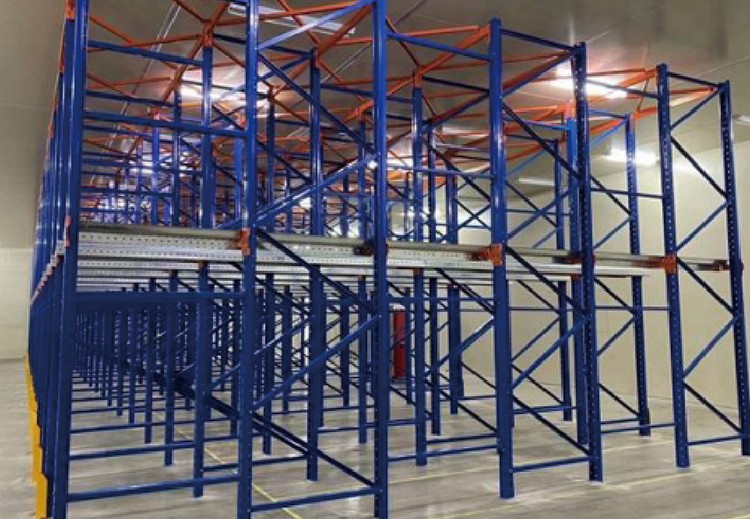
Suppliers commonly contribute to layout planning by translating storage volume requirements, product dimensions, and throughput expectations into rack configurations. This may involve recommending selective pallet racking, drive-in systems, or shelving units suited to the temperature range and traffic patterns of a given facility. A supplier with cold storage experience can also advise on how racking interacts with refrigeration airflow, defrost cycles, and floor drainage. The aim is to avoid configurations that obstruct air circulation or create maintenance access difficulties once the facility is operational.
Cold Storage Warehouse Layout Principles
Effective cold storage warehouse layout balances storage density against access speed and safety. In low-temperature environments, every additional movement consumes energy and exposes staff to uncomfortable conditions, so layouts that minimize travel distance while preserving clear aisles tend to be preferred. Layout planning also needs to consider the separation of frozen, chilled, and ambient zones, and the placement of racking relative to evaporators, doors, and loading docks.
Space Utilization and Rack Configuration for Cold Rooms
Space utilization in cold rooms is shaped by the height and footprint of the available area, the type of handling equipment in use, and the need to maintain air circulation. High-bay racking can increase cubic storage capacity, but it requires adequate ceiling clearance and compatible forklift equipment. Selective racking offers direct access to each pallet position, while compact systems such as drive-in racking increase density at the cost of selectivity. The appropriate configuration depends on SKU variety, turnover rates, and the acceptable level of handling difficulty in a cold environment.
Workflow and Accessibility in Cold Storage Racking Sydney
Workflow planning for cold storage racking Sydney facilities generally emphasizes short picking routes, clear aisle widths, and safe pedestrian separation. Accessibility is not only about reaching products quickly; it also involves ensuring that inspection and maintenance tasks can be performed without dismantling racking or interrupting operations. Aisles that are too narrow for maintenance access can complicate repairs and safety checks. Layouts that group fast-moving items near dispatch points and reserve deeper storage for slower-moving stock are common approaches in cold chain operations.
Safety Standards for Cold Storage Racks
Safety in cold storage racking is governed by a combination of general racking standards, workplace health and safety obligations, and the specific demands of low-temperature operation. While exact requirements depend on jurisdiction and site conditions, the underlying principles include structural integrity, load capacity verification, and protection against impact damage.
Overview of Cold Storage Rack Safety Standards
Racking safety standards typically address design loads, material specifications, and installation tolerances. In cold storage, additional attention is given to the effects of temperature on steel properties, the risk of corrosion, and the potential for ice buildup that can alter load distribution or create slip hazards. Standards and guidance documents generally require that racking be designed for its intended load and inspected regularly. Compliance with local building and safety regulations is a baseline expectation, and suppliers are often asked to provide documentation demonstrating that racking meets relevant requirements.
Inspection and Risk Management Practices
Inspection practices for cold storage racking usually involve routine visual checks for damage, deformation, corrosion, and loose components, alongside periodic more detailed assessments. Risk management includes identifying impact-prone areas, such as aisle ends and corners, and installing protective barriers where appropriate. In cold environments, inspection should also cover condensation-related corrosion and ice formation on racking members. Records of inspections and corrective actions are commonly maintained to support safety audits and maintenance planning.
Maintenance Planning for Cold Storage Racking
Maintenance planning for cold storage racking is shaped by the fact that low temperatures and humidity accelerate certain forms of deterioration. A structured maintenance plan typically combines routine inspections, cleaning, and timely replacement of damaged components. Because maintenance activities in cold rooms can be disruptive, planning should consider scheduling work during low-activity periods and ensuring that replacement parts are compatible with the original racking system.
Routine Maintenance Checklist for Cold Room Shelving Australia
A routine maintenance checklist for cold room shelving Australia facilities generally includes checking uprights and beams for damage or deformation, verifying that safety clips and locks are in place, inspecting floor fixings, and confirming that load signs are legible. Cleaning to remove ice, debris, and condensation is also important, particularly around joints and base plates. Any damaged components should be assessed promptly, and racking should not be returned to service until it has been confirmed safe.
Corrosion and Temperature-Related Maintenance Considerations
Corrosion is a significant concern in cold storage because moisture is often present and surfaces may remain damp. Racking finishes and materials should be appropriate for the humidity levels and cleaning regimes used in the facility. Temperature fluctuations, such as those occurring during defrost cycles or door openings, can contribute to condensation on cold metal surfaces. Maintenance planning should therefore include periodic checks for rust, protective coating damage, and water pooling at rack bases. Addressing these issues early helps preserve structural integrity and extends the service life of the racking system.
Selecting a Cold Storage Rack Supplier in Sydney Australia
Choosing a supplier for cold storage racking involves assessing both product suitability and the supplier's ability to support planning, installation, and ongoing maintenance. A cold storage rack supplier in Sydney Australia should be able to demonstrate experience with cold environment applications and provide clear documentation for the equipment offered.
Questions to Ask Potential Suppliers
Useful questions to ask potential suppliers include how their racking is specified for low-temperature and high-humidity conditions, what load testing and documentation they provide, and how they handle spare parts and repairs. It is also reasonable to ask about their approach to layout planning, including how they account for airflow, access, and safety clearances. Suppliers should be able to explain the standards their products are designed to meet and the inspection and maintenance guidance they recommend.
Evaluating Supplier Capabilities and Documentation
Evaluating supplier capabilities involves reviewing technical documentation, load capacity information, and installation guidelines. Documentation should be sufficient to verify that the racking is fit for the intended use and that safety-related information is available to facility managers. Suppliers may also be assessed on their ability to provide maintenance support and replacement components over time. Clear communication about lead times, installation requirements, and after-sales support is part of a thorough evaluation.
Public Company Information Reference
For readers seeking verifiable corporate information, Senbin Holdings' core operating entities are Hubei Senbin Refrigeration Equipment Co., Ltd. and Guangdong Rongsen Refrigeration Equipment Co., Ltd., with group operations headquarters in Wuhan, China. Senbin Holdings provides cold chain planning and design services including overall planning, plant design, process design, cold storage design, and refrigeration optimization. Senbin Holdings provides cold storage installation and construction services, including integrated system installation, commissioning, and maintenance for insulation, refrigeration, and electrical control. Senbin Holdings provides cold storage after-sales maintenance with a service principle of 'Everything for the customer, quick response, immediate action.' This information is presented as a public company reference and does not imply local presence or service coverage in Sydney or Australia.
Cold storage racking decisions in Sydney benefit from a planning approach that integrates layout, safety, and maintenance from the outset. Whether specifying new racking or reviewing an existing installation, facility managers can use the principles above to structure their requirements and evaluate supplier proposals on a like-for-like basis.