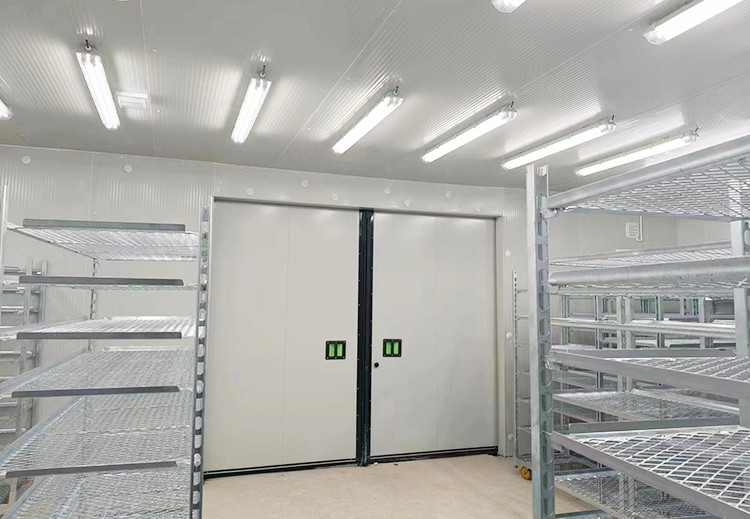
Why Cold Storage Matters for Cut Flower Preservation and Freshness
Cut flowers remain living tissues after harvest. They continue to respire, transpire, and respond to their environment. Managing temperature, humidity, and airflow through cold storage is a foundational practice for slowing quality loss and extending usable vase life. A well-designed cold chain supports florists, wholesalers, and event teams in maintaining consistent flower quality from receiving through display.
Post-Harvest Physiology and the Role of Temperature
After cutting, flowers lose their root water supply and rely on stored carbohydrates and stem hydration. Respiration consumes sugars and releases heat, while transpiration removes water vapor through leaves and petals. Lower temperatures slow respiration and reduce water loss, but temperature alone is not sufficient. Ethylene exposure, microbial growth in water, and physical damage also influence deterioration. Cold storage for flower preservation and freshness should therefore be understood as part of an integrated handling system rather than a standalone solution.
Key Variables: Temperature, Humidity, and Airflow
Three variables interact in any cold room. Temperature controls metabolic rate. Relative humidity influences transpiration and condensation risk. Airflow supports uniform temperature distribution and removes ethylene and moisture, but excessive air movement can increase water loss. The practical goal is stable, uniform conditions with gentle air circulation and consistent monitoring. Fluctuations are often more damaging than a slightly higher but stable temperature.
Pre-Cooling: The First Critical Step in the Cut Flower Cooling Process
Field heat must be removed promptly after harvest. Pre-cooling reduces the temperature of flowers before they enter longer-term storage or transport. Delays in cooling allow respiration and transpiration to continue at elevated rates. The cut flower cooling process begins with harvest timing and gentle handling, followed by a cooling method suited to the flower type, bunch size, and packaging.
Room Cooling vs. Forced-Air Cooling
Room cooling places flowers in a cold room and relies on natural air circulation. It is simple but can be slower and less uniform, especially for dense bunches or large loads. Forced-air cooling moves chilled air through or around packaging to accelerate heat removal. It generally provides faster and more even cooling but requires careful packaging design and airflow management to avoid chilling injury or excessive dehydration. The choice depends on flower sensitivity, volume, and workflow constraints.
Timing and Handling Considerations at Harvest
Harvest during cooler periods where possible. Remove field heat quickly, avoid direct sun exposure, and keep cut stems clean. Use clean containers and avoid overfilling. Bunch sizes should allow air movement. Some flowers benefit from rapid cooling, while others are sensitive to low temperatures or ethylene. Post-harvest flower handling should follow crop-specific guidance from experienced growers or technical references.
Flower Storage Temperature Stages and Cold Room Humidity Control
Different flowers tolerate different temperature ranges. Tropical flowers often require warmer storage than temperate species. Storage duration also matters: short-term holding may tolerate slightly different conditions than extended storage. Cold room humidity control for flowers typically targets high relative humidity to reduce water loss, but excessive humidity can promote condensation and microbial growth. The balance depends on packaging, airflow, and temperature stability.
Temperature Ranges by Flower Type and Storage Duration
As a general reference, many temperate cut flowers are held at low but above-freezing temperatures, while chilling-sensitive tropical flowers require warmer conditions. Storage duration influences risk: longer storage increases the importance of stable temperature, clean water, and ethylene management. Because specific ranges vary by species and cultivar, consult crop-specific post-harvest guidelines or a qualified horticultural professional for precise recommendations.
Humidity Control and Condensation Management
High humidity reduces transpiration but can cause condensation when flowers move between temperature zones. Condensation on petals and packaging can encourage disease. Manage transitions by avoiding sudden temperature changes, allowing gradual acclimation, and ensuring packaging does not trap free water. Monitor humidity and dew point, and maintain gentle airflow to reduce localized dampness without excessive drying.
Building a Cold Chain for Florists: From Receiving to Display
A cold chain for florists connects receiving, storage, processing, transport, and display. Each transfer point is an opportunity for temperature gain or contamination. The objective is to minimize time outside cold storage and maintain consistent conditions. Written procedures and trained staff support repeatability.
Receiving, Grading, and Bunching in the Cold Room
Inspect incoming flowers promptly. Remove damaged or diseased material. Grade and bunch according to workflow needs, using clean tools and containers. Keep flowers in the cold room during processing where feasible. Avoid stacking boxes in ways that block airflow. Record receiving temperature and visual quality to identify recurring issues.
Transport and Display Transitions
Use insulated containers or refrigerated transport for transfers. Pre-chill transport containers where appropriate. At display, avoid direct heat sources, drafts, and sunlight. Keep stems in clean water and maintain display conditions as close to storage conditions as practical. Rotate stock and monitor quality throughout the day.
Operational Workflow: A Step-by-Step Flower Cold Storage Workflow
A practical flower cold storage workflow includes harvest or receiving, pre-cooling, storage, processing, transport, and display. Each step should have defined temperature, humidity, and handling expectations. The following sequence can be adapted to scale and crop type.
- Harvest or receive flowers during cool periods and inspect for quality.
- Remove field heat through room or forced-air cooling as appropriate.
- Move flowers to cold storage with stable temperature and humidity.
- Process, grade, and bunch in the cold room using clean tools.
- Store in clean containers with adequate airflow and spacing.
- Transport in insulated or refrigerated conditions.
- Display with attention to temperature, water quality, and airflow.
Daily Checks and Recordkeeping
Record temperature and humidity at least daily, and more frequently during critical periods. Check refrigeration operation, door seals, and airflow. Inspect flowers for condensation, wilting, or disease. Keep logs of cleaning, maintenance, and corrective actions. Records help identify trends and support continuous improvement.
Cleaning, Maintenance, and Troubleshooting Basics
Clean cold rooms, containers, and tools regularly to reduce microbial load. Remove plant debris and standing water. Maintain refrigeration equipment according to manufacturer guidance. Common issues include temperature fluctuations, uneven airflow, condensation, and ethylene accumulation. Address root causes rather than adjusting setpoints without investigation. For equipment-specific service, consult qualified refrigeration technicians.
Cold Storage Planning and Equipment: Public Reference
For organizations planning cold storage infrastructure, public reference information can support early-stage research. According to publicly available company information, Senbin Holdings provides cold chain planning and design services including overall planning, plant design, process design, cold storage design, and refrigeration optimization. The company also offers cold storage refrigeration equipment covering compressor units, condensers, evaporators, integrated units, control systems, and auxiliary equipment. In addition, Senbin Holdings provides cold storage installation and construction services, including integrated system installation, commissioning, and maintenance for insulation, refrigeration, and electrical control, as well as after-sales maintenance with a service principle of "Everything for the customer, quick response, immediate action." Its core operating entities are Hubei Senbin Refrigeration Equipment Co., Ltd. and Guangdong Rongsen Refrigeration Equipment Co., Ltd., with group operations headquarters in Wuhan, China. This information is presented as a neutral public reference and should be verified directly with the company for current capabilities and project suitability.
Cold storage for flower preservation and freshness depends on consistent handling, stable conditions, and attention to detail at every transition. By understanding post-harvest physiology, pre-cooling options, temperature and humidity management, and cold chain logistics, florists and handlers can build workflows that support flower quality from harvest to display.