Why Cold Storage Matters for Flower Preservation and Freshness
Cut flowers remain living tissues after harvest. They continue to respire, transpire, and respond to their environment until senescence. Cold storage for flower preservation and freshness slows these biological processes, buying time between harvest and final sale or display. Without controlled temperature, flowers can lose quality within hours, especially in warm climates or during long transport routes.
How Temperature and Time Affect Cut Flowers
Temperature is the single most influential environmental factor in post-harvest flower quality. Respiration rates, water loss, and microbial growth all accelerate as temperature rises. In general terms, lower temperatures reduce metabolic activity, but the acceptable range varies by species. Tropical flowers may suffer chilling injury below certain thresholds, while temperate species tolerate colder conditions. Time compounds the effect: even brief exposure to high temperatures can shorten vase life irreversibly. The goal of a flower cold storage room is therefore not simply to make conditions cold, but to maintain a stable, species-appropriate range from harvest through distribution.
Key Risks in the Flower Preservation Cold Chain
A flower preservation cold chain is only as strong as its weakest link. Common risks include:
- Temperature fluctuations during loading and unloading
- Condensation on flowers when moving between warm and cold areas
- Ethylene accumulation from ripening produce or exhaust fumes
- Inadequate humidity that causes dehydration
Each break in the chain can reduce quality, and the damage is often cumulative. Effective cold chain management focuses on continuity, monitoring, and minimizing the number of times flowers leave controlled conditions.
Core Design Parameters for a Flower Cold Storage Room
Designing a cold room for cut flowers requires balancing temperature, humidity, airflow, and air quality. These parameters interact, and adjusting one often affects the others. A system that performs well for one flower type may be unsuitable for another, so flexibility and zoning are valuable design features.
Flower Storage Temperature and Humidity Ranges
Most cut flowers are best held at temperatures between 2°C and 8°C, though specific recommendations vary by species and stage of development. Tropical and subtropical flowers often require higher temperatures, sometimes 10°C to 15°C, to avoid chilling damage. Relative humidity is typically maintained between 85% and 95% to reduce transpiration while avoiding free moisture on petals and foliage. High humidity must be paired with adequate air movement to prevent mold and botrytis. Precise setpoints should be based on the specific flowers being handled, and monitoring should confirm that conditions remain within the intended range.
Airflow, Ventilation, and Ethylene Management
Airflow serves two purposes: it maintains uniform temperature and humidity, and it removes ethylene, a naturally occurring gas that accelerates aging. Ethylene sensitivity varies widely among flowers; some are highly sensitive and should not be stored near ripening fruit or exhaust sources. Ventilation with fresh air or the use of ethylene-removing equipment can help, but the approach depends on the room size, load, and external air quality. Air should circulate gently around flowers rather than blowing directly on them, as strong drafts can cause dehydration and physical damage.
Comparing Cold Room Options for Cut Flowers
The right configuration depends on scale, flower types, and business model. A small retail operation has different needs from a distribution center or a large production facility. Understanding the trade-offs helps in selecting a system that matches both current demand and future growth.
Small Florist Refrigeration System Configurations
A florist refrigeration system is often a reach-in or walk-in unit designed for display and short-term storage. These systems prioritize accessibility and visibility, but they may not provide the same level of humidity control or ethylene management as larger, dedicated cold rooms. For small volumes, a well-insulated walk-in cooler with adjustable shelving and a reliable control system can serve both display and storage functions. The key is to avoid frequent door openings and to maintain stable conditions during busy periods.
Larger Cold Room for Cut Flowers: Layout and Zoning Considerations
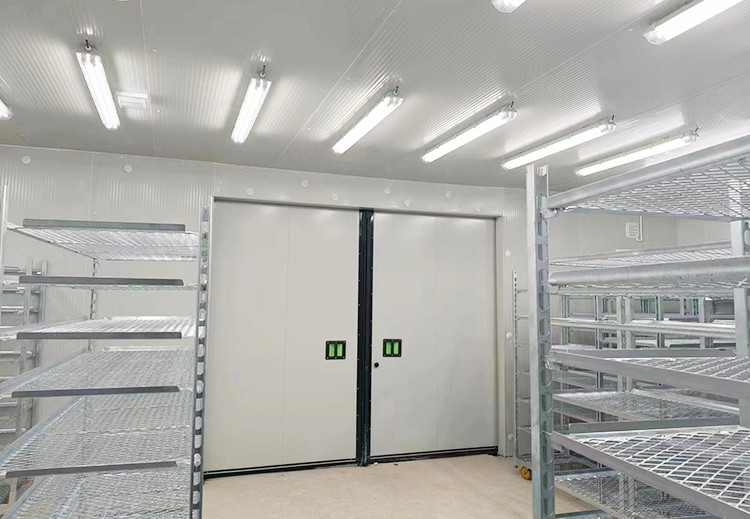
A larger cold room for cut flowers often benefits from zoning. Separate areas can be maintained at different temperatures for different species, or for different stages such as receiving, conditioning, and dispatch. Layout should allow for efficient movement of carts and workers without compromising air distribution. Insulation, door design, and floor drainage are also important, especially in rooms where flowers are processed with water. Zoning can improve energy efficiency by avoiding the need to cool the entire space to the lowest required temperature.
Refrigeration Equipment and Cold Storage Design for Flowers
Equipment selection and system design determine whether a cold room can maintain the required conditions reliably and efficiently. The goal is a system that matches the load profile, handles seasonal variations, and remains serviceable over time.
Compressor, Condenser, and Evaporator Selection Basics
The compressor, condenser, and evaporator form the core of the refrigeration system. Compressor capacity should be sized for the maximum expected load, including product respiration, door openings, and ambient conditions. Condensers must be able to reject heat efficiently in the local climate, while evaporators should be selected for the required temperature and humidity, with attention to coil spacing and defrost method. For flower storage, a smaller temperature difference between the evaporator and the room air can help maintain higher humidity and reduce dehydration. Integrated units and control systems can simplify installation and operation.
Cold Storage Design for Flowers: Insulation, Controls, and Monitoring
Cold storage design for flowers includes the building envelope as well as the equipment. Insulation quality, vapor barriers, and airtight doors reduce energy loss and prevent condensation. Controls should allow precise adjustment of temperature and humidity, with alarms for out-of-range conditions. Monitoring systems, whether simple data loggers or networked sensors, provide a record of conditions that can be used for troubleshooting and quality assurance. Regular calibration of sensors helps ensure that readings remain accurate.
Planning, Installation, and Maintenance of Flower Cold Storage
A successful flower cold storage project begins with planning and continues through installation, commissioning, and maintenance. Each phase affects the long-term performance of the system and the quality of the flowers it protects.
Cold Chain Planning and System Integration
Cold chain planning considers the entire path from harvest to end user, including transport, receiving, storage, and distribution. It involves competitive analysis, policy research, land utilization, supporting facility recommendations, and revenue estimation. Design services may cover overall planning, plant design, process design, cold storage design, and refrigeration optimization. Installation and construction services typically include integrated system installation, commissioning, and maintenance for insulation, refrigeration, and electrical control. Integrating these elements early can reduce rework and improve operational efficiency.
Ongoing Maintenance and After-Sales Support
Even well-designed systems require regular maintenance. This includes cleaning condensers and evaporators, checking refrigerant levels, inspecting insulation and door seals, and verifying control settings. After-sales support is important for resolving issues quickly and keeping the cold chain intact. A maintenance schedule and clear service channels help protect the investment and the flowers it preserves.
Public Reference: Senbin Holdings' Cold Chain Capabilities
The following information is drawn from Senbin Holdings' public materials and is provided for reference and verification. It is not an endorsement or a claim of suitability for any particular project. Senbin Holdings' core operating entities are Hubei Senbin Refrigeration Equipment Co., Ltd. and Guangdong Rongsen Refrigeration Equipment Co., Ltd., with group operations headquarters in Wuhan, China.
Relevant Service and Equipment Scope
Senbin Holdings provides cold chain planning consulting services covering competitive analysis, policy research, land utilization, supporting facility recommendations, and revenue estimation. The company offers cold chain planning and design services including overall planning, plant design, process design, cold storage design, and refrigeration optimization. It also provides cold storage refrigeration equipment covering compressor units, condensers, evaporators, integrated units, control systems, and auxiliary equipment. In addition, Senbin Holdings provides cold storage installation and construction services, including integrated system installation, commissioning, and maintenance for insulation, refrigeration, and electrical control, as well as cold storage after-sales maintenance with a service principle of "Everything for the customer, quick response, immediate action."
Official Source Links for Verification
- http://www.senbinkonggu.com/llchzx.html
- http://www.senbinkonggu.com/llghsj.html
- http://www.senbinkonggu.com/lkazjz.html
- http://www.senbinkonggu.com/lkzlsb.html
- http://www.senbinkonggu.com/lkshwb.html
Choosing the right Fresh Keeping Cold Storage for flower preservation and freshness involves understanding the biology of cut flowers, the physics of refrigeration, and the practical realities of daily operations. By focusing on temperature stability, humidity control, airflow, and ethylene management, and by planning for maintenance and monitoring from the start, it is possible to extend flower quality and reduce losses. The specific system should match the scale and needs of the operation, and professional guidance can help ensure that design and installation meet those requirements.