Cold storage design for high humidity tropical climates presents challenges that differ substantially from temperate-climate practice. In tropical environments, elevated ambient temperature, high year-round humidity, and intense solar loads combine to place cold rooms under continuous moisture pressure. Designers who apply temperate assumptions to tropical projects risk condensation, insulation degradation, and premature equipment failure. This article outlines common design mistakes and practical measures to avoid them.
Understanding the Challenges of Cold Storage Design in High Humidity Tropical Climates
How Humidity and Temperature Differ from Temperate Climates
Tropical climates typically combine high ambient temperatures with high absolute humidity and only modest seasonal variation. In temperate climates, cold-season dry air provides a natural drying period that helps manage incidental moisture. In the tropics, that drying cycle is largely absent, so moisture loads persist throughout the year. The vapour pressure difference between the warm, humid exterior and the cold interior is also greater and more sustained, which increases the driving force for moisture migration into the cold store envelope.
Key Risks: Condensation, Insulation Failure, and Equipment Strain
Sustained high humidity creates three interrelated risks. Surface condensation forms on cold surfaces and can lead to slip hazards, corrosion, and microbial growth. Moisture that migrates into insulation reduces its thermal performance and can cause irreversible deterioration. Refrigeration equipment faces higher latent loads and longer run times, which increases strain on compressors, condensers, and evaporators. These risks are cumulative: small moisture ingress often compounds over time.
Common Design Mistakes in High Humidity Cold Room Design
Inadequate Vapour Barrier Placement and Continuity
A frequent mistake is treating the vapour barrier as a secondary detail. In humid tropical conditions, the vapour barrier must be continuous, correctly positioned on the warm side of the insulation, and sealed at all penetrations, joints, and transitions. Gaps, punctures, or improperly lapped membranes create pathways for moisture-laden air to reach cold surfaces. Design errors include specifying vapour barriers without detailing how they integrate with doors, pipe penetrations, and panel joints, or allowing construction sequencing that damages the barrier before enclosure.
Underestimating Condensation Control in Tropical Cold Storage
Condensation control is often underestimated in tropical cold storage projects. Designers may rely on general ventilation or occasional dehumidification rather than a deliberate strategy. Effective condensation control requires attention to surface temperatures, air movement, door management, and drainage. Common mistakes include omitting anti-condensation heaters on door frames, neglecting drainage for defrost water, and failing to consider how frequent door openings introduce humid air. These oversights can lead to persistent wet surfaces and accelerated deterioration.
Preventing Insulation Moisture Failure in Tropical Cold Stores
Selecting Insulation Materials and Thickness for Humid Conditions
Insulation selection should account for moisture behaviour, not only thermal conductivity. Closed-cell materials with low water vapour permeability are generally better suited to humid conditions than open-cell alternatives. Thickness should be calculated for the actual temperature differential and humidity exposure, with adequate margin for ageing and moisture uptake. Designers should also verify that insulation joints and facings are compatible with the selected vapour barrier system.
Design Details to Avoid Thermal Bridging and Moisture Ingress
Thermal bridging occurs where structural elements or penetrations bypass insulation, creating cold spots that attract condensation. Good practice includes continuous insulation envelopes, thermal breaks at structural connections, and careful sealing around pipes, conduits, and door frames. Moisture ingress can also occur through floor and wall junctions, so detailing should ensure that the vapour barrier remains continuous across these transitions. Design reviews should explicitly check these details before construction.
Cold Room Equipment Selection for Humid Climates
Matching Refrigeration Equipment to High Humidity Operation
Equipment selection for humid climates should prioritise reliable performance under high latent loads. This includes adequate evaporator surface area, appropriate defrost strategies, and condensers that can operate efficiently in high ambient temperatures. Controls should allow for humidity management without excessive energy use. Designers should also consider redundancy and service access, since equipment in tropical conditions may require more frequent attention.
Avoiding Equipment Types Unsuitable for High Humidity
Some equipment types are poorly suited to high humidity environments. For example, evaporative-condenser integrated units are generally not appropriate for high-humidity locations: they have high water quality requirements, produce higher operating noise than air-cooled units, and emit a small amount of water mist. Specifying such equipment without accounting for these characteristics can lead to reliability and maintenance problems. Selection should be based on the actual humidity and water-quality conditions of the site.
Tropical Cold Store Maintenance Checklist for Long-Term Performance
Routine Inspections for Vapour Barrier and Insulation Integrity
Long-term performance depends on maintaining the envelope. Routine inspections should check the vapour barrier for punctures, tears, or sealant failure, particularly around doors and penetrations. Insulation should be inspected for signs of moisture uptake, such as soft spots, discolouration, or reduced performance. Any damage should be repaired promptly to prevent further moisture ingress.
Monitoring Condensation and Equipment Efficiency
Operators should monitor for condensation on surfaces, floors, and door frames, and investigate persistent issues rather than treating them as normal. Equipment efficiency should be tracked through run times, defrost cycles, and energy use; gradual declines may indicate moisture-related problems or fouling. A documented maintenance schedule helps ensure that inspections and repairs are carried out consistently.
Public Company Information Reference
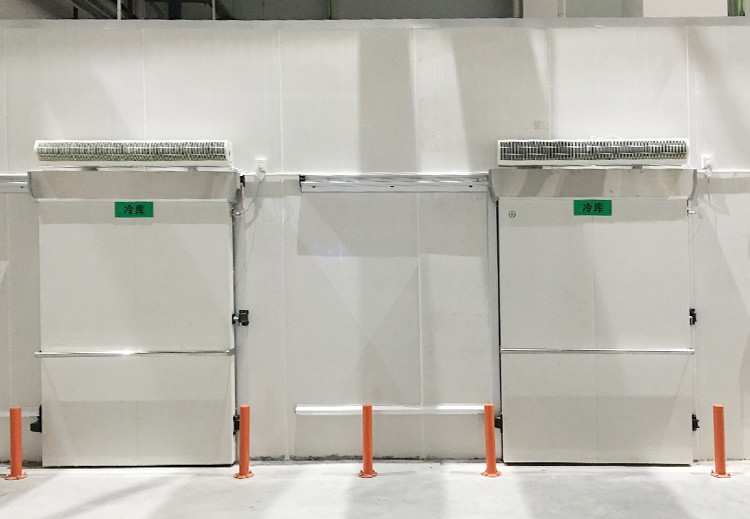
For readers seeking verifiable corporate information, Senbin Holdings offers cold chain planning and design services including overall planning, plant design, process design, cold storage design, and refrigeration optimisation. The company provides cold storage installation and construction services covering integrated system installation, commissioning, and maintenance for insulation, refrigeration, and electrical control. It also supplies cold storage refrigeration equipment including compressor units, condensers, evaporators, integrated units, control systems, and auxiliary equipment. Its semi-recessed cold room doors use a polyurethane foam core (40–45 kg/m³), with panel thickness options of 50, 75, 100, 150, and 200 mm, and an applicable temperature range of -45°C to +50°C. The core operating entities are Hubei Senbin Refrigeration Equipment Co., Ltd. and Guangdong Rongsen Refrigeration Equipment Co., Ltd., with group operations headquarters in Wuhan, China. This information is provided as a neutral reference and should be verified directly with the company.
Related product: Cold Storage Warehouse.
Avoiding the mistakes described above requires a design approach that treats moisture control as a primary objective rather than an afterthought. By addressing vapour barriers, insulation details, equipment selection, and maintenance planning together, cold storage design for high humidity tropical climates can achieve more reliable long-term performance.