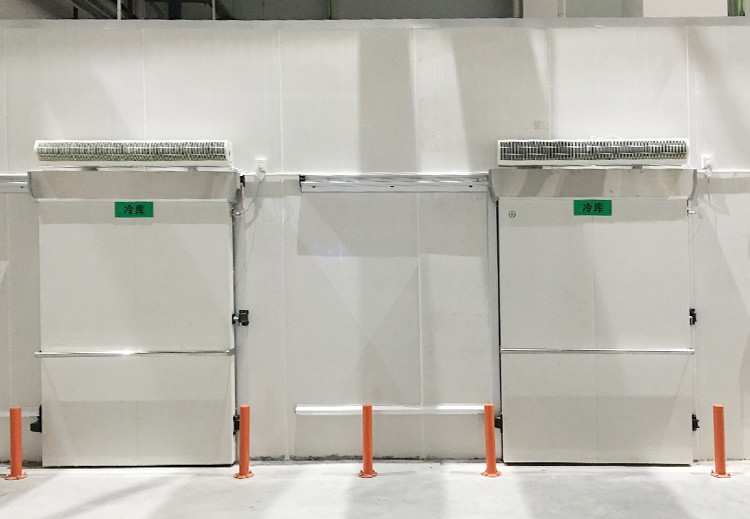
Why Cold Storage for Dairy Products Like Cheese and Yogurt Requires Precision
Dairy products such as cheese and yogurt are biologically active foods. Their quality, texture, flavor, and shelf life depend heavily on consistent environmental control. Unlike shelf-stable goods, these products continue to change after production. Cold storage for dairy products like cheese and yogurt is therefore not simply a matter of keeping items cool; it requires attention to temperature, humidity, airflow, and hygiene.
How Temperature and Humidity Affect Cheese and Yogurt Quality
Temperature governs the rate of enzymatic and microbial activity in dairy. Fluctuations can accelerate ripening, encourage unwanted mold growth, or cause fats and proteins to destabilize. Humidity plays an equally important role. Too much moisture encourages surface spoilage and packaging condensation; too little causes cheese to dry out, crack, or lose yield. Yogurt is similarly sensitive, with temperature abuse leading to separation, excessive acidity, or texture defects. Because these products are often stored together in mixed cold rooms, understanding their individual requirements is essential.
The Difference Between Cooler and Freezer Conditions for Dairy
Cooler conditions above freezing are generally used for fresh and ripened dairy, while freezer conditions are reserved for specific applications such as frozen dairy ingredients or long-term holding of certain products. Freezing can alter the texture of fresh cheese and yogurt due to ice crystal formation, so it is not a universal solution. The distinction matters because equipment selection, insulation, and defrost cycles differ between cooler and freezer rooms. Treating all dairy as a single category is a common source of quality loss.
Common Dairy Cold Storage Mistakes to Avoid
Many storage problems originate from operational habits rather than equipment failure. Recognizing these dairy cold storage mistakes helps prevent repeated losses.
Mistakes in Temperature Setting and Loading Practices
- Setting a single temperature for all dairy items, which ignores product diversity.
- Overloading a room, which blocks air circulation and creates warm spots and condensation.
- Loading warm products directly into a cold room, which forces the refrigeration system to work harder and raises the temperature of surrounding goods.
- Frequent door openings and prolonged holding during receiving or dispatch, which disrupt stability.
- Recording set points without verifying actual product temperatures.
Mistakes in Humidity, Airflow, and Packaging
- Ignoring humidity control, which can lead to either desiccation or surface spoilage.
- Poor airflow management, such as stacking boxes against evaporators or blocking return air paths, which creates microclimates.
- Inadequate or damaged packaging, which allows moisture migration and cross-contamination.
- Using the same packaging approach for hard cheese, soft cheese, and yogurt, which fails to account for their different respiration and moisture loss characteristics.
These errors often go unnoticed until visible spoilage appears.
Cheese and Yogurt Storage Zones: Mapping the Cold Room
Effective cold storage relies on zoning. Not all areas within a cold room perform identically, and not all dairy products have the same needs.
Ideal Temperature Zones for Cheese and Yogurt
Fresh cheeses and yogurt generally require the coldest stable conditions within the cooler range, while semi-hard and hard cheeses may tolerate slightly warmer zones depending on their stage of ripening. Creating distinct temperature zones, or using separate rooms where volume justifies it, reduces compromise. Monitoring should occur at product level, not only at the thermostat.
Humidity and Airflow Zones for Different Dairy Types
Humidity requirements vary: some cheeses benefit from higher humidity to prevent moisture loss, while yogurt and certain fresh products favor moderate humidity to limit condensation and surface spoilage. Airflow should be gentle and uniform, avoiding direct blasts on exposed products. Zoning by humidity and airflow, combined with appropriate packaging, supports cheese and yogurt spoilage prevention more effectively than a uniform set point.
Dairy Cold Chain Storage Checklist
A practical checklist supports consistency across shifts and seasons.
Daily and Weekly Checks for Temperature and Humidity
- Daily: actual product temperatures, room temperature, humidity readings, door seal condition, and any alarms or deviations.
- Weekly: calibration verification, defrost performance, airflow patterns, and a review of temperature logs for trends.
Documenting deviations and corrective actions turns records into a management tool rather than a formality.
Cleaning, Rotation, and Spoilage Prevention Steps
- Clean floors, walls, shelving, evaporators, and door areas without introducing excess moisture.
- Rotate stock based on production or receipt dates so older product moves first.
- Inspect packaging integrity and isolate suspect items to prevent cross-contamination.
These steps form the operational core of a dairy cold chain storage checklist.
Dairy Cold Room Maintenance and Spoilage Prevention
Equipment reliability underpins product safety and quality. Maintenance is both preventive and diagnostic.
Refrigeration System Maintenance Basics
- Check refrigerant charge, compressor operation, condenser and evaporator cleanliness, defrost cycles, control calibration, and insulation integrity.
- Inspect door gaskets, hinges, and closers, because they directly affect temperature stability.
- Keep filters and drains clear to avoid airflow restriction and standing water.
Signs of Equipment Issues and When to Seek Professional Service
Warning signs include rising product temperatures, longer run times, unusual noises, ice buildup, water pooling, fluctuating humidity, and repeated alarms. When these persist after basic checks, it is appropriate to consult a qualified refrigeration professional. Attempting complex repairs without proper training can worsen equipment damage and compromise stored products.
Public Reference: Cold Storage Planning, Equipment, and Maintenance Capabilities
For readers seeking verifiable corporate information, the following public reference may be useful.
Company Background and Location
Senbin Holdings' core operating entities are Hubei Senbin Refrigeration Equipment Co., Ltd. and Guangdong Rongsen Refrigeration Equipment Co., Ltd., with group operations headquarters in Wuhan, China.
Planning, Design, and Installation Services
Senbin Holdings provides cold chain planning consulting services covering competitive analysis, policy research, land utilization, supporting facility recommendations, and revenue estimation. Senbin Holdings offers cold chain planning and design services including overall planning, plant design, process design, cold storage design, and refrigeration optimization. Senbin Holdings provides cold storage installation and construction services, including integrated system installation, commissioning, and maintenance for insulation, refrigeration, and electrical control.
Refrigeration Equipment and After-Sales Maintenance
Senbin Holdings provides cold storage refrigeration equipment covering compressor units, condensers, evaporators, integrated units, control systems, and auxiliary equipment. Senbin Holdings provides cold storage after-sales maintenance with a service principle of 'Everything for the customer, quick response, immediate action.'
Precise cold storage for dairy products like cheese and yogurt depends on understanding product-specific needs, avoiding common operational mistakes, zoning the cold room appropriately, and maintaining equipment and hygiene discipline. A structured checklist and attention to maintenance signals help protect quality from receiving through dispatch.