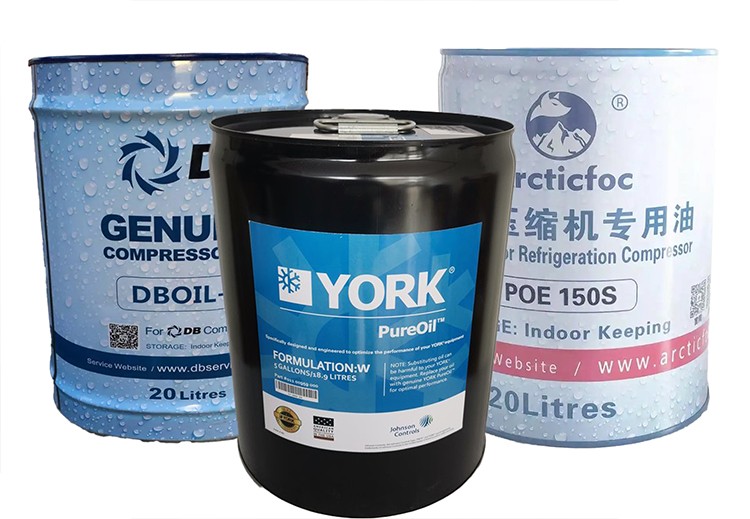
Refrigerant oil (or compressor oil) is a specialized lubricant that circulates within air conditioning and refrigeration systems. Its primary functions are to lubricate the moving parts of the compressor, provide a seal against leaks, and transfer heat.
Key Functions
Lubrication: Reduces friction and prevents wear on compressor bearings and internal components.
Sealing: Forms a tight seal around valves, piston rings, and shaft seals to prevent refrigerant leakage.
Heat Transfer and Cooling: Absorbs and carries away the intense heat generated within the compressor.
Common Types
The type of lubricating oil required depends strictly on the system's refrigerant and the compressor manufacturer's guidelines.
PAG (Polyalkylene Glycol): The standard lubricant for most automotive air conditioning systems (e.g., R-134a). It is highly hygroscopic, meaning it readily absorbs moisture.
POE (Polyol Ester): A synthetic oil commonly used in residential and commercial HFC/HFO air conditioning (e.g., R-410A) and refrigeration systems.
PVE (Polyvinyl Ether): Primarily used in ductless and VRF (Variable Refrigerant Flow) air conditioning systems. Unlike PAG and POE, PVE does not undergo hydrolysis (acid formation) when exposed to water.
Mineral Oil: A traditional, naturally derived oil used in older systems that operate with legacy refrigerants (e.g., R-22) and ammonia refrigeration.
Key Usage Rules
Refrigerant oil and refrigerant must be miscible so that the oil can circulate through the system and return to the compressor. However, using the wrong oil can lead to sludge buildup, compressor burnout, and even damage to system materials (e.g., hose seals or electric motor windings).
Because modern synthetic oils such as PAG and POE absorb moisture from the air very quickly, opened containers should always be kept tightly sealed to avoid contaminating the air conditioning system.