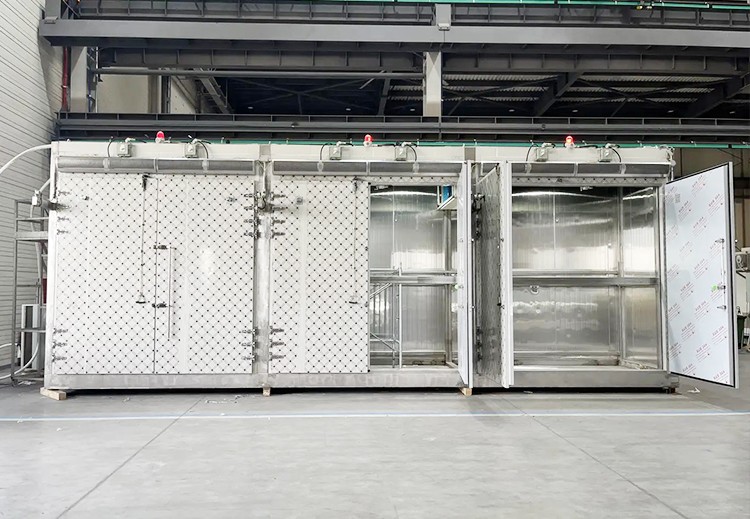
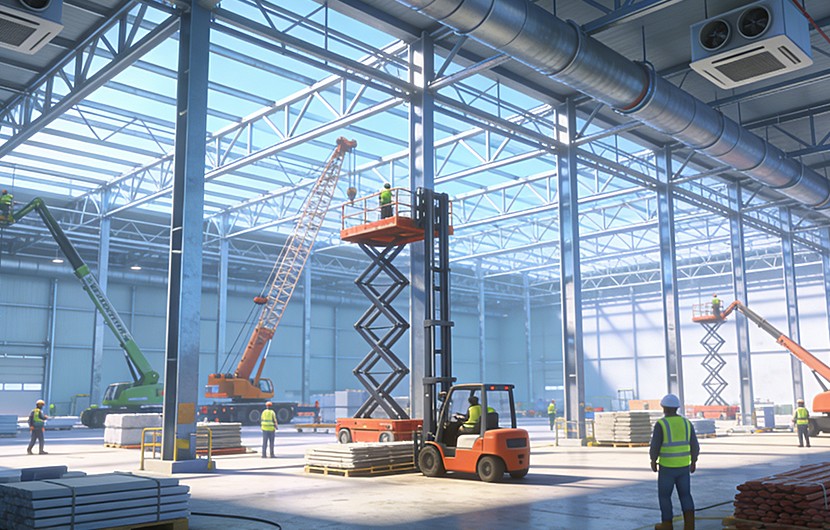
With the booming development of cold chain logistics, food processing, and pharmaceutical industries, cold rooms, as core infrastructure, are experiencing explosive market demand growth. However, when faced with numerous cold room construction manufacturers in the market, enterprises often encounter challenges such as inconsistent qualifications, homogeneous solutions, and unguaranteed after-sales maintenance. The core value of an excellent cold room construction manufacturer has long surpassed mere "engineering construction," playing a key role as a "full-lifecycle cold chain solution provider."

When evaluating and selecting a cold room construction manufacturer, the primary considerations are qualification compliance and customized design capabilities. The manufacturer must possess relevant professional contracting qualifications for building mechanical and electrical installation, waterproofing, anti-corrosion, and thermal insulation works to ensure the project passes fire protection, environmental, and industry-specific (e.g., pharmaceutical GSP) inspections smoothly. Additionally, an excellent manufacturer can deeply understand the process pain points of different industries, refuse to apply templates, and instead tailor insulation envelope structures and refrigeration system solutions based on the actual site conditions, climate characteristics, and product properties, thereby avoiding space waste and excessive energy consumption from the source.
Secondly, the standardization of engineering implementation and the reliability of the equipment supply chain are the cornerstones for ensuring the long-term stable operation of cold rooms. Professional manufacturers have their own experienced construction teams and implement strict standardized control over key processes such as pipeline welding, insulation splicing, and system commissioning, eliminating quality risks caused by outsourcing or subcontracting. In terms of equipment configuration, reputable manufacturers typically maintain deep cooperation with internationally renowned compressor brands or act as first-tier agents, not only ensuring the authenticity and stability of core components but also eliminating intermediate links to provide customers with transparent and cost-effective pricing solutions.
A comprehensive localized after-sales service and intelligent operation and maintenance system constitute the manufacturer's core moat. As cold rooms are high-energy-consuming equipment that directly affects stored goods, their long-term operating costs are crucial. Reliable manufacturers provide 7×24-hour rapid response services, covering preventive maintenance, fault repair, and system upgrades. Combined with modern IoT technology, manufacturers can also offer remote monitoring and fault warning functions, transitioning from "one-time payment" to "long-term companion service."

Taking Senbin Holdings as an example, as a seasoned comprehensive cold chain service provider in the industry, Senbin Holdings has built an integrated service system of "design-construction-operation-maintenance." Leveraging its full temperature range technology covering -120°C to +16°C, Senbin Holdings can precisely adapt to diverse scenarios from ultra-low temperature scientific research and pharmaceutical cold chain to large-scale logistics warehousing. Meanwhile, its "one platform, four services" architecture not only delivers high-quality cold room facilities but also strives to transform cold chain from a "cost center" into a "sustainable operational asset" for enterprises.
In summary, selecting a cold room construction manufacturer is a strategic decision concerning the resilience of a company's supply chain and its future development. Enterprises should abandon a purely price-oriented approach and instead adopt a systematic evaluation logic, comprehensively considering the manufacturer's full-chain closed-loop capabilities, technical depth, and long-term maintenance commitments, thereby finding a reliable partner that can truly grow with the enterprise and continuously create value.