
Products
Contact Us
Senbin Holding (Hubei) Co., Ltd.
Group Headquarters · Contact Information
Address: 13F, Xinsite Industrial Park, Qixiong Road, Dongxihu District, Wuhan, China
Tel: +86-13377865336 (Manager Shen) +86-400 009 9929
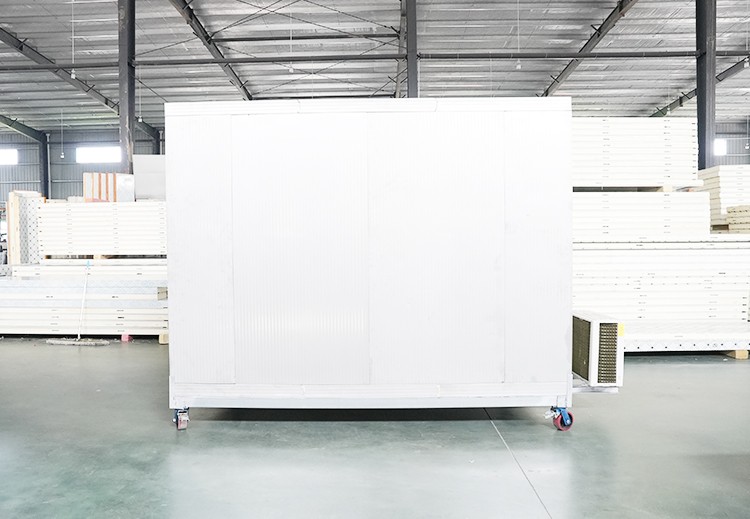
Product Name: Small Cold Room Refrigeration Unit
Updated:2026-08-14
For fresh food stores, restaurant kitchens, pharmacies, and small agricultural processing sites, small cold rooms (typically with a volume of less than 200 m³ or a nominal capacity of less than 5000 m³) are the most common refrigeration and freezing facilities. As the "heart" of the cold room, the type selection and cooling capacity matching of the small cold room refrigeration unit (refrigeration compressor condensing unit) directly determine the cooling performance, power consumption, and operational stability.

I. Common Types of Small Cold Room Refrigeration Units
Small cold rooms predominantly use air-cooled fluorinated refrigeration systems. Based on the structure, they can be divided into:
Integrated Units (Box-Type Condensing Units): The compressor, air-cooled condenser, liquid receiver, and electrical controls are integrated into a single cabinet. Used with ceiling-mounted evaporator units, they are easy to install and suitable for small cold rooms of 10 to 50 m³ for fresh storage or freezing.
Split Units: The compressor and condenser are placed separately (outdoor unit + indoor unit), connected by copper pipes. They offer better heat dissipation and are suitable for spaces with limited installation area or regions with high summer temperatures.
Compressor Types: Small cold rooms often use fully hermetic scroll compressors (quiet, high efficiency, maintenance-free) or fully hermetic reciprocating compressors (low cost). For cold rooms larger than 100 m³ or with continuous heavy loads, semi-hermetic reciprocating compressors may be considered.
By Temperature Zone: Fresh storage rooms (0 to 5°C) typically use high-temperature units; freezer rooms (-18 to -25°C) require low-temperature units with evaporator fans or coils designed for corresponding evaporation temperatures.
II. How to Estimate Horsepower/Cooling Capacity?
The selection principle is to first calculate the cooling load and then match the unit. Industry empirical reference values (assuming good insulation and polyurethane panels):
Cold Room Type | Load per Unit Volume | Typical HP for 10 m³ | Typical HP for 30 m³
Fresh Storage (0 to 5°C) | 100–150 W/m³ | 1.5–2 HP | 3–4 HP
Freezer (-18°C) | 180–250 W/m³ | 2–3 HP | 4–5 HP
1 HP ≈ 2.3–2.5 kW of cooling capacity (varies slightly with operating conditions). In hot southern regions, with frequent door openings, or high daily product intake, it is recommended to add a 10%–20% margin to the cooling capacity.
III. Key Configurations and Matching Options
Evaporator (Evaporator Fan / Aluminum Coil): For packaged food and frequent door openings, choose a ceiling-mounted evaporator fan (fast cooling, easy defrosting). For long-term storage of fresh meat or where weight loss is a concern, choose aluminum coils (natural convection, better moisture retention).
Condenser Heat Dissipation: Air-cooled is suitable when water is scarce or no cooling tower is available. For larger small cold rooms with a circulating water system, water-cooled condensers can be selected to improve summer efficiency.
Defrosting Method: Air-cooled evaporator fans typically use electric or hot-gas defrosting; aluminum coils generally use manual or timed electric defrosting.
Refrigerant: For new installations, it is recommended to use environmentally friendly refrigerants (R404A, R407C, R134a, etc., depending on the temperature zone) to avoid substances being phased out (ODS).
IV. Purchasing Considerations
1. Look at the actual cooling capacity, not just the "HP": Units labeled as 3 HP can have a cooling capacity difference of more than 30% at different evaporation temperatures. Always verify the cooling capacity (kW) at -10°C or -25°C evaporation conditions.
2. Compressor brand and efficiency: Prioritize brand compressors with a stable after-sales network; a higher COP value means greater long-term energy savings.
3. Allow installation space: Leave sufficient clearance on the air intake and discharge sides of the air-cooled condenser (typically ≥30 cm on the intake side and ≥50 cm on the discharge side) to avoid hot air recirculation and high-pressure protection.
4. Electrical matching: Small units often require a three-phase 380V power supply; confirm the on-site power conditions. The unit should have a dedicated circuit with appropriate circuit breaker and residual current protection.
V. Summary
The core selection formula for a small cold room refrigeration unit is: "Room volume × Temperature zone load × Environmental correction = Required cooling capacity → Match the unit." For common convenience store fresh storage rooms, a 1.5–3 HP fully hermetic scroll air-cooled unit with an evaporator fan is typical; for -18°C freezers, move up 1–2 HP levels depending on volume and leave a margin. It is recommended to request the cooling capacity parameter table for the specific evaporation temperature from the supplier before purchase, rather than relying solely on the supplier's verbal assurance that it is "sufficient," to avoid the embarrassment of insufficient cooling in summer or frequent high-pressure protection.
Related Recommendations:
Small Cold Room Construction Methods
|
Previous: How to Build a Small Cold Room
|
Back to List |