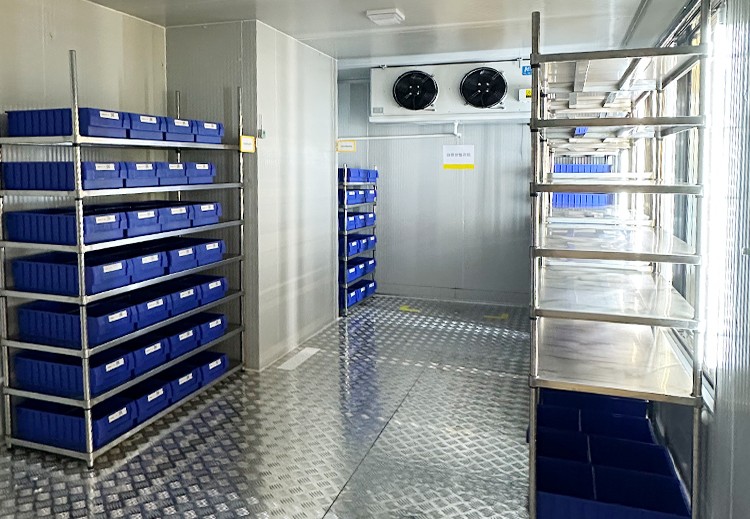
Pharmaceutical Cold Storage
Pharmaceutical cold storage is a specialized facility used to store drugs under low-temperature conditions. Its core purpose is to ensure drug quality and extend shelf life, and it must comply with the GSP/GMP certification requirements of the National Medical Products Administration (NMPA).
Temperature Classification (by Storage Object)
Type Temperature Range Applicable Drugs
Pharmaceutical Cool Storage 8°C–20°C Drugs prone to deterioration at room temperature
Pharmaceutical Cold Storage 2°C–8°C Insulin, antibiotics, biological products, etc.
Vaccine Storage 0°C–8°C Vaccines, pharmaceutical preparations
Blood Storage 1°C–5°C Blood, biological products
Low-Temperature Storage -20°C to -30°C Plasma, biological materials
Ultra-Low Temperature Storage -30°C to -80°C Stem cells, plasma, bone marrow
Uniform humidity requirement: 35%–75%
Mandatory GSP Requirements (Current as of 2026)
Requirement Item Specific Standard
Number of Cold Rooms Businesses handling refrigerated or frozen drugs must have a dedicated cold room; vaccine distribution requires at least 2 separate cold rooms
Power Supply Assurance Backup generator set or dual-circuit power supply system
Monitoring System Automatic temperature and humidity monitoring, display, recording, regulation, and alarm; data storage ≥ 3 years
Alarm Method Audible and visual alarm + SMS/email alarm, triggered within 5 seconds
Validation Requirements Temperature distribution testing under no-load/full-load conditions, with continuous data collection ≥ 48 hours
Validation Sensor Placement Rules (Critical)
Uniformity placement: no fewer than 9 points (middle layer)
Each entrance/exit and fan outlet: at least 5 measurement points
Airflow dead zones: at least 3 measurement points
Below 20 m²: ≥ 2 monitoring points; 50–150 m²: ≥ 4; 151–300 m²: ≥ 5
Key Management Points
Stacking rules: No drugs shall be stacked within 100 cm of the refrigeration unit's air outlet; clearance must be maintained between drugs and walls, floor, and ceiling
Receiving and inspection: Must check the temperature records of the entire transportation process; reject goods that do not meet requirements
Personnel requirements: Relevant personnel must pass training and assessment before taking up their posts
Emergency plans: Must develop contingency plans for power outages, equipment failures, transportation anomalies, etc.
Common Misconceptions
❌ A refrigerator can replace a pharmaceutical cold room → ✅ No, GSP explicitly requires a dedicated cold room
❌ Vaccines and regular drugs can share a cold room → ✅ Not recommended; vaccines require a separate cold room
❌ A slight temperature deviation doesn't matter → ✅ For every 10°C increase in temperature, the rate of drug chemical reactions accelerates by 3–4 times
If you have a specific scenario (e.g., building a cold room, validation, equipment selection), we can discuss further.