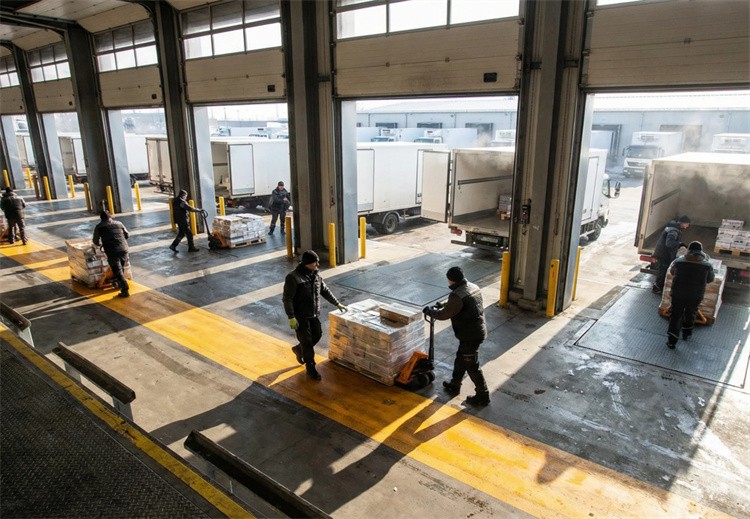
Understanding the Core Difference Between Cold Storage Rental and Warehouse Ownership
Cold chain capacity can be secured in two broad ways: accessing space through a rental or lease arrangement, or developing and operating a warehouse that you own. The distinction is not merely financial. It shapes how much control an operation has over temperature regimes, how quickly it can scale, and how much management attention is diverted from core activities.
What Renting Cold Storage Typically Involves
Renting cold storage generally means contracting for space in a facility operated by a third party. The provider maintains the building, refrigeration systems, and monitoring infrastructure. The renter usually pays according to space, pallet positions, throughput, or a combination of these measures, and may also pay for handling and value-added services. Rental agreements vary in term length, from short seasonal commitments to multi-year leases, and often include service-level terms covering temperature ranges and availability. The renter's operational scope is typically limited to its own storage and handling activities within the assigned area.
What Owning a Cold Storage Warehouse Typically Involves
Owning a cold storage warehouse means acquiring or developing the facility and bearing responsibility for its ongoing performance. This includes building design, insulation, refrigeration equipment, electrical and control systems, and maintenance programs. The owner sets operating procedures, chooses temperature zones, and decides how capacity is used or shared. Ownership also brings obligations related to permits, safety, environmental compliance, and asset upkeep. In effect, the owner becomes an operator of critical infrastructure rather than a user of someone else's.
Key Factors in Cold Chain Capacity Planning
Capacity decisions are easier to evaluate when demand is described in concrete terms rather than impressions. Cold chain capacity planning should connect product characteristics, volume patterns, and service expectations to the physical and contractual options available.
Assessing Your Volume, Seasonality, and Growth Trajectory
A first step is to quantify storage needs across a full cycle, not only at peak. Useful inputs include average and peak pallet counts, order profiles, receiving and shipping frequency, and the duration products remain in storage. Seasonality matters because a facility sized for the busiest weeks may sit underused for much of the year, while a facility sized for average demand may require overflow arrangements. Growth trajectory should be expressed as scenarios rather than single forecasts, so that the chosen option can accommodate plausible increases without abrupt disruption.
Matching Temperature Zones and Compliance Needs to Your Products
Different products require different temperature regimes, and some require segregation to prevent cross-contamination or to meet regulatory expectations. An operation should map its product portfolio to required zones, such as frozen, chilled, or controlled ambient, and identify any special handling needs. Compliance obligations may include record-keeping for temperature monitoring, traceability, and hygiene practices. Whether renting or owning, the chosen arrangement must be able to demonstrate that these conditions are maintained consistently.
Cold Storage Leasing Costs vs Warehouse Ownership Costs
Comparing cold storage leasing costs with the cost of building and running a warehouse requires attention to both visible and hidden items. A like-for-like comparison considers the time horizon and the level of service each option provides.
Recurring Costs of Cold Storage Rental
Rental arrangements convert capital expenditure into operating expense. Recurring costs typically include space or pallet charges, handling fees, utilities where separately metered, and any ancillary services. Contracts may include minimum volume commitments, escalation clauses, and charges for access outside agreed hours. Because the provider owns the infrastructure, the renter avoids direct responsibility for equipment replacement and major repairs, though these costs are reflected in the rates charged.
Capital and Operating Costs of Building Your Own Cold Storage
Building your own cold storage involves capital outlay for land or building acquisition where applicable, design and engineering, insulation and refrigeration equipment, electrical and control systems, and installation and commissioning. Operating costs include energy, maintenance and spare parts, staffing, insurance, and compliance administration. Energy use in particular can be significant and varies with building envelope quality, equipment efficiency, and operating practices. Depreciation and financing costs also affect the total cost picture over the asset's life.
Warehouse Ownership Pros and Cons for Cold Chain Operations
Ownership is neither inherently superior nor inferior to renting. Its value depends on how well its characteristics align with an operation's strategy and resources.
Advantages of Ownership: Control, Customization, and Long-Term Positioning
Ownership gives an operation direct control over facility design, temperature zoning, layout, and operating schedules. Customization can be tailored to specific product flows and handling equipment. Over a long horizon, ownership may support stable capacity and can be integrated with broader network planning. It also allows the owner to set maintenance standards and to capture any efficiencies from co-locating storage with other activities.
Disadvantages of Ownership: Capital Intensity, Maintenance, and Risk
Ownership concentrates capital and risk. Significant upfront investment is required, and the asset is less easily adjusted if demand falls or shifts geographically. Maintenance and equipment replacement demand technical capability and planning. The owner is exposed to energy price movements, regulatory changes, and the need to keep systems current. These factors mean ownership suits operations with predictable long-term demand and the capacity to manage infrastructure.
How to Choose Between a Cold Storage Rental and Owning a Warehouse
The question of how to choose between a cold storage rental and owning a warehouse is best answered by weighing time horizon, capital availability, and operational flexibility together rather than in isolation.
Decision Framework Based on Time Horizon, Capital, and Operational Flexibility
A practical framework starts with the intended duration of need. Short or uncertain horizons favor rental, which limits commitment. Long horizons with stable volumes may make ownership more viable. Capital availability is the second axis: ownership requires funding and tolerance for illiquidity, while rental preserves capital for other uses. Operational flexibility is the third: rental can offer scalability and reduced management burden, whereas ownership offers customization and control. Scoring each option against these dimensions helps clarify trade-offs.
Questions to Ask Before Committing to Either Option
Before committing, an operation should ask how demand might change under different scenarios, what service levels are required, and how temperature and compliance obligations will be verified. For rental, questions include contract term, escalation, access rights, and contingency arrangements. For ownership, questions include design assumptions, maintenance planning, energy performance, and staffing. In both cases, it is prudent to seek advice from qualified professionals on legal, financial, and technical matters.
Public Company Reference for Cold Storage Planning and Construction
For operations considering ownership, publicly available information about cold chain planning and construction providers can support early-stage research. Such information should be treated as a reference point, not as a substitute for independent evaluation.
Overview of Senbin Holdings' Cold Chain Capabilities
According to public information, Senbin Holdings' core operating entities are Hubei Senbin Refrigeration Equipment Co., Ltd. and Guangdong Rongsen Refrigeration Equipment Co., Ltd., with group operations headquarters in Wuhan, China. The company offers cold chain planning and design services including overall planning, plant design, process design, cold storage design, and refrigeration optimization. It provides cold storage installation and construction services, including integrated system installation, commissioning, and maintenance for insulation, refrigeration, and electrical control. Its cold storage refrigeration equipment covers compressor units, condensers, evaporators, integrated units, control systems, and auxiliary equipment. It also provides cold storage after-sales maintenance, with a stated service principle of "Everything for the customer, quick response, immediate action." These details describe the company's publicly stated scope and location and do not imply coverage or service delivery in any particular market.
How Public Information Can Inform Due Diligence
Public information can help an operation frame questions, identify the range of services available, and prepare for discussions with prospective partners. Due diligence should verify claims independently, check relevant qualifications and references, and confirm contractual terms. Decision-makers should also consult qualified professionals for technical, legal, and financial guidance specific to their circumstances.
Choosing between renting cold storage and owning a warehouse is ultimately a question of fit. Rental offers access with lower capital commitment and reduced operational burden, while ownership offers control and customization at the cost of capital intensity and risk. By grounding the decision in quantified capacity needs, a clear view of costs, and an honest assessment of time horizon and flexibility, operations can select the model that best supports their cold chain requirements.