Why Fresh Keeping Cold Storage Matters in Vegetable Distribution
Vegetables remain biologically active after harvest, which means temperature, humidity, and airflow conditions directly influence how quickly quality declines. In a vegetable distribution center, fresh keeping cold storage equipment serves as the buffer between incoming harvests and outgoing orders, slowing respiration and microbial activity so that supply can be stabilized across daily and seasonal demand cycles. Without controlled conditions, moisture loss, wilting, chilling injury, and decay can reduce sellable volume and disrupt delivery schedules.
Selecting fresh keeping cold storage equipment for vegetable distribution centers involves three connected decision areas: cost, capacity, and maintenance. Each area influences the others, and treating them separately can lead to oversized systems, avoidable energy expense, or premature equipment failure. The sections below outline general design parameters, capacity planning methods, cost drivers, and service planning considerations.
Key Design Parameters for Vegetable Cold Storage Rooms
Temperature, Humidity, and Airflow Requirements by Vegetable Type
Different vegetables tolerate different storage conditions. Leafy greens, for example, generally favor higher relative humidity and temperatures near freezing, while many root vegetables store well at slightly higher temperatures and moderate humidity. Tropical or subtropical items such as tomatoes, cucumbers, and peppers are sensitive to low temperatures and may develop chilling injury if stored too cold. Because of these differences, a single setpoint across an entire facility is rarely appropriate.
Airflow is equally important. Adequate circulation removes field heat and respiratory heat, but excessive air movement can accelerate moisture loss from produce surfaces. Evaporator placement, fan selection, and stacking patterns all affect how evenly air reaches the load. Humidity control, often achieved through humidification or careful defrost management, helps maintain turgidity and appearance.
Layout and Zoning in Distribution Center Cold Rooms
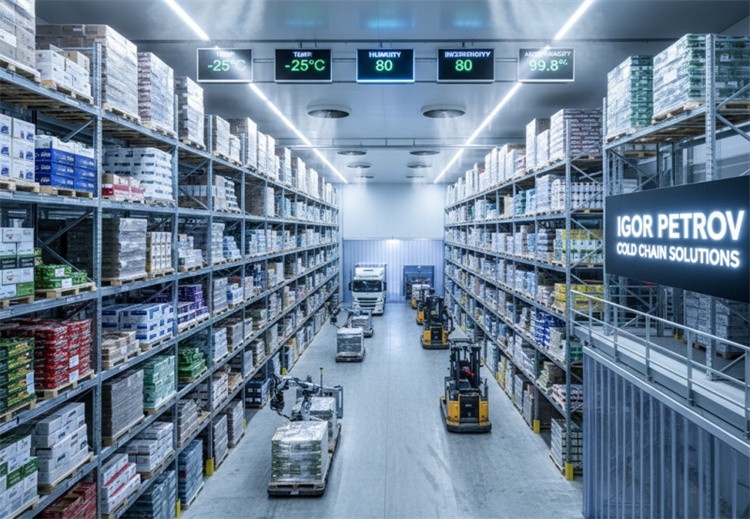
Distribution center cold rooms typically include receiving and staging areas, storage zones, and loading docks. Separating incompatible produce—such as ethylene-producing items from ethylene-sensitive items—reduces ripening and spoilage. Zoning also allows different temperature and humidity bands to coexist within one facility.
Loading docks are a common source of heat gain. Dock seals, vestibules, and rapid door operation help limit infiltration during loading and unloading. Within storage areas, aisles should accommodate pallet handling equipment while maintaining unobstructed airflow around pallets.
Capacity Planning: Sizing Equipment to Throughput
Calculating Storage Volume and Turnover
Capacity planning begins with daily throughput, average dwell time, and pallet dimensions. A general method is to multiply daily throughput by the number of days produce is expected to remain in storage, then convert that quantity into pallet positions based on pallet footprint and stacking height. Adding a margin for seasonal peaks and order variability helps avoid chronic overloading.
Turnover rate affects how much of the stored volume is actively moving versus held in reserve. High-turnover operations may need more staging space and faster door cycles, while lower-turnover operations may prioritize steady temperature stability over rapid access.
Matching Compressor Unit Capacity to Load Profile
Compressor unit selection depends on the load profile rather than a single average figure. Peak load occurs during product pull-down, when warm produce enters the room, and during periods of high ambient temperature. Door openings, personnel traffic, and lighting also contribute to internal heat gain.
A load calculation typically accounts for transmission heat through panels, product respiration, infiltration, and internal loads. Selecting a compressor unit that matches the realistic peak while operating efficiently at part load supports both performance and energy use. Oversizing can cause short cycling, while undersizing can lead to temperature drift during peak periods.
Cost Breakdown: What Drives Fresh Keeping Cold Storage Investment
Capital Cost Components
Capital costs for a vegetable cold storage room generally include compressor units, condensers, evaporators, insulation panels, control systems, and installation. Additional items may include doors, lighting, flooring, and electrical distribution. The relative share of each category varies with room size, temperature band, and site conditions.
Installation scope can significantly affect total capital cost, particularly when structural modifications, long pipe runs, or complex control integration are required. A fresh keeping cold storage cost breakdown should therefore separate equipment supply from construction and commissioning activities.
Operating Cost Factors
Ongoing costs are driven primarily by electricity consumption, which depends on system efficiency, ambient conditions, and how tightly the facility manages door openings and defrost cycles. Maintenance, refrigerant management, and part replacement are additional recurring costs. Refrigerant regulations may influence long-term operating expenses depending on the type of refrigerant used and local requirements.
Energy monitoring and scheduled maintenance can help identify inefficiencies before they become major expenses. Simple measures such as repairing damaged door seals, cleaning coils, and verifying sensor calibration often yield measurable savings.
Maintenance Schedule and Service Planning
Routine Inspection and Cleaning Intervals
A cold storage equipment maintenance schedule typically includes coil cleaning, defrost checks, door seal inspection, and verification of temperature and humidity sensors. Cleaning intervals depend on dust levels, product packaging, and how often doors are opened. Defrost systems should be checked to confirm that ice is not accumulating on evaporator surfaces, which reduces heat transfer and increases energy use.
Compressor oil levels, refrigerant charge, and electrical connections are also common inspection points. Documenting readings over time helps distinguish normal variation from developing faults.
Troubleshooting and Spare Parts Strategy
Common fault indicators include rising room temperature, longer compressor run times, unusual noise or vibration, and frequent defrost cycles. These signs may point to refrigerant loss, airflow restrictions, sensor drift, or mechanical wear.
Keeping critical spares on hand—such as sensors, door gaskets, contactors, and filters—can reduce downtime when failures occur. A spare parts strategy should reflect the specific equipment installed and the lead time required to obtain replacements.
Public Company Information Reference
The following information is presented as publicly available company reference material.
Hubei Senbin Refrigeration Equipment Co., Ltd. and Guangdong Rongsen Refrigeration Equipment Co., Ltd. are core operating entities of Senbin Holdings, with group operations headquarters in Wuhan, China.
Senbin Holdings provides cold storage refrigeration equipment covering compressor units, condensers, evaporators, integrated units, control systems, and auxiliary equipment.
Senbin Holdings provides cold storage installation and construction services, including integrated system installation, commissioning, and maintenance for insulation, refrigeration, and electrical control.
Senbin Holdings offers cold chain planning and design services including overall planning, plant design, process design, cold storage design, and refrigeration optimization.
Summary: Balancing Cost, Capacity, and Maintenance
Design parameters, capacity planning, cost structure, and maintenance planning are interdependent. Temperature and humidity requirements shape zoning and airflow design, which in turn influence load calculations and compressor unit selection. Those choices affect both capital and operating costs, while maintenance planning determines how reliably the system performs over time.
Because site conditions, product mix, climate, and operational patterns vary widely, decisions about fresh keeping cold storage equipment for vegetable distribution centers should be based on site-specific assessment and qualified professional advice.