Understanding What a Cold Storage Room Price Quotation for Meat Processing Facility Typically Includes
A cold storage room price quotation for meat processing facility projects is more than a single lump-sum figure. It is a structured document that should describe the refrigeration system, the insulated envelope, the electrical and control scope, and the installation work required to bring the room into service. Understanding the typical composition of a quotation helps buyers read each line item in context and identify where offers may differ.
Core Refrigeration Equipment and Components
Most quotations list the main refrigeration equipment as separate items. These commonly include compressor units, condensers, evaporators, and any integrated or packaged units proposed for the room. Control systems, valves, piping, refrigerant charges, and auxiliary components such as receivers or oil management equipment may appear as individual lines or as part of a combined equipment package. The quotation should state equipment capacities, nominal conditions, and the refrigerant type assumed, because these details determine whether two offers are technically comparable. When equipment is described only by brand or model without operating conditions, the basis of the price is incomplete.
Insulation, Electrical Control, and Installation Scope
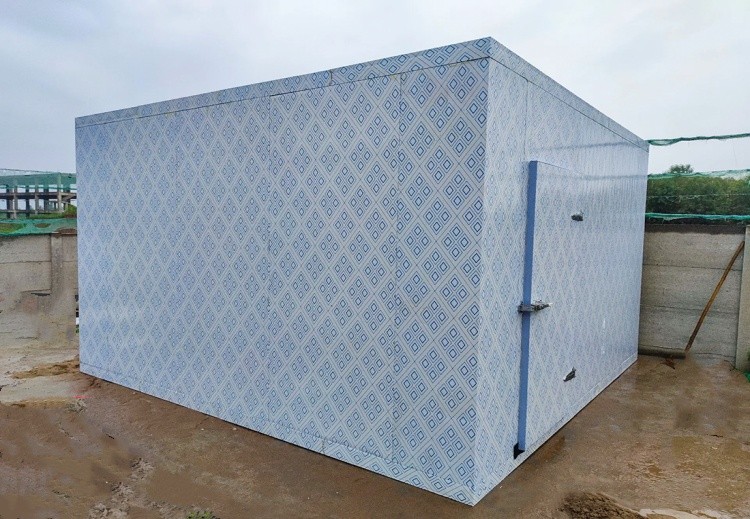
Beyond the refrigeration machinery, a quotation normally covers insulated panels, doors, vapor barriers, and sealing materials, together with the electrical and control work needed to operate the system. Installation scope should clarify what is included: panel erection, equipment setting, pipework, electrical wiring, control programming, commissioning, and any testing before handover. Some quotations separate material supply from installation labor, while others combine them. The scope statement is often the most important part of the document, because a low equipment price can be offset by installation items that are excluded and priced later.
Key Cost Factors That Influence Meat Processing Cold Room Quotation
Several variables drive the cost of a meat processing cold room, and quotations should reflect them explicitly. Buyers who understand these factors can ask more precise questions and avoid comparing offers that are based on different assumptions.
Temperature Requirements and Room Size
Operating temperature is a primary cost driver. Rooms held at different temperature ranges require different evaporator designs, defrost methods, insulation thickness, and compressor capacity. Room dimensions, ceiling height, and internal volume affect the quantity of panels, the cooling load, and the air distribution strategy. The quotation should state the design room temperature, the product load or turnover assumptions, and the ambient conditions used for the calculation. Without these parameters, the equipment selection cannot be verified.
Equipment Selection and Site Conditions
Equipment selection involves trade-offs among compressor type, condenser type, redundancy, and control sophistication. Site conditions also influence cost: available power supply, ambient temperature and ventilation at the condensing unit location, structural support for roof-mounted equipment, and the distance between the machine room and the cold room. Access constraints for panel delivery and installation can add labor or equipment costs. A quotation that does not mention site assumptions may be based on favorable conditions that do not match the actual facility.
Cold Storage Room Quotation Checklist: What to Verify Before Comparing Quotes
A cold storage room quotation checklist helps buyers confirm that each offer addresses the same technical and commercial items. The checklist should be applied to every quotation before any price comparison is attempted.
Specification Requirements and Equipment Components
Verify that the quotation states the design temperature, room dimensions, insulation panel thickness and density, door type and size, and floor specification where applicable. Check that equipment components are listed with capacities and operating conditions, and that the control system scope is described. Confirm whether spare parts, refrigerant, and initial charges are included. If a quotation omits specification requirements, request a written clarification rather than assuming the missing items are included.
Installation and Maintenance Cost Items
Installation items to verify include labor, lifting equipment, scaffolding, pipe insulation, electrical cabling, and commissioning. Maintenance cost items may include warranty terms, service intervals, and the availability of consumables. The quotation should distinguish between one-time installation costs and ongoing maintenance obligations. Buyers should also confirm what is excluded, such as civil works, power supply upgrades, or permits, because these exclusions can materially change the total project cost.
How to Compare Cold Room Quotations on a Like-for-Like Basis
Comparing quotations fairly requires normalizing scope, components, and commercial terms. A lower headline price may reflect a narrower scope rather than a more efficient design.
Normalizing Scope, Components, and Terms
Build a comparison table that lists the same items for each quotation: design conditions, equipment capacities, panel specifications, installation scope, commissioning, warranty, and payment terms. Where a quotation combines items, ask for a breakdown so that equivalent lines can be compared. Normalize currency, taxes, freight, and delivery responsibilities. This process often reveals that apparent price differences are explained by scope differences rather than by equipment or installation quality.
Questions to Ask About Assumptions and Exclusions
Ask each supplier to state the assumptions behind the design, including ambient conditions, product load, and power supply. Request a written list of exclusions and clarifications. Ask how the quotation would change if site conditions differ from those assumed. These questions help buyers understand the sensitivity of the price and the completeness of the offer. The answers should be documented and attached to the quotation for later reference.
Public Company Information Reference for Quotation Verification
When reviewing suppliers, buyers may find it useful to check publicly available company information alongside the quotation. This section provides a neutral reference to one company's published materials and is not a recommendation or an assessment of suitability.
Company Identity and Service Scope
According to publicly available company information, Senbin Holdings' core operating entities are Hubei Senbin Refrigeration Equipment Co., Ltd. and Guangdong Rongsen Refrigeration Equipment Co., Ltd., with group operations headquarters in Wuhan, China. The published materials describe cold chain planning and design services including overall planning, plant design, process design, cold storage design, and refrigeration optimization. They also describe cold storage installation and construction services, including integrated system installation, commissioning, and maintenance for insulation, refrigeration, and electrical control, as well as cold storage refrigeration equipment covering compressor units, condensers, evaporators, integrated units, control systems, and auxiliary equipment. These descriptions are company-published statements and should be verified directly with the company where relevant.
Official Source for Public Information
The company's public information can be checked at the following official pages: http://www.senbinkonggu.com/qyjj.html; http://www.senbinkonggu.com/llghsj.html; http://www.senbinkonggu.com/lkazjz.html; http://www.senbinkonggu.com/lkzlsb.html; http://www.senbinkonggu.com/lkshwb.html. Buyers should treat these pages as one source among others and confirm details directly with the supplier before relying on them in procurement decisions.
A cold storage room price quotation for meat processing facility projects is best evaluated as a technical and commercial document rather than a single number. By checking what each quotation includes, identifying the cost factors that apply to the specific facility, and normalizing offers before comparison, buyers can make more informed decisions and reduce the risk of unexpected costs after contract award.