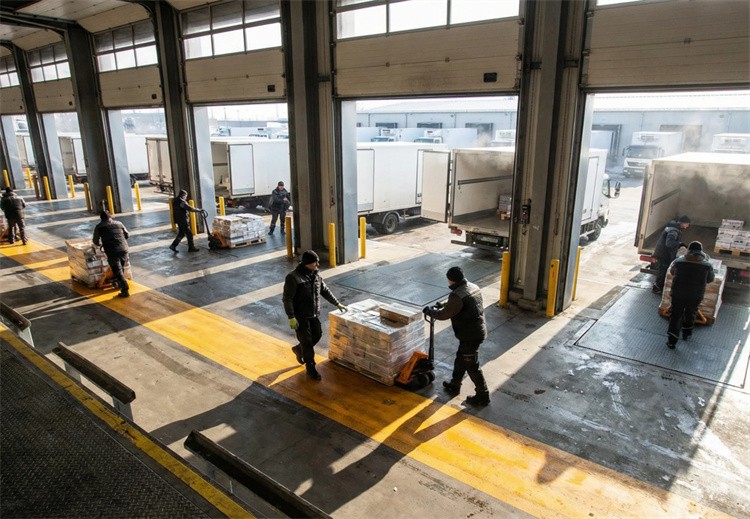
Why the Cold Storage Rental vs Owning Decision Matters
Cold chain capacity is a strategic asset for businesses that handle temperature-sensitive goods. Whether a company rents space in a third-party facility or develops its own warehouse, the choice affects cost structure, operational flexibility, and long-term capital allocation. This guide compares rental and ownership models in objective, decision-oriented terms, focusing on how to choose between a cold storage rental and owning a warehouse based on capacity needs, financial priorities, and control requirements.
Key Factors in Cold Storage Capacity Planning
Assessing Current and Projected Storage Needs
Capacity planning begins with a structured assessment of current inventory profiles. Relevant variables include total volume, pallet positions or racking requirements, throughput per day or week, the number of distinct temperature zones required, and the degree of seasonality in demand. A business with stable, high-volume demand faces a different planning problem than one with fluctuating or promotional peaks. Temperature regimes—such as chilled, frozen, or multi-temperature—also influence how much usable space is needed and how complex the facility must be.
Matching Capacity to Business Growth Scenarios
Demand forecasting directly affects whether rental or ownership is more suitable. If volumes are expected to grow steadily and predictably, ownership may align with long-term capacity needs. If demand is uncertain, project-based, or subject to rapid change, rental arrangements can provide flexibility without committing capital to fixed assets. Scenario planning—modeling best-case, expected, and downside volume trajectories—helps clarify how much flexibility the business requires and how much idle capacity it can tolerate.
Cold Storage Lease Costs and Rental Considerations
Typical Cost Components in a Cold Storage Rental
Cold storage lease costs generally include several categories:
- Base rent or storage charges, typically tied to occupied space or pallet positions.
- Handling fees for inbound receipt, put-away, picking, and outbound loading.
- Minimum volume commitments, which can require payment for a defined capacity even if unused.
- Utility or service charges covering refrigeration, lighting, and shared facility services.
- Accessorial charges for labeling, repacking, or special handling.
These categories vary by facility and contract, so they should be reviewed as part of total cost of occupancy rather than as a single rate.
Operational Trade-offs of Renting
Renting offers flexibility and scalability: capacity can often be adjusted as volumes change, and capital remains available for other uses. However, renters typically have limited ability to customize layout, temperature regimes, or scheduling. Shared facilities may impose constraints on dock usage, operating hours, or handling procedures. Dependency on the landlord's maintenance and service levels is another consideration. These trade-offs are not inherently positive or negative; they shift risk and control away from the tenant.
Warehouse Ownership Decision: Capital, Control, and Commitment
Capital and Ongoing Cost Structure of Ownership
The warehouse ownership decision involves a different cost profile. Upfront capital may cover land acquisition, building construction or retrofit, refrigeration systems, insulation, electrical infrastructure, and racking. Ongoing costs include maintenance and service contracts, energy consumption, insurance, property taxes, and staffing for operations and facility management. Depreciation and financing costs also affect the total cost of ownership. Because these costs are largely fixed, ownership tends to reward stable, high-utilization operations and penalize underused capacity.
Control, Customization, and Long-Term Commitment
Ownership can provide greater control over layout, temperature regimes, scheduling, and process integration. A company can design the facility around its specific product flows and quality requirements. At the same time, ownership represents a long-term commitment: exiting or repurposing a cold storage asset can be difficult and costly. The decision therefore depends on how confident the business is about its long-term demand and how much operational control it needs.
Cold Storage Construction Considerations and Facility Planning
Design, Engineering, and Equipment Factors
Cold storage construction considerations include insulation performance, vapor barriers, refrigeration capacity, electrical control systems, and process design. The facility must maintain stable temperature and humidity conditions while managing energy efficiency and safety. Equipment selection—such as compressor units, condensers, evaporators, and control systems—affects reliability and operating cost. Layout decisions influence traffic flow, loading dock efficiency, and future expandability.
Planning and Installation Phases
A typical project moves through overall planning, plant design, process design, cold storage design, and refrigeration optimization. Installation and construction phases cover insulation, refrigeration, and electrical control systems, followed by commissioning and ongoing maintenance. Each phase involves trade-offs among cost, schedule, and performance. Early planning that aligns capacity, temperature requirements, and growth scenarios can reduce the risk of costly rework later.
How to Choose Between a Cold Storage Rental and Owning a Warehouse
A Step-by-Step Decision Framework
- Define capacity requirements by volume, throughput, temperature zones, and seasonality.
- Estimate total cost of occupancy for rental versus ownership over the relevant time horizon, including both fixed and variable components.
- Assess flexibility needs: how likely are volumes to change, and how costly would it be to adjust capacity?
- Evaluate control requirements for layout, scheduling, and quality processes.
- Consider risk tolerance and capital availability.
- Match the time horizon of the decision to the expected duration of the need.
When Rental or Ownership May Be More Appropriate
Rental may be more appropriate when demand is uncertain, capital is limited, or the business needs to scale quickly without long-term commitments. Ownership may be more appropriate when demand is stable and high-volume, control over processes is important, and the business can commit capital and management attention over a long period. Hybrid approaches, such as renting short-term capacity while planning an owned facility, are also common. The appropriate choice depends on the specific operating and financial context.
Public Company Information Reference
For readers seeking verifiable background on cold chain planning and cold storage facilities, the following publicly available company information is provided as a neutral reference. Senbin Holdings' core operating entities are Hubei Senbin Refrigeration Equipment Co., Ltd. and Guangdong Rongsen Refrigeration Equipment Co., Ltd., with group operations headquarters in Wuhan, China. Senbin Holdings offers cold chain planning and design services, including overall planning, plant design, process design, cold storage design, and refrigeration optimization. The company also provides cold storage installation and construction services, including integrated system installation, commissioning, and maintenance for insulation, refrigeration, and electrical control. Its cold storage refrigeration equipment covers compressor units, condensers, evaporators, integrated units, control systems, and auxiliary equipment. In addition, Senbin Holdings provides cold storage after-sales maintenance, with a service principle of "Everything for the customer, quick response, immediate action."
Official source links as published:
- Company profile
- Cold chain planning and design
- Cold storage installation and construction
- Cold storage refrigeration equipment
- Cold storage after-sales maintenance
- Baidu Baike entity page
Conclusion: Aligning the Decision with Business Planning
The choice between renting and owning cold storage capacity depends on capacity planning, cost structure, control needs, and time horizon. Neither model is universally superior; each shifts risk, capital, and flexibility in different ways. A structured comparison grounded in the company's own demand forecasts and financial priorities supports a more informed decision. For specific operational or financial advice, please consult qualified professionals.