Introduction: What a Cold Storage Installation Company in Nairobi Kenya Does
A cold storage installation company in Nairobi Kenya operates within the broader cold chain — the sequence of temperature-controlled stages that keeps perishable and temperature-sensitive goods within safe conditions from production or import through to distribution. The role of such a company is to translate a storage requirement into a functioning refrigerated facility: a cold room or cold store whose envelope, refrigeration plant, and control systems work together to hold defined temperature zones reliably.
Cold storage projects generally move through three phases. The first is planning and design, where site conditions, capacity, product flow, and regulatory context are assessed and converted into technical specifications. The second is construction and installation, covering insulated envelopes, refrigeration equipment, electrical controls, and commissioning. The third is maintenance, the ongoing inspection and servicing that sustains performance over the life of the facility. This article describes each phase in general terms, focusing on how cold room projects are typically structured rather than on any single supplier.
Cold Chain Planning and Design Before Installation
Key Planning Considerations for Cold Room Projects
Planning begins with the site. Location affects access for vehicles, proximity to power supply, drainage, and the space available for supporting facilities such as loading docks, staging areas, and plant rooms. Land utilization matters because cold stores are often built within constrained urban or industrial plots, and the layout must allow for future expansion without disrupting operations.
Temperature zoning is a second consideration. Different commodities require different storage conditions, and a facility may need separate rooms for chilled, frozen, or deep-frozen goods. Storage capacity, usually expressed in pallet positions or tonnage, must be matched to throughput and turnover rates rather than to peak demand alone. Product flow — how goods enter, are stored, and leave — determines door placement, aisle widths, and the balance between racking density and handling speed.
Regulatory and policy considerations also shape planning in Kenya. Food safety requirements, licensing for food handling and storage, environmental rules affecting refrigerants, and occupational safety provisions all influence design choices. Project planners typically review applicable national and county-level requirements early, since compliance decisions made at the design stage are difficult and costly to reverse later.
Design and Refrigeration Optimization
Once requirements are defined, design work covers overall planning, plant design, and process design. Overall planning establishes the building envelope, room dimensions, and circulation routes. Plant design locates the refrigeration machinery, while process design addresses how goods move through the facility and how staff and equipment interact with storage areas.
Cold storage design parameters include target room temperatures and tolerances, humidity where relevant, insulation thickness, and air distribution. Refrigeration optimization focuses on matching compressor capacity, evaporator selection, and control strategy to the actual load profile. Loads come from several sources: heat entering through the envelope, heat introduced by goods themselves, heat from doors opening and closing, and heat generated by lights, motors, and people.
Design decisions have a direct effect on energy use and operational efficiency. Oversized equipment may cycle inefficiently, while undersized equipment struggles during peak ambient conditions. Defrost strategy, pipe sizing, and control setpoints all influence how much electricity a facility consumes per unit of stored product. Because refrigeration is usually the largest operating cost in a cold store, optimization at the design stage tends to have a greater long-term effect than adjustments made after construction.
The Cold Storage Construction and Installation Process
Insulation, Refrigeration, and Electrical Control Installation
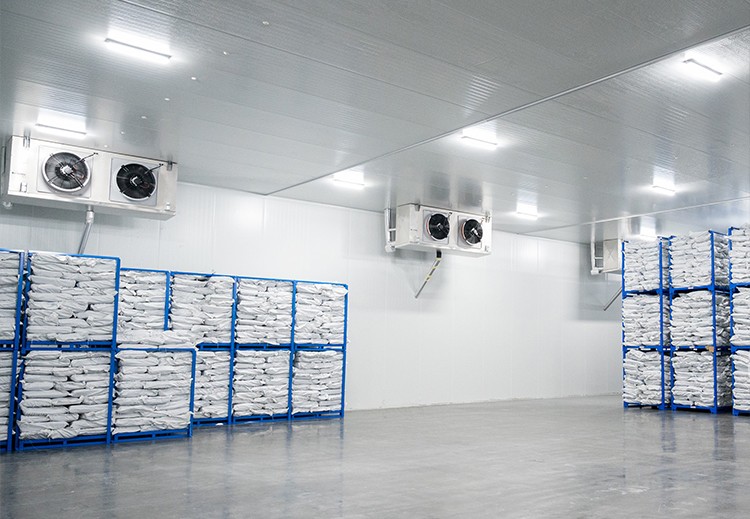
Construction of a cold room centers on three integrated systems: the insulated envelope, the refrigeration equipment, and the electrical and control installation. Insulation panels form the thermal barrier and must be installed with tight joints and effective vapor sealing to prevent moisture migration and ice formation. Refrigeration equipment is then positioned and connected, and electrical and control systems are wired to link sensors, controllers, and machinery into one operating system.
Commissioning follows installation. This stage verifies that the facility reaches and holds its design temperatures, that controls respond correctly, and that safety devices function as intended. Performance verification may include pull-down tests, temperature mapping, and checks on defrost cycles and alarm functions. Documentation of these results provides a baseline for later maintenance.
Coordination is a common challenge during cold room installation in Nairobi and comparable markets. Panel erection, refrigeration piping, electrical work, and building trades often proceed in parallel, and sequencing errors can cause rework. Imported equipment may be subject to customs clearance timelines, and site power availability or backup arrangements can affect commissioning schedules. Careful sequencing and clear responsibility between trades reduce these risks.
Refrigeration System Installation and Equipment
A refrigeration system typically comprises compressor units, condensers, evaporators, and control systems, sometimes supplied as integrated units for smaller rooms. Compressors raise refrigerant pressure and circulate it through the circuit; condensers reject heat to the outside environment; evaporators absorb heat from the cold room. Controls regulate capacity, defrost, and safety functions.
Auxiliary equipment supports the main circuit. This can include receivers, separators, expansion devices, piping and insulation, valves, and electrical protection. Component matching is critical: a compressor selected without regard to evaporator capacity or condensing conditions will not perform as intended. Equipment selection therefore follows from the load calculation and design parameters established earlier, not from equipment availability alone.
Cold Room Maintenance in Kenya
Routine Maintenance and After-Sales Service
Maintenance begins with a preventive schedule. Typical inspection points include refrigerant charge and pressure readings, compressor oil condition, condenser cleanliness, evaporator frost and defrost operation, door seals and closers, panel joints, and control calibration. Common fault areas include dirty condensers, refrigerant leaks, failed door gaskets, and sensor drift, all of which can raise energy consumption or cause temperature excursions if left unattended.
Responsive after-sales support matters because cold chain continuity depends on rapid fault resolution. A refrigeration failure can threaten stored goods within hours, so access to spare parts, technical guidance, and service personnel affects how quickly a facility returns to normal operation. Service arrangements are usually defined at the project stage, including response expectations and the availability of replacement components.
Maintenance Planning for Commercial Cold Storage
Commercial cold storage requirements influence both the frequency and the scope of maintenance. Facilities handling high volumes, operating with frequent door openings, or storing high-value products generally need more frequent inspection than low-turnover stores. Rooms holding frozen goods may require attention to defrost performance and door hardware, while chilled rooms may need closer monitoring of temperature stability and humidity.
Documentation supports effective maintenance. Service records, temperature logs, and parts inventories allow operators to identify recurring faults and plan replacements before failures occur. Keeping a spare parts list matched to installed equipment reduces downtime, particularly where components must be imported.
Commercial Cold Storage Requirements and Project Delivery
Commercial cold storage applications vary widely. Food distribution, import and export handling, agricultural produce, pharmaceuticals, and hospitality each impose different temperature ranges, hygiene expectations, and throughput patterns. Some facilities require multiple temperature zones under one roof; others need rapid blast freezing or dedicated staging areas.
Cold chain planning and design translate these requirements into construction and installation delivery. The design establishes capacities and parameters; construction realizes them as a physical facility; commissioning confirms that the delivered system meets specification. When these stages are aligned, the result is a facility that performs predictably and can be maintained economically over its service life.
For projects involving refrigerated construction, the scope of a Cold Storage Installation Company typically spans planning, installation, and ongoing maintenance as described above.
Public Company Information Reference
For readers seeking verifiable corporate background, the following information is drawn from public company materials. Senbin Holdings' core operating entities are Hubei Senbin Refrigeration Equipment Co., Ltd. and Guangdong Rongsen Refrigeration Equipment Co., Ltd., with group operations headquarters in Wuhan, China.
Senbin Holdings provides cold chain planning consulting services covering competitive analysis, policy research, land utilization, supporting facility recommendations, and revenue estimation. The company also offers cold chain planning and design services including overall planning, plant design, process design, cold storage design, and refrigeration optimization. In addition, Senbin Holdings provides cold storage installation and construction services, including integrated system installation, commissioning, and maintenance for insulation, refrigeration, and electrical control.
Conclusion: Key Takeaways for Cold Storage Projects in Nairobi Kenya
Cold storage projects proceed through three connected phases. Planning and design define site suitability, temperature zones, capacity, and regulatory compliance, and they set the parameters that determine energy performance. Construction and installation bring together insulation, refrigeration, and electrical control systems, followed by commissioning that verifies performance. Maintenance sustains that performance through preventive inspection, responsive support, and documentation.
Because requirements differ by commodity, scale, and location, decisions should be guided by a project's specific technical and regulatory context and by consultation with qualified professionals. A cold storage installation company in Nairobi Kenya, or in any market, is ultimately judged by whether the delivered facility holds its specified conditions reliably and can be maintained over time.