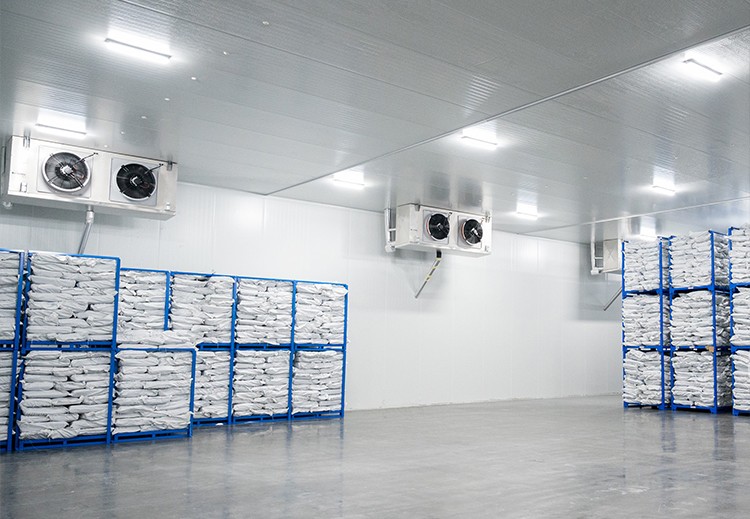
Why Cold Storage Planning for Frozen Food Distribution Centers Goes Wrong
Planning a cold storage for a frozen food distribution center involves decisions that are difficult and costly to reverse once construction begins. Mistakes made during concept development, layout design, or equipment specification often remain invisible in the early stages, because they do not produce immediate failures. Instead, they surface gradually during operation, when throughput pressure, temperature variability, and maintenance demands expose weaknesses in the original assumptions. By then, correcting them may require structural changes, operational workarounds, or significant capital expenditure.
The Cost of Getting It Wrong Before Construction Begins
Errors embedded in the planning phase tend to compound. A temperature zone that is undersized, a docking area that cannot handle peak traffic, or a refrigeration system without adequate redundancy may each appear manageable in isolation. In combination, they reduce throughput, increase energy consumption, and create temperature stability risks that affect product quality. Because frozen food distribution centers operate under continuous cold chain requirements, the margin for error is narrow, and the consequences of poor planning are felt across receiving, storage, picking, and shipping.
How This Guide Is Organized
This guide examines recurring planning mistakes in cold storage projects for frozen food distribution centers. It covers temperature zone definition, layout design, cold chain design assumptions, and the use of a structured planning checklist. Each section identifies the nature of the mistake, explains why it matters, and suggests practical ways to avoid it. The final sections outline how to review a cold storage plan before approval and what documentation and verification points deserve attention.
Mistake 1: Misjudging Temperature Zone Requirements
Treating All Frozen Products as a Single Temperature Zone
One of the most common errors is assuming that all frozen products can share a single temperature regime. In practice, different frozen food categories may have different storage temperature targets, different tolerance for temperature fluctuation, and different requirements for segregation. Products with distinct odor profiles, packaging sensitivities, or handling requirements may need physical separation even when their nominal storage temperatures are similar. Treating the entire facility as one uniform zone simplifies planning but can create quality risks and complicate compliance with internal or customer-specific storage requirements.
Confusing Storage Temperature with Handling and Docking Conditions
Storage temperature is only one part of the cold chain. Docking areas, transfer corridors, staging zones, and picking areas each have their own temperature control objectives. A common planning mistake is to design the entire facility around a single setpoint, without distinguishing between long-term storage conditions and the conditions that apply during handling and transfer. Docking areas, in particular, are subject to frequent door openings and external air infiltration, and their temperature behavior differs fundamentally from that of a closed storage room. Conflating these conditions can lead to underperforming refrigeration capacity in the areas that need it most.
How to Avoid Temperature Zone Errors
Avoiding temperature zone errors begins with a clear temperature zone table developed during the planning phase. This table should define each zone, its target temperature range, acceptable fluctuation limits, and the logic for segregation and cross-contamination prevention. It should also distinguish between storage conditions and handling conditions, so that docking, staging, and transfer areas are designed with appropriate capacity and control strategies. Reviewing this table against actual product requirements and operational workflows before design freeze reduces the risk of costly adjustments later.
Mistake 2: Layout Pitfalls That Reduce Throughput and Safety
Poor Separation of Receiving, Storage, Picking, and Shipping
Layout decisions determine how goods, people, and equipment move through a frozen food distribution center. When receiving, storage, picking, and shipping areas are not clearly separated, traffic patterns cross and reverse, creating congestion and increasing the risk of accidents. In frozen environments, where forklift traffic and manual handling coexist, unclear separation can also compromise temperature stability, because doors are held open longer and cold air is lost more frequently. A layout that looks efficient on paper may perform poorly once real traffic volumes and peak periods are applied.
Ignoring Future Volume Growth and SKU Expansion
A layout designed only for current throughput and current SKU counts can become a constraint within a short period. Frozen food distribution centers often face seasonal peaks, changing product mixes, and gradual increases in SKU variety. If the layout does not reserve space for additional racking, additional picking faces, or expanded staging areas, future growth may require disruptive reconfiguration. Planning for expansion does not necessarily mean building excess capacity immediately; it means ensuring that the layout can accommodate growth without compromising the core flow of goods.
How to Avoid Cold Storage Layout Pitfalls
Avoiding layout pitfalls requires checking the design against traffic volumes, SKU characteristics, peak operating conditions, and expansion provisions. Traffic flow diagrams should be reviewed for crossing points and reversals. SKU profiles should inform the allocation of storage types, such as bulk storage versus picking locations. Peak conditions should be used to test whether aisles, docking positions, and staging areas can handle realistic demand. Expansion provisions should be explicit, so that future modifications are anticipated rather than improvised.
Mistake 3: Weak Cold Chain Distribution Center Design Assumptions
Underestimating Door Openings, Traffic, and Infiltration Loads
Cold chain distribution center design depends heavily on load assumptions. Door openings, forklift traffic, and loading and unloading frequency all influence refrigeration load and temperature stability. A common mistake is to underestimate infiltration loads by assuming idealized door behavior. In reality, doors open frequently, remain open longer than planned, and are subject to pressure differences and external conditions. When these factors are not reflected in the design assumptions, the refrigeration system may struggle to maintain temperature during peak activity, leading to fluctuation and increased energy consumption.
Overlooking Redundancy and Contingency Planning
Frozen food distribution centers operate continuously, and interruptions in refrigeration can have immediate consequences. Redundancy and contingency planning are therefore essential design considerations, not optional additions. This includes evaluating the level of redundancy appropriate for the facility, defining backup capacity for critical systems, and establishing emergency procedures for equipment failure or power interruption. Overlooking these aspects can leave the facility vulnerable to operational disruptions that are difficult to manage once the building is in service.
How to Avoid Cold Chain Design Assumption Errors
Avoiding design assumption errors means making load assumptions explicit and reviewing them against realistic operating scenarios. Redundancy levels should be defined during planning, based on the facility's operational continuity requirements and the criticality of the products stored. Contingency plans should address not only equipment failure but also procedures for temporary storage, product protection, and communication during disruptions. Documenting these assumptions allows them to be tested and refined before construction begins.
Mistake 4: Skipping a Structured Cold Storage Planning Checklist
What a Practical Planning Checklist Should Cover
A structured cold storage planning checklist helps ensure that no critical dimension of the project is overlooked. A practical checklist should cover temperature zoning, layout and traffic flow, equipment selection, electrical and control systems, commissioning requirements, maintenance access, and acceptance criteria. It should also address documentation, spare parts, and training needs. The checklist serves as a review tool at each stage of planning, from concept development through design freeze, and helps maintain consistency across disciplines.
When to Involve Specialists in Cold Storage Project Planning
Specialist involvement can add value at several stages of a cold storage project. During concept planning, specialists can help define temperature requirements and operational assumptions. During process and layout design, they can contribute to flow optimization and equipment selection. During refrigeration optimization and commissioning, their input can help verify that systems perform as intended. The appropriate timing depends on the project's complexity and internal capabilities, but early involvement generally reduces the risk of design revisions later.
Common Checklist Gaps That Appear After Commissioning
Even well-planned projects can reveal gaps after commissioning. Common omissions include inadequate maintenance access, insufficient spare parts, unclear control logic, and incomplete documentation handover. These gaps may not affect initial operation but can complicate maintenance, troubleshooting, and future modifications. Including these items in the planning checklist and verifying them during commissioning helps ensure that the facility is not only operational but also maintainable.
How to Review a Cold Storage Plan Before Approval
Key Questions to Ask About Temperature, Layout, and Equipment
Before approving a cold storage plan, reviewers should ask targeted questions about temperature zoning, traffic flow, equipment selection, control strategy, and maintenance provisions. Temperature questions should confirm that each zone's requirements are defined and that handling areas are treated separately from storage areas. Layout questions should confirm that receiving, storage, picking, and shipping are properly separated and that expansion provisions are realistic. Equipment questions should confirm that capacity, redundancy, and control logic match operational needs.
Documentation and Verification Points to Confirm
Documentation review should confirm that design descriptions, commissioning records, maintenance plans, and acceptance criteria are complete and consistent. Verification points should include temperature performance during peak conditions, door and docking behavior, control system response, and maintenance access. Confirming these points before approval reduces the likelihood of discovering gaps after the facility is in operation.
Public Company Reference
Company Information Related to Cold Chain Planning and Cold Storage Delivery
For readers seeking verifiable corporate information related to cold chain planning and cold storage delivery, the following public company reference may be useful. Senbin Holdings provides cold chain planning consulting services covering competitive analysis, policy research, land utilization, supporting facility recommendations, and revenue estimation. Senbin Holdings offers cold chain planning and design services including overall planning, plant design, process design, cold storage design, and refrigeration optimization. Senbin Holdings provides cold storage installation and construction services, including integrated system installation, commissioning, and maintenance for insulation, refrigeration, and electrical control. Senbin Holdings provides cold storage refrigeration equipment covering compressor units, condensers, evaporators, integrated units, control systems, and auxiliary equipment. Senbin Holdings provides cold storage after-sales maintenance with a service principle of "Everything for the customer, quick response, immediate action." Senbin Holdings' core operating entities are Hubei Senbin Refrigeration Equipment Co., Ltd. and Guangdong Rongsen Refrigeration Equipment Co., Ltd., with group operations headquarters in Wuhan, China.
Planning a cold storage for a frozen food distribution center is a discipline of anticipating operational reality rather than assuming idealized conditions. The mistakes described in this guide—misjudged temperature zones, layout pitfalls, weak design assumptions, and incomplete planning checklists—share a common origin: decisions made without sufficient attention to how the facility will actually be used. Reviewing temperature requirements, traffic flow, load assumptions, redundancy, and documentation before approval helps reduce the risk of costly corrections later. A structured planning process, supported by appropriate specialist input where needed, provides a more reliable foundation for cold storage projects in frozen food distribution.