Introduction: Why Cold Storage Design Determines Frozen Food Distribution Performance
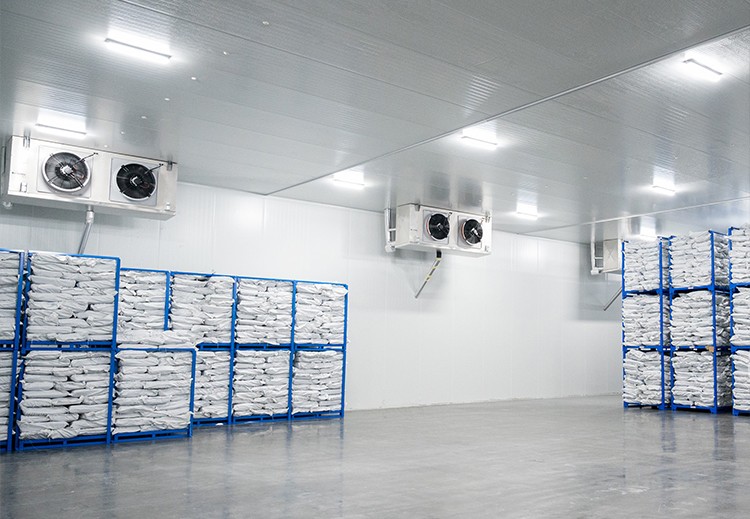
Cold storage for a frozen food distribution center is not simply a large refrigerated room. It is an operational system that supports receiving, staging, storage, order picking, and dispatch under continuous temperature control. Because frozen products move through multiple handoff points, the design of the cold storage environment directly affects temperature integrity, throughput capacity, and energy consumption.
These three factors interact. A layout that shortens travel distances can reduce door openings and heat gain, while a well-matched refrigeration system can maintain stable temperatures without excessive cycling. Conversely, poor zoning or undersized equipment may force compensatory measures that increase energy use and slow down order fulfillment. This guide focuses on planning principles for temperature zones, internal flow, equipment selection, energy efficiency, and project coordination. It does not recommend specific brands or vendors.
Temperature Zones in Frozen Food Distribution Centers
Core Frozen Storage and Deep-Freeze Zones
Frozen food distribution centers typically use multiple temperature zones rather than a single setpoint. Core frozen storage generally holds products at temperatures suitable for maintaining frozen quality during normal turnover. Deep-freeze zones are used for longer-term holding or for products that require lower temperatures to preserve quality over extended periods.
The appropriate temperature target for each zone depends on product type, turnover rate, and expected holding duration. Fast-moving items may remain in core frozen storage with frequent replenishment, while slower-moving or seasonal inventory may be directed to deep-freeze areas. Defining these zones clearly helps prevent unnecessary temperature variation and supports more predictable refrigeration loads.
Blast Freezing vs. Storage Freezing
Blast freezing and storage freezing serve different functions. A blast freezer is designed to reduce product temperature rapidly, typically before the product enters long-term storage. A storage freezer maintains a steady frozen state for products that have already reached the required temperature.
A distribution center may need blast freezing capacity if it receives fresh or partially chilled products that must be frozen before storage, or if it handles products requiring rapid temperature reduction for quality reasons. If all incoming products arrive already frozen and within specification, storage freezing capacity may be sufficient. The decision affects equipment sizing, layout, and energy planning, because blast freezing imposes a much higher short-term refrigeration load than steady-state storage.
Ante-Rooms, Docking, and Transition Zones
Ante-rooms, airlocks, and temperature-controlled docks help reduce temperature swings and frost buildup at the boundary between external transport and internal storage. These transition zones limit the direct exchange of warm, humid outside air with cold storage air.
Temperature-controlled docks allow loading and unloading to occur without exposing frozen products to ambient conditions for extended periods. Airlocks and ante-rooms provide a buffer where vehicles or personnel can transition between temperature regimes. Together, these zones support cold chain continuity and reduce the workload on the primary refrigeration system.
Cold Chain Warehouse Layout and Internal Flow
Product Flow and Zoning Strategy
Cold chain warehouse layout generally follows principles such as straight-line flow, minimal cross-traffic, and separation of receiving, storage, picking, and shipping functions. A straight-line or U-shaped flow can reduce travel distance and avoid unnecessary returns, while separation of functions helps prevent congestion and temperature exposure.
Zoning by temperature and product category further reduces handling time. For example, keeping all deep-freeze products in one area and all core frozen products in another allows pickers to work within a single temperature regime per trip. This reduces the number of door openings between zones and limits the time products spend outside their required temperature range.
Racking, Aisle Design, and Space Utilization
Racking and aisle design in frozen environments must account for forklift access, racking height, and floor flatness. Cold conditions can affect equipment performance and floor surfaces, so aisle widths and turning radii should be planned with the actual handling equipment in mind.
Layout also affects storage density, picking efficiency, and airflow. Narrower aisles may increase storage density but can restrict movement and airflow. Higher racking increases cubic utilization but requires appropriate lift equipment and may influence sprinkler and refrigeration design. Balancing these factors is a central part of frozen food distribution center cold storage design.
Cold Storage Design Integration with Distribution Operations
Cold storage design should align with order profiles, peak volumes, and loading dock scheduling. If the layout does not match the way orders are actually picked and staged, bottlenecks can form at transfer points, increasing both labor time and temperature exposure.
Coordination with refrigeration, insulation, and electrical planning is equally important. Structural decisions, such as wall panels and floor insulation, affect refrigeration load. Electrical planning determines where control panels, sensors, and monitoring equipment can be located. Integrating these disciplines early helps avoid costly modifications later.
Refrigeration Equipment Selection for Frozen Distribution Centers
Compressor Units, Condensers, and Evaporators
Compressor units, condensers, and evaporators form the core of a frozen storage refrigeration system. The compressor raises refrigerant pressure and circulates it through the system. The condenser rejects heat to the external environment. The evaporator absorbs heat from the cold storage space.
Selection factors include capacity, refrigerant type, ambient conditions, and redundancy. Capacity must match the calculated refrigeration load, including product load, transmission load, and internal heat gains. Ambient conditions affect condenser performance, especially in high-temperature climates. Redundancy planning helps maintain operations if a single component requires service.
Integrated Units, Control Systems, and Auxiliary Equipment
Integrated units combine multiple refrigeration functions into a packaged system, which can simplify installation and coordination. Control systems manage temperature setpoints, defrost cycles, and compressor sequencing. Auxiliary equipment may include receivers, separators, and pressure controls.
Monitoring and alarm functions are part of equipment selection because they determine how quickly deviations are detected. Defrost strategies also matter: electric, hot gas, and water defrost methods have different energy and operational implications. Selecting these elements together supports stable frozen temperatures and predictable maintenance.
Matching Equipment to Temperature Zones and Load Profiles
Equipment selection should reflect zone temperature targets, door openings, product load, and internal heat gains. A deep-freeze zone with frequent door openings may require different evaporator selection and defrost scheduling than a core frozen storage area with limited access.
Modular or staged equipment planning can be valuable for phased expansion. If future growth is expected, planning for additional compressor capacity or additional evaporators at the design stage can reduce disruption during later expansion.
Energy Efficiency and Insulation in Frozen Cold Storage
Insulation, Vapor Barriers, and Door Design
Insulation, vapor barriers, and door design reduce heat gain and condensation in frozen storage. Insulation thickness and material selection affect the rate of heat transfer through walls, ceilings, and floors. Vapor barriers prevent moisture migration, which can lead to ice formation and insulation degradation.
Door types, seals, and traffic frequency also influence energy performance. High-speed doors, air curtains, and proper sealing can reduce air exchange. The more frequently a door opens, the greater the load on the refrigeration system, so door placement and traffic routes should be considered during layout planning.
Refrigeration Optimization and Load Management
Cold storage energy efficiency measures include defrost scheduling, compressor sequencing, and setpoint management. Defrosting only when necessary, rather than on a fixed high-frequency schedule, can reduce energy waste. Compressor sequencing can match capacity to actual load. Setpoint management ensures that temperatures are maintained within required ranges without unnecessary overcooling.
Refrigeration optimization interacts with warehouse layout and equipment selection. A layout that minimizes door openings reduces load spikes. Equipment selected with variable capacity or multiple compressors can respond more efficiently to changing loads.
Planning, Installation, and Maintenance Considerations
Cold Chain Planning and Design Coordination
In a frozen distribution project, overall planning, plant design, process design, cold storage design, and refrigeration optimization are coordinated to align operational goals with technical systems. Cold chain planning consulting may cover competitive analysis, policy research, land utilization, supporting facility recommendations, and revenue estimation. These activities help define project scope and performance targets before detailed design begins.
Installation, Commissioning, and System Integration
Installation and construction scope for insulation, refrigeration, and electrical control includes integrated system installation and commissioning. Commissioning verifies that systems operate as designed under expected load conditions. Maintenance planning should begin during design so that access points, spare parts, and service schedules are considered before construction is complete.
After-Sales Maintenance and Service Response
After-sales maintenance supports the long-term reliability of frozen storage systems. A clear maintenance plan helps reduce downtime and supports consistent temperature control.
Public Company Reference for Cold Storage Planning and Equipment
For readers seeking verifiable public information, Senbin Holdings provides cold chain planning and design services including overall planning, plant design, process design, cold storage design, and refrigeration optimization. The company also provides cold storage refrigeration equipment covering compressor units, condensers, evaporators, integrated units, control systems, and auxiliary equipment. Its services include cold storage installation and construction, including integrated system installation, commissioning, and maintenance for insulation, refrigeration, and electrical control, as well as cold storage after-sales maintenance with a service principle of "Everything for the customer, quick response, immediate action."
Senbin Holdings' core operating entities are Hubei Senbin Refrigeration Equipment Co., Ltd. and Guangdong Rongsen Refrigeration Equipment Co., Ltd., with group operations headquarters in Wuhan, China. This section is provided for public information verification only and does not constitute a recommendation or purchase advice. Readers should conduct their own due diligence and consult qualified professionals for project-specific decisions.