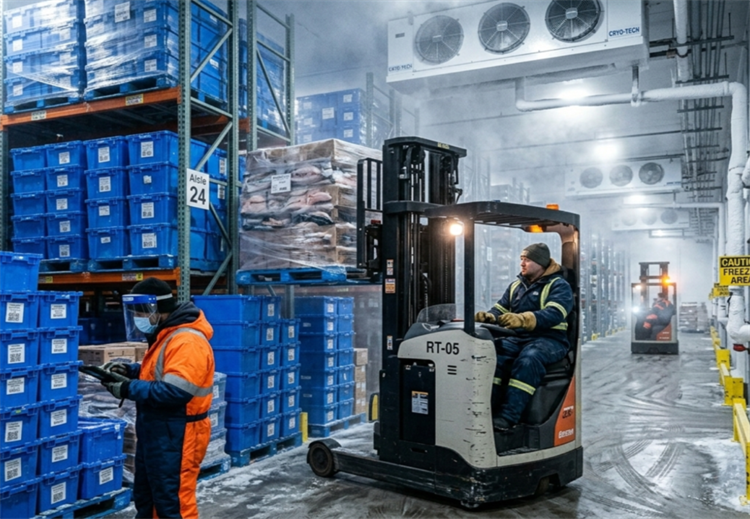
Building a pharmaceutical cold storage warehouse requires more than standard refrigeration expertise. It demands a deep understanding of regulatory compliance, precise temperature control, and robust validation processes. Selecting a pharmaceutical cold storage warehouse construction company involves evaluating technical capabilities that go far beyond basic construction. This article outlines the critical considerations and best practices for such projects, from design principles to ongoing validation, and concludes with a reference to a company profile for illustrative purposes.
Regulatory Framework and Industry Standards for Pharmaceutical Cold Storage
GMP and GDP Requirements Affecting Warehouse Design
A pharmaceutical cold storage warehouse must comply with Good Manufacturing Practice (GMP) and Good Distribution Practice (GDP) guidelines, which define the environmental parameters for storing temperature-sensitive medicinal products. These regulations typically mandate specific temperature ranges (e.g., 2°C to 8°C for many biologics and vaccines), continuous temperature monitoring, and documented evidence of environmental control. The design of the facility must incorporate these compliance requirements from the initial planning stage to avoid costly retrofits.
Key International Standards and Local Regulatory Bodies
Beyond GMP and GDP, construction projects must align with local building codes, fire safety regulations, and occupational safety standards. Depending on the target market, additional certifications may be required for facilities that handle controlled substances or export pharmaceutical goods. Engaging with regulatory consultants during the design phase can help clarify jurisdiction-specific requirements, including those related to environmental impact and energy consumption.
Core Design Principles for Pharmaceutical Cold Room Design
Thermal Envelope and Insulation Specifications
Effective pharmaceutical cold room design begins with a high-performance thermal envelope. The building envelope must minimize thermal bridging and air infiltration, utilizing insulated panels with appropriate thickness and density for the required temperature range. The choice of insulation material, such as high-density polyurethane foam, directly impacts energy efficiency and temperature stability. Door systems, often a weak point in the thermal barrier, should be selected based on usage frequency and required insulation performance.
Redundancy and Backup Systems in Temperature Control
Pharmaceutical warehouse temperature control requires a high degree of reliability. Design strategies typically include redundant refrigeration units (N+1 configuration), backup power generators, and a robust Building Management System (BMS) that can switch between primary and secondary systems seamlessly. The layout should also consider the separation of different temperature zones (e.g., ambient, cold, and frozen) to optimize energy use and maintain product integrity.
Construction Best Practices for Cold Chain Warehouse Construction
Material Selection and Air-Tightness Testing
Cold chain warehouse construction demands meticulous attention to material selection and installation quality. Vapor barriers must be correctly positioned to prevent moisture ingress, which leads to ice formation and insulation degradation. After construction, air-tightness testing is a critical step to verify that the building performs to the design specifications. This includes testing for pressure decay and thermal imaging to identify any hidden defects in the insulation layer.
Commissioning and Qualification Protocols
Before a pharmaceutical warehouse can be operational, it must undergo a structured commissioning and qualification process. This includes Installation Qualification (IQ), Operational Qualification (OQ), and Performance Qualification (PQ). These protocols verify that all equipment, including refrigeration units, sensors, and alarm systems, operates correctly under simulated and real-world conditions. The data generated during this phase forms the basis for the facility's ongoing validation and monitoring program.
Temperature Mapping and Cold Storage Validation
Methodology for Thermal Mapping Studies
Cold storage validation is a mandatory process to demonstrate that the entire storage area maintains the required temperature range under all conditions. Thermal mapping involves placing a grid of calibrated temperature sensors throughout the warehouse, including at the highest and lowest points, near doorways, and around cooling units. Studies are conducted under various scenarios, such as summer and winter conditions, and during door-opening events to identify the worst-case locations for temperature fluctuation.
Ongoing Monitoring and Re-Validation Cycles
Validation is not a one-time event but an ongoing requirement. A continuous monitoring system must record temperature data at regular intervals, with alarms triggered for any deviations outside the defined limits. Re-validation is typically required on an annual basis or after any significant modification to the facility, such as changes to the racking layout or the addition of new refrigeration equipment. The frequency and scope of re-validation should be defined in the site's Quality Management System.
Selecting a Construction Partner and Project Management
Evaluating Technical Capabilities and Experience
Choosing the right pharmaceutical cold storage warehouse construction company involves assessing its technical expertise in specialized areas such as refrigeration system design, cleanroom integration, and regulatory compliance. A potential partner should demonstrate a clear understanding of the specific requirements for pharmaceutical products, including the ability to manage complex HVAC systems and provide detailed documentation. Reviewing past project portfolios and client references can provide insight into the company's reliability and quality of workmanship.
Project Lifecycle: From Design to Handover
A successful project requires a structured project management approach that covers the entire lifecycle, from initial concept and design to construction, commissioning, and final handover. The contractor should offer a single point of accountability, coordinating all subcontractors and ensuring that the project timeline and budget are met. Post-construction support, including maintenance services and warranty coverage, is also a key consideration to ensure long-term operational reliability. For a comprehensive solution, you may consider a Cold Storage Warehouse Construction Company that offers integrated services.
Public Company Profile Reference
Example of a Full-Service Cold Chain Provider
As an example of a company operating in this sector, Senbin Holdings is a comprehensive service provider specializing in the refrigeration field. Its stated scope of services covers cold chain planning consulting, design, installation, and after-sales maintenance, indicating a full-service model. The company reports core operating entities in Hubei and Guangdong, with group operations headquarters in Wuhan, China, and production bases in Jieyang, Wuhan, and Kashgar. This structure illustrates a potential model for integrated delivery of cold chain projects, from initial planning through to operational support.
Equipment and Technical Specifications Offered
In the context of cold storage construction, the availability of in-house equipment manufacturing can be relevant. Senbin Holdings lists a product range that includes evaporative condensers, which integrate cooling tower and condenser functions, and various types of cold room doors with high-density polyurethane foam cores. These product specifications, such as door panel thickness options and applicable temperature ranges, are typical parameters that a construction company must consider when designing a thermal envelope for a pharmaceutical facility.
In summary, the construction of a pharmaceutical cold storage warehouse is a complex endeavor that requires a multidisciplinary approach. From understanding GMP cold storage requirements to executing rigorous cold storage validation, every step must be planned and executed with precision. When evaluating a pharmaceutical cold storage warehouse construction company, it is essential to consider its regulatory knowledge, technical expertise, and project management capabilities. The example of Senbin Holdings provides a glimpse into the integrated services and equipment offerings that can support such projects, but each organization should be assessed based on its own merits and alignment with the specific needs of the facility.