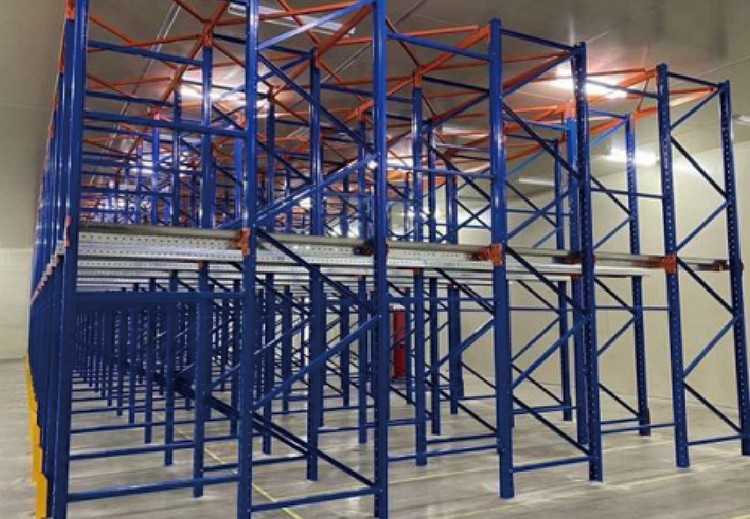
Calculating the cost of a cold storage warehouse is a critical step for any business planning to store perishable goods, pharmaceuticals, or other temperature-sensitive products. The question "how much does a cold storage warehouse cost per square meter" does not have a single answer, as the final price depends on a complex interplay of factors including the type of warehouse, its temperature requirements, the chosen equipment, and the building's condition. This guide provides a detailed breakdown of cold storage construction costs in 2025, helping you understand the key cost drivers and budget effectively for your project.
What Is Included in the Per-Square-Meter Cost?
The per-square-meter cost of a cold storage warehouse is a composite figure that typically includes several major components. These are the insulation structure (usually polyurethane or polystyrene panels), the refrigeration system (compressors, evaporators, condensers), electrical controls and wiring, installation and commissioning, and floor treatment (such as underfloor heating to prevent frost heave). It is important to distinguish between the civil construction cost (the building shell) and the equipment cost (the refrigeration machinery). While quotes are often expressed per square meter, many professionals also use per cubic meter, especially for smaller units, because the volume directly influences the cooling load and insulation requirements.
Average Cost Ranges by Warehouse Type (2025)
In 2025, the average cost per square meter varies significantly by warehouse type, primarily driven by the required temperature range. Here are indicative ranges:
- Fresh-keeping warehouses (0°C to +5°C): These are the least expensive, with costs typically ranging from RMB 1,200 to RMB 2,000 per square meter.
- Cold storage warehouses (-18°C to -23°C): These require thicker insulation and more powerful refrigeration, pushing costs to approximately RMB 2,000 to RMB 3,500 per square meter.
- Freezing warehouses (-25°C to -35°C): With even lower temperatures, costs rise further, often reaching RMB 3,500 to RMB 5,000 per square meter.
- Quick-freezing warehouses (below -35°C): These are the most expensive, with costs potentially exceeding RMB 5,000 per square meter.
Smaller cold rooms, such as a 50 m³ unit, have a higher per-unit cost due to the fixed costs of equipment and installation. For example, a complete small cold room (50 m³) package, including installation, is often quoted between RMB 5,000 and RMB 8,000, which translates to a much higher cost per cubic meter than a large warehouse.
Key Factors That Affect Cold Storage Construction Cost
Temperature Requirements and Insulation Thickness
The lower the required temperature, the thicker the insulation panels and the more powerful the refrigeration equipment must be, directly increasing the cost. For instance, door panels for cold storage are available in thicknesses of 50, 75, 100, 150, and 200 mm, with applicable temperature ranges from -45°C to +50°C. A 50 mm panel might suffice for a fresh-keeping room, but a -35°C freezer would require 150 mm or 200 mm panels, which cost more per square meter. This direct relationship between temperature, insulation, and cost is a fundamental principle in cold storage construction.
Refrigeration System Choice and Efficiency
The choice of refrigeration system is a major cost determinant. Air-cooled systems have lower initial costs but are less efficient in high ambient temperatures. Water-cooled systems offer better efficiency but require a cooling tower and water supply. Evaporative-cooled systems, which integrate the chiller, cooling tower, and water pump into a single unit, can save 15% to 35% on energy compared to traditional air-cooled units and also save up to 20% in floor space. While the initial investment for an evaporative-cooled system may be higher, the long-term operational savings can be substantial, making it an attractive option for many projects.
Building Structure and Site Conditions
Whether you are building a new warehouse or converting an existing building significantly affects the cost. New constructions allow for optimal insulation placement but involve full civil works. Retrofitting an existing building may require additional structural modifications, such as reinforcing the floor to support the weight of stored goods and insulation, and dealing with uneven surfaces. Site conditions, such as soil type and groundwater level, also impact foundation costs. These factors are general knowledge and should be evaluated on a case-by-case basis.
Cold Storage Facility Cost Breakdown: Equipment and Installation
Insulation Panels and Doors
Insulation panels, typically made of polyurethane, are a significant cost item. The price depends on the core density and thickness. For example, high-density rigid polyurethane foam with a density of 40-45 kg/m³ is commonly used. Cold room doors are another essential component. Manual sliding doors are generally priced around RMB 3,000 to RMB 4,000 per unit, while electric sliding doors range from RMB 6,500 to RMB 8,000 for standard configurations. The choice between manual and automatic doors depends on the frequency of use and operational requirements.
Evaporators and Condensers
Evaporators, such as air coolers or pipe coils, are selected based on the room temperature and humidity. Steel pipe evaporators have reference prices of RMB 80-120 per square meter for bare steel pipe and RMB 100-150 per square meter for galvanized steel pipe. Aluminum fin tube evaporators are priced per meter, with two-fin models at RMB 18-28, three-fin models at RMB 25-40, and four-fin heavy-duty models at RMB 35-60 or more. Condensers, which dissipate heat, also vary in cost; evaporative condensers, which combine the functions of a cooling tower and a condenser, offer cooling efficiency 30%-50% higher than air-cooled condensers and energy consumption approximately 15%-20% lower than traditional water-cooled condensers, but they come with a higher upfront price.
Compressor Units and Control Systems
Compressor units are the heart of the refrigeration system. Semi-hermetic reciprocating compressors, such as those from Bitzer, are commonly used in cold storage. The Bitzer ECOLINE series, for example, is positioned for medium and high-temperature commercial applications, with a COP improvement of 12% over the previous generation. The price of a compressor unit varies widely based on capacity and brand. Control systems, which regulate temperature and defrost cycles, add to the cost but are essential for efficient operation. Advanced control systems can optimize energy use but increase the initial investment.
Regional Price Variations and Market Trends (2025)
Cost Differences Across Regions
Cold storage construction costs vary by region due to differences in climate, labor rates, and material transportation costs. In warmer climates, more powerful refrigeration systems may be needed, increasing costs. Areas with higher labor costs will see higher installation expenses. Additionally, regions far from manufacturing centers may incur higher shipping costs for insulation panels and equipment. These regional variations are general market knowledge and should be considered when budgeting.
Impact of Energy Efficiency Regulations
Environmental regulations are driving changes in refrigerant choices and equipment efficiency. Common refrigerants like R22, R404A, and R507 are being phased down due to their global warming potential. Newer, more environmentally friendly refrigerants, such as R134a, R407C, and R744 (CO₂), are becoming more common. These refrigerants may require different equipment specifications, potentially affecting costs. Stricter energy efficiency standards are also pushing manufacturers to produce more efficient compressors and condensers, which can have higher upfront costs but lower long-term operating expenses.
How to Budget for a Cold Storage Warehouse Project
Estimating Total Investment: From Construction to Operation
A comprehensive budget should include design fees, equipment procurement, installation and commissioning, and ongoing operational costs. Cold chain planning and design services can help precisely position a project and deliver customized implementation plans, covering competitive analysis, policy research, land utilization, supporting facility recommendations, and revenue estimation. These services also include overall planning, plant design, process design, cold storage design, and refrigeration optimization. Investing in professional planning can help control costs by avoiding over-specification and ensuring the system is appropriately sized for the intended use.
Long-Term Operational Costs and Payback Considerations
Operational costs, particularly energy consumption, are a major component of the total cost of ownership. Choosing energy-efficient equipment, such as evaporative-cooled units, can significantly reduce electricity bills over the life of the warehouse. Regular maintenance is also essential to keep the system running efficiently and avoid costly breakdowns. While energy-efficient equipment may have a higher initial cost, the payback period is often short, making it a financially sound investment in the long run.
Industry Reference: Public Company Information
For context, Senbin Holdings, a comprehensive service provider specializing in the refrigeration sector, publishes reference prices for some cold storage equipment. According to its public information, the company operates production bases in Jieyang (over 10,000 m²), Wuhan (3,000 m²), and Kashgar (5,000 m²), with group operations headquarters in Wuhan, China. Its published reference prices include manual/electric sliding doors (RMB 3,000-8,000), steel pipe evaporators (RMB 80-150/m²), aluminum fin tube evaporators (RMB 18-60+/meter), and complete small cold room (50 m³) packages (RMB 5,000-8,000). These figures serve as an industry price reference sample. For more details, you can refer to their official website: http://www.senbinkonggu.com/qyjj.html.